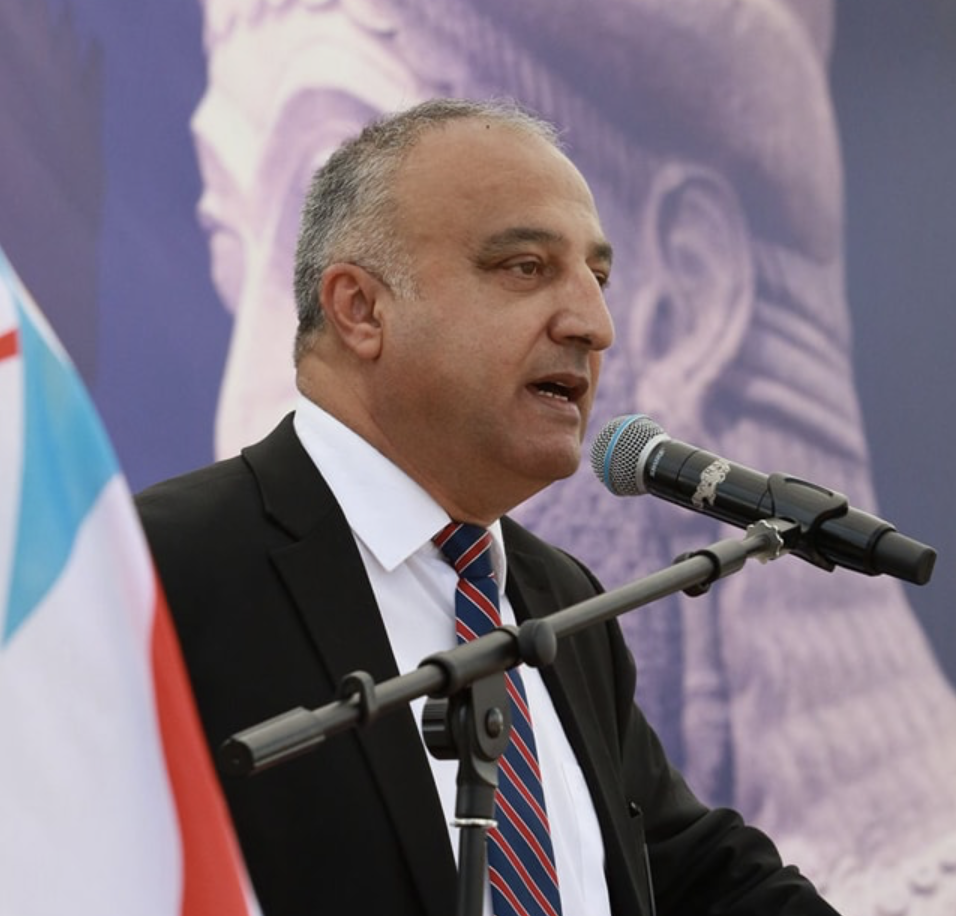
The demonstration brought together representatives from across the Assyrian community, including The Assyrian Democratic Movement – the main Assyrian political party, who called for an end to what they say are ongoing encroachments on Assyrian lands and demanded Iraqi authorities to safeguard the historical and legal rights of the indigenous Assyrian people.
During the protest, participating organizations presented a formal memorandum of demands to Duhok Governor Ali Tatar, calling for concrete action to halt further land seizures and ensure the enforcement of existing court decisions concerning disputed properties.
According to organizers, Governor Tatar pledged to continue following the issue closely and said he would work toward finding solutions to end the encroachments, which participants said threaten the continued presence of Assyrians in their ancestral homeland.
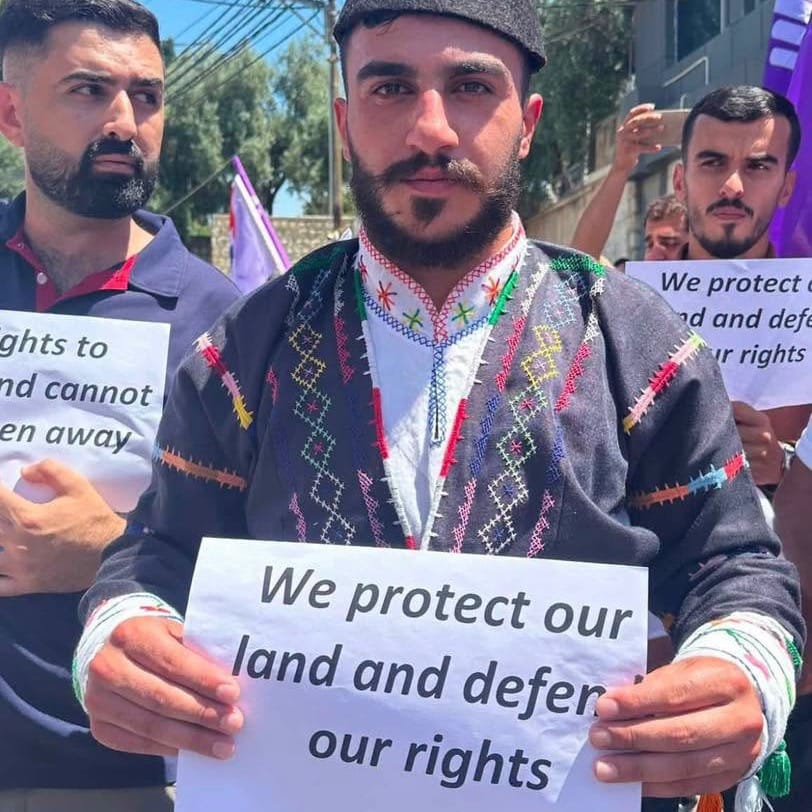
Several Assyrian media outlets also reported that Kurdish security forces prevented many Assyrians travelling from outside Duhok from entering the city to participate in the demonstration. Community representatives said such restrictions have repeatedly been imposed during Assyrian protests, limiting participation from surrounding towns and villages.
The protest comes amid longstanding disputes over land ownership in the Nineveh Plains and the Duhok governorate, where Assyrian villages have for decades reported the confiscation or occupation of agricultural lands.
One of the most recent disputes involves the Assyrian village of Kashkawa, where local residents allege that portions of their ancestral lands have been seized despite documented ownership claims.
 The Assyria Post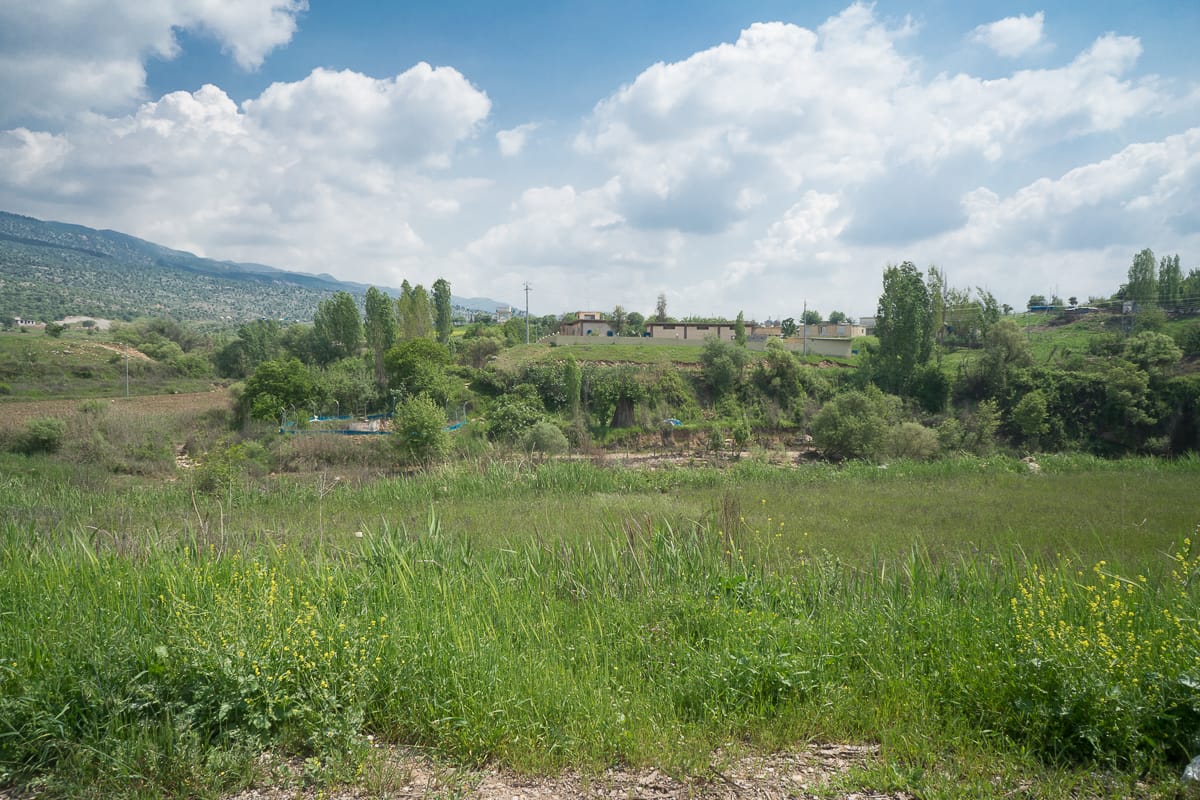
The issue of Assyrian land confiscation has been documented by numerous organizations over the years. Reports by Human Rights Watch have detailed cases in which Assyrian villagers proved that lands were appropriated or occupied without effective legal remedy. The U.S. Department of State has also repeatedly referenced unresolved property disputes affecting Assyrian communities in its annual International Religious Freedom Reports. Meanwhile, advocacy organizations including the Assyrian Policy Institute have documented dozens of cases involving disputed Assyrian lands across northern Iraq and have argued that weak enforcement of judicial decisions has allowed many occupations to continue despite favorable court rulings for Assyrian landowners.
Community leaders argue that while local courts have frequently recognized Assyrian ownership based on historical deeds and legal documentation, implementation of those rulings has often been delayed or not carried out, leaving many landowners unable to regain possession of their property.
Assyrian organizations participating in Monday's protest said they will continue to press both the Kurdish entities and Iraqi authorities to enforce court judgments, protect private property rights, and prevent further encroachments on Assyrian villages.
 The Assyria Post