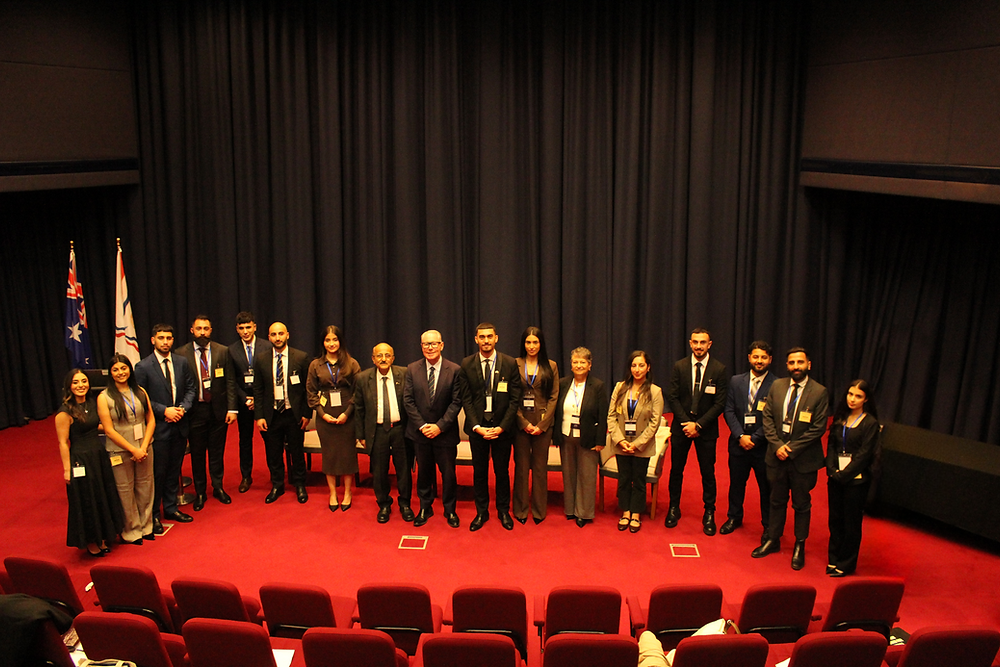
The "Exploring Australia's Role in the Future of the Nineveh Plains" Summit was organised by the Assyrian National Council (Australia) (ANCA) in partnership with its youth organisation, The Young Assyrians, bringing together senior Australian policymakers, diplomats, academics, and community representatives in an unprecedented dialogue on the future of the Assyrian homeland.
The Summit was officially opened by the Prime Minister of Australia, Anthony Albanese, alongside Senator Penny Wong, Minister for Foreign Affairs, and the Chris Bowen, Minister for Climate Change and Energy, who hosted the event at Parliament House. Their attendance reflected Australia's growing engagement with issues affecting Iraq's indigenous Assyrian community and the increasing influence of Australia's Assyrian diaspora in shaping policy discussions concerning the Nineveh Plains.
Among the international guests were Dr. Hillel Newman, Ambassador of the State of Israel to Australia, and Mr. Amir Meron, Deputy Head of Mission at the Embassy of Israel. They were joined by representatives from international organisations, policy institutes, academia, civil society organisations, and community leaders who travelled from across Australia to participate in what organisers described as a landmark national dialogue.
The Summit formed part of a broader strategic initiative by ANCA to strengthen engagement with Australian decision-makers and international stakeholders regarding the future of the Nineveh Plains. Panellists discussed governance, constitutional pathways, security, economic development, cultural preservation, and practical policy approaches aimed at strengthening the long-term future of the indigenous peoples of the Nineveh Plains.
Throughout the discussions, participants examined the historical significance of the Nineveh Plains as the ancestral homeland of the Assyrian people and considered the contemporary challenges facing its indigenous communities. Situated east and north of Mosul, the Nineveh Plains have served as the heartland of the Assyrian nation for millennia. Despite the territorial defeat of the so-called Islamic State, the region continues to face significant challenges, including security concerns, demographic change, displacement, political representation, reconstruction, the protection of cultural heritage, and long-term stability.
A recurring theme throughout the Summit was the need for practical, constitutional, and democratic solutions that would enable the indigenous peoples of the Nineveh Plains to live securely and with dignity in their ancestral homeland while contributing to a peaceful, united, and pluralistic Iraq. Speakers also emphasised the importance of preserving the Assyrian language, culture, national identity, and historical heritage, while recognising the vital role of international cooperation in advancing human rights, religious freedom, and the protection of indigenous peoples.
One of the Summit's most significant outcomes was the presentation of the Canberra Declaration on the Future and Protection of the Nineveh Plains, a policy document affirming shared principles supporting the security, dignity, cultural preservation, and meaningful participation of the indigenous peoples of the Nineveh Plains. The Declaration calls for continued engagement between governments, policymakers, civil society, and affected communities to advance practical and sustainable outcomes consistent with constitutional governance, international human rights principles, and the long-term stability of Iraq.
 ANCA
ANCA