

The commemorations began on Friday, August 7, when The Young Assyrians, led by President Dennis Suro, hosted an Assyrian Genocide Lecture and Exhibition at the headquarters of the Assyrian National Council of Australia.
The event brought together members of the Assyrian community as well as scholars and representatives of the Greek and Armenian communities. The evening examined the history and legacy of the Assyrian Genocide, including Seyfo in the Ottoman Empire and the Simele Massacre of 1933.
Greek-Australian historian and author Dr. Themistocles Kritikakos delivered the keynote address, presenting his recently published book, Armenian, Greek, and Assyrian Genocide Recognition in Twenty-First Century Australia: Memory, Identity, and Cooperation, published by Palgrave Macmillan in 2026.
Drawing on his research, Dr. Kritikakos examined the enduring legacies of Seyfo and Simele and the ways in which the effects of genocide continue to shape subsequent generations through inherited stories, memories of traumatic experiences, and silence.
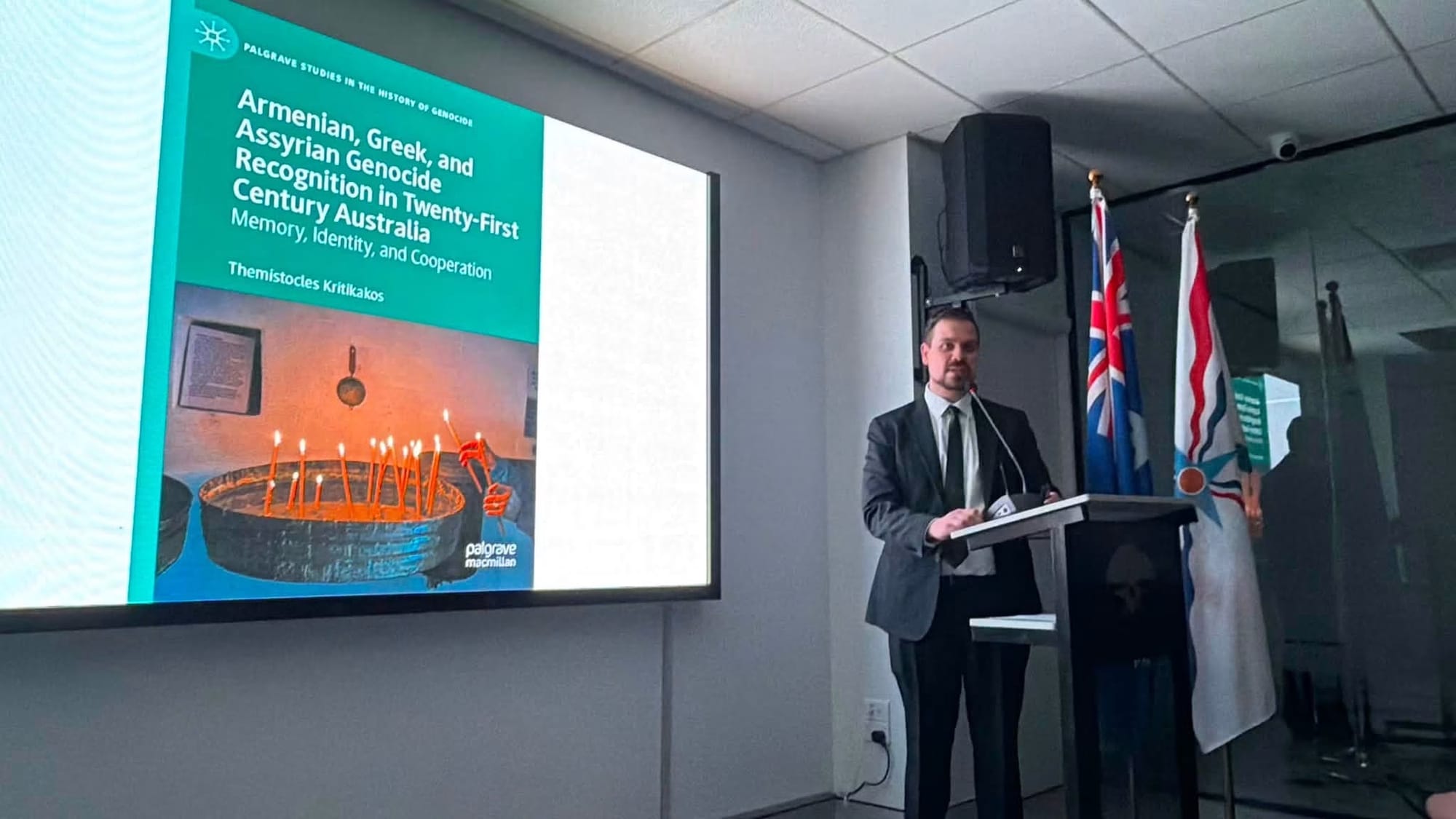
His presentation also explored how the Assyrian, Armenian, and Greek communities in Australia have remembered their respective experiences of genocide and pursued recognition through intercommunal cooperation.“Research and commemoration bring the experiences of survivors and their descendants to public attention and ensure that future generations inherit historical understanding rather than silence, fragmentation and erasure”, he said.
The lecture further examined Australia's humanitarian response to survivors from the three communities during the First World War and its aftermath, highlighting the historical connections between the communities and Australia's role in assisting those affected by mass violence and displacement.
Dr. Michelle Shamoell also presented on “The Intergenerational Trauma of Genocide and the Healing Process.” Her presentation examined the transmission of genocide-related trauma across generations, including discussion of epigenetics and the possibility that extreme historical trauma can leave biological effects across generations. She also addressed the Assyrian experience as a double diaspora, alongside questions of healing, resilience, and the ways communities can respond to inherited trauma.
A central message of the event was the importance of ensuring that younger generations remain actively involved in preserving the history and memory of their communities. The Young Assyrians encouraged future generations of Assyrians, Armenians, and Greeks to contribute through academic research and publications while also becoming actively involved in advocacy for genocide recognition within Australian political and public life.
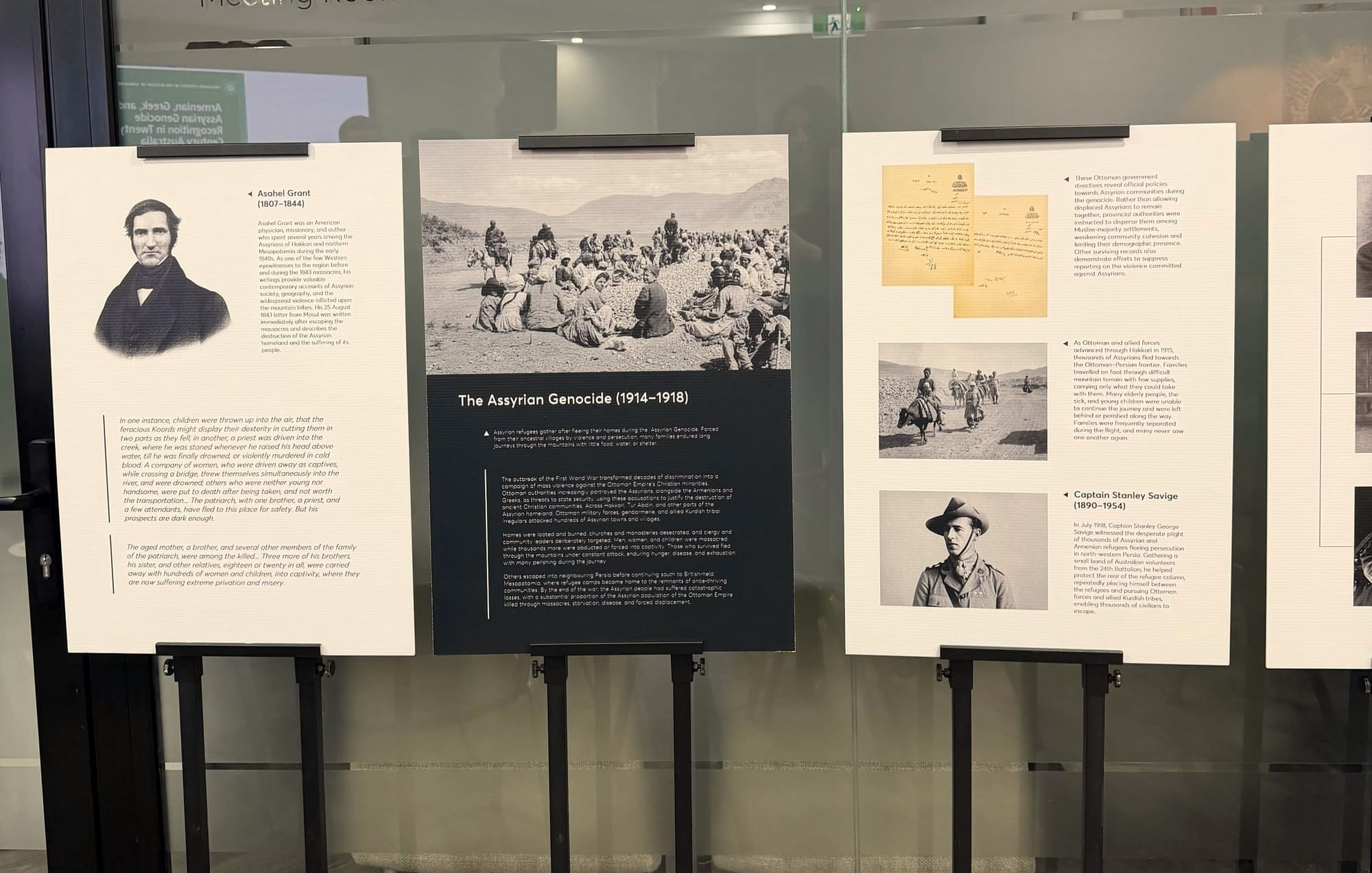
The lectures were accompanied by a historical photographic exhibition documenting the genocides and massacres experienced by Assyrians, including Seyfo and Simele, and their enduring legacy.
During the evening, Dr. Kritikakos was presented with an Honorary Recognition for his scholarship and contribution to research on the Assyrian, Armenian, and Greek Genocides.
Martyrs Day commemoration
The commemorative program continued on Sunday, August 9, with the official Assyrian Martyrs Day Commemoration at the Assyrian Genocide Monument in Western Sydney. The event was organized by the Assyrian National Council of Australia under the leadership of its President, Hermiz Shahen.
Members of the Assyrian community gathered alongside representatives of the Armenian and Greek communities to honour the victims of Seyfo, the Simele Massacre, and the subsequent persecution suffered by Assyrians in Iraq and Syria.
The ceremony also reflected on the broader history of persecution experienced by the Assyrian people and the importance of preserving their historical memory for future generations.
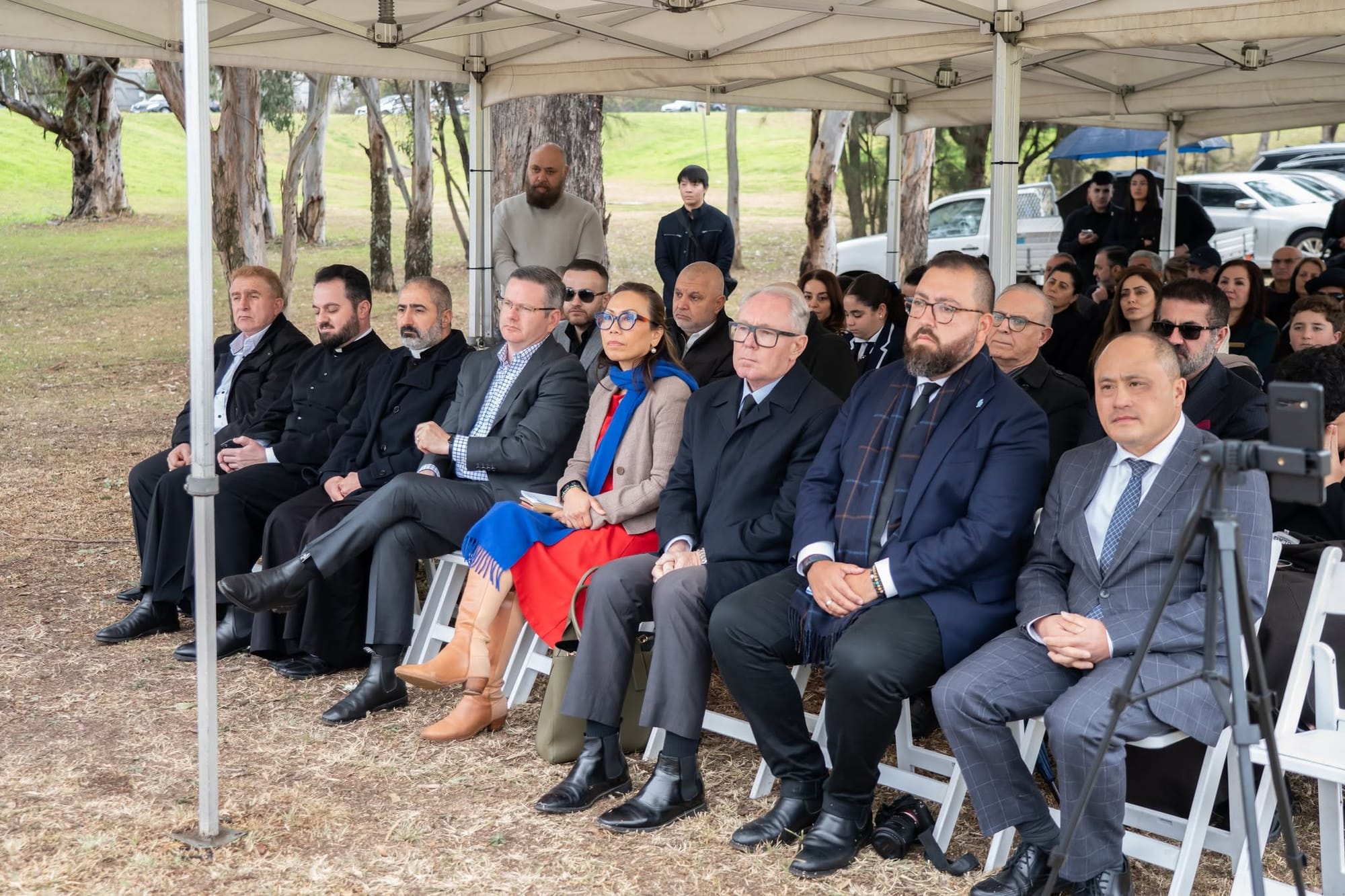
Representatives from federal, state, and local governments attended the commemoration, alongside clergy, scholars, community leaders, and members of the Assyrian, Armenian, and Greek communities. The program featured addresses from politicians, Assyrian community leaders, clergy, scholars, and other invited speakers, focusing on remembrance, genocide recognition, and the preservation of Assyrian history.
Dr. Kritikakos again addressed the gathering, reflecting on Seyfo and Simele, intergenerational trauma, collective memory, and the continuing pursuit of recognition in Australia.
Greek-Australian historian and genocide recognition advocate Dr. Panayiotis Diamadis also spoke, focusing on the strategic importance of education as well as the history of Australian civic action and humanitarian relief.


