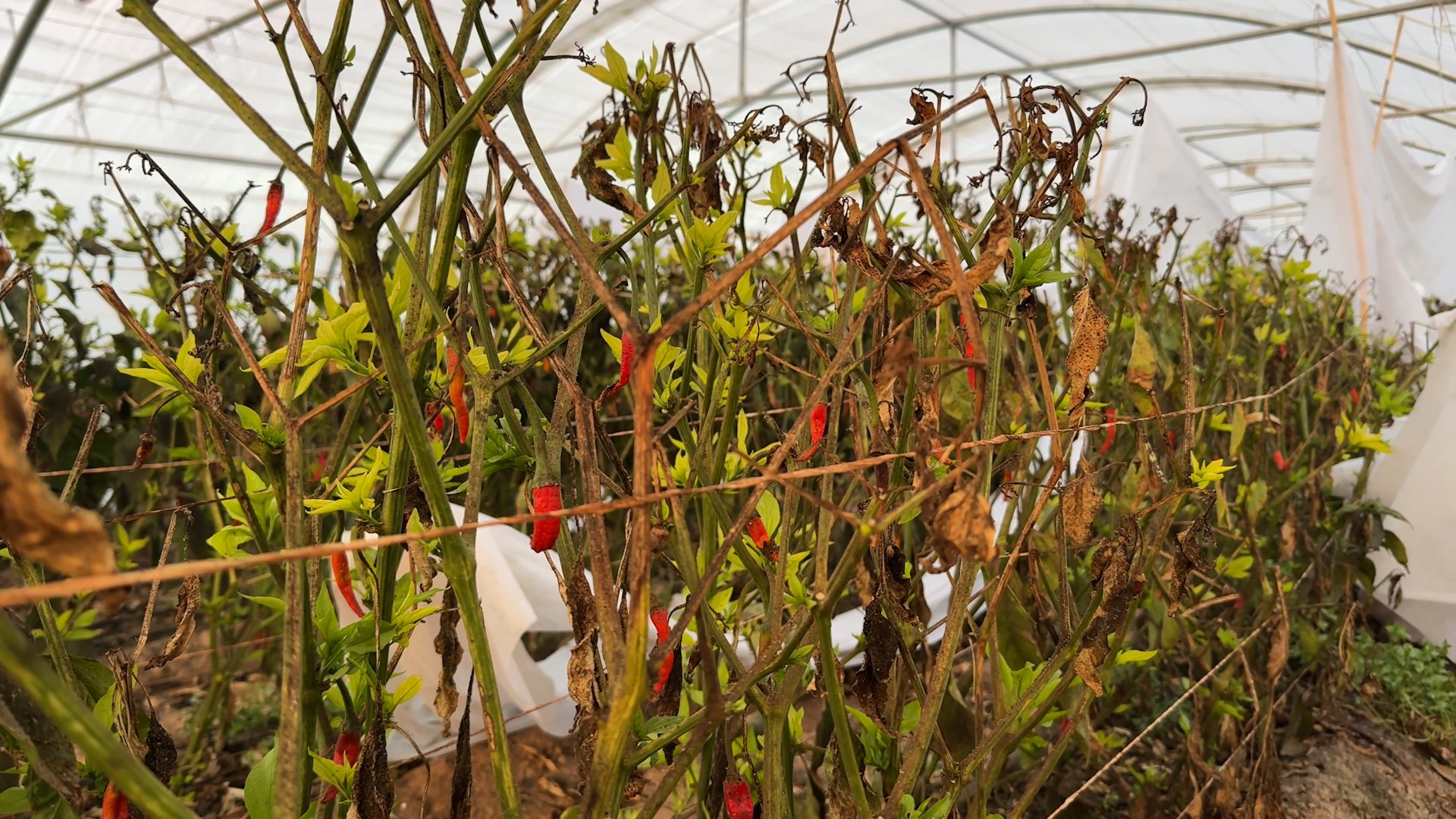
Nineveh farmer cultivates diverse pepper varieties
A farmer in Baghdida is growing a wide range of pepper varieties inside plastic greenhouses, part of an agricultural effort that community leaders say helps Nineveh Plain residents stay on their land.
"Francis Ador told 964media he is managing the effects of an unusually cold and wet season, which has caused his Iraqi hot peppers to turn from green to red earlier than expected. “The color change will not affect the flavor,” he said. His greenhouses, each covering around 500 square meters, sit near Baghdida along the Mosul road, irrigated by a nearby well."
In a personal reflection, Assyrian-American student Sabrina Bet-Mansour draws on her family’s history of displacement and migration to examine today’s immigration policies and the growing challenges faced by those fleeing violence and persecution.
On August 7, 2026, Assyrian communities around the world observed the Day of Remembrance for Assyrian Martyrs. On this day, the victims of persecution and mass killings are commemorated, particularly those who perished during the Simele massacre in Iraq in 1933.
The best cookbooks offer more than recipes—they tell the stories of the people behind them, their heritage, and their struggles. That’s exactly what makes The Oldest Kitchen in the World by Matay de Mayee such a treasure.
New details from the Ottoman population register, which records the 1835 census in the city of Mardin, provide a precise breakdown of the city's households, showing that Assyrians made up the largest non-Muslim group.
Randy K. Abro, a 41-year-old Assyrian man from Utica, Michigan, was fatally shot at a warehouse and business plaza in Sterling Heights on October 7. A Detroit man has been charged in connection with his death, while authorities continue searching for a second suspect.