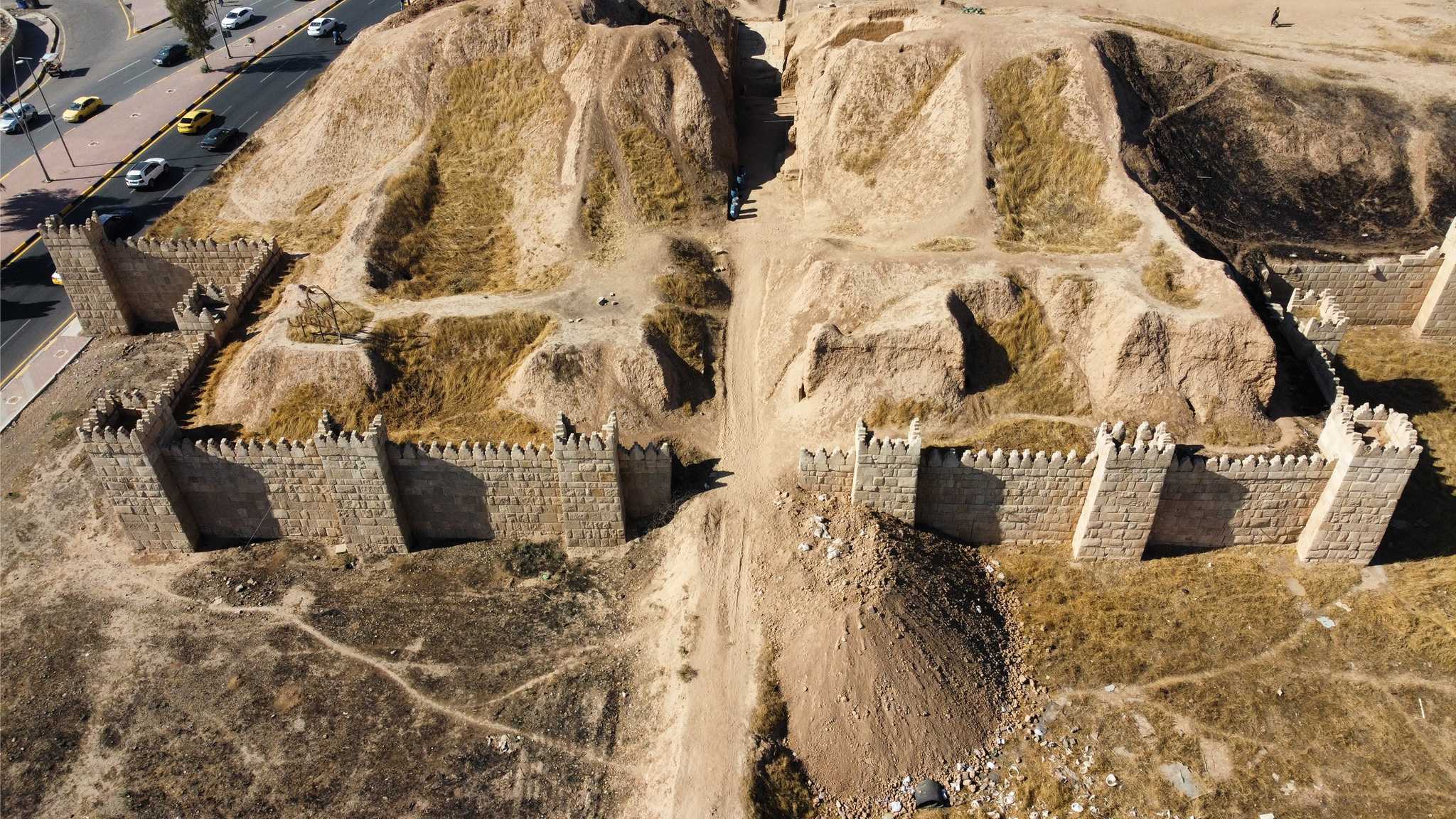
Ancient Shamash Gate in Nineveh Reveals Two Battles 2,500 Years Apart
The Shamash Gate in ancient Nineveh has revealed rare evidence of two violent chapters separated by more than 2,500 years: the fall of the Assyrian capital in 612 B.C. and the battle to free Mosul from ISIS in 2017.
Editor's pick This post is part of hand-picked stories from across the web, curated by the editors of the Assyria Post.
"The Shamash Gate was one of 18 entrances into Nineveh. Ancient records link its construction to King Sennacherib, who ruled from 705 to 681 B.C. The gate connected the city to the east, along the road from Erbil to Nineveh.
Inside the city, the route led toward major royal and religious areas, including Nabi Yunis and the palace of Esarhaddon. This made the gate a key point in Nineveh’s movement, trade, and defense.
Researchers say the site now preserves evidence from two battles. The first was the fall of Nineveh in 612 B.C., when the city fell to invading forces. The second was the fight to liberate Mosul from ISIS in 2017."
In a personal reflection, Assyrian-American student Sabrina Bet-Mansour draws on her family’s history of displacement and migration to examine today’s immigration policies and the growing challenges faced by those fleeing violence and persecution.
On August 7, 2026, Assyrian communities around the world observed the Day of Remembrance for Assyrian Martyrs. On this day, the victims of persecution and mass killings are commemorated, particularly those who perished during the Simele massacre in Iraq in 1933.
The best cookbooks offer more than recipes—they tell the stories of the people behind them, their heritage, and their struggles. That’s exactly what makes The Oldest Kitchen in the World by Matay de Mayee such a treasure.
The Assyrian Democratic Party unveiled a new monument dedicated to Assyrian martyrs in the center of Tal Tamr on Saturday, September 19, as the community gathered to commemorate those who lost their lives defending this Assyrian region.
An Assyrian bishop in California has been accused in a civil lawsuit of taking $200,000 in cash from a church member who believed the money would be used to renovate a church in El Cajon.
In a personal reflection, Assyrian-American student Sabrina Bet-Mansour draws on her family’s history of displacement and migration to examine today’s immigration policies and the growing challenges faced by those fleeing violence and persecution.


 Nisha Zahid