AI learns to read cuneiform: A milestone for Ancient Near Eastern Studies
The new AI tool “Palaeographicum” is revolutionizing research into the cultures of the Ancient Near East: It identifies individual variations of cuneiform signs—a huge step forward for academia.
Editor's pick This post is part of hand-picked stories from across the web, curated by the editors of the Assyria Post.
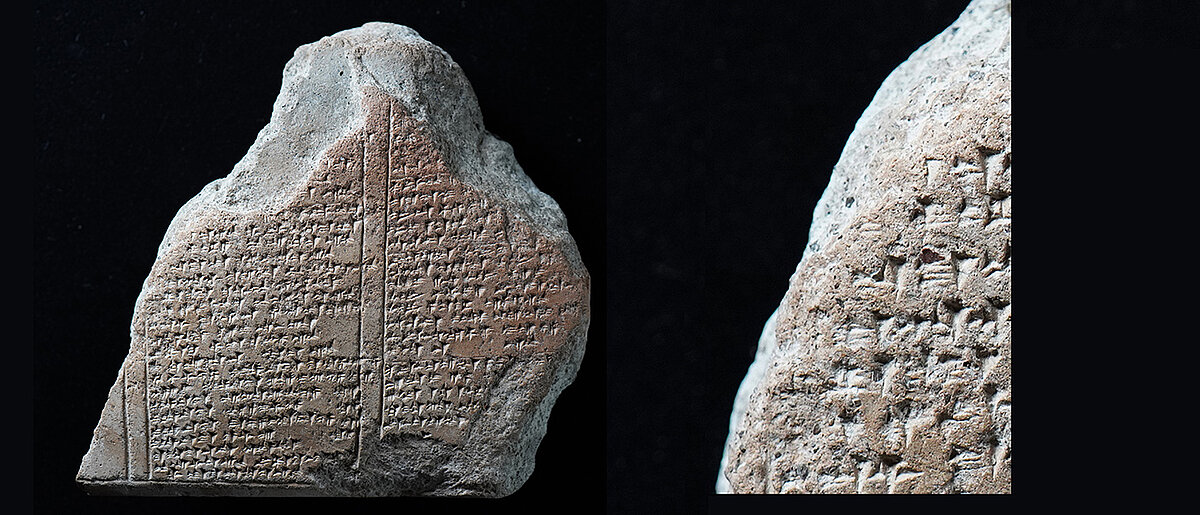
"In the three millennia before the common era, a highly developed civilization flourished in the Near East, leaving behind a wealth of information: on clay tablets inscribed in cuneiform. In this writing system, wedge-shaped characters were pressed with a stylus into moist clay tablets, which were then dried—resulting in a durable written document.
Most clay tablets have broken over time, and their fragments are scattered across museums around the world. Ancient Near Eastern Studies therefore faces a complex task: it must correctly piece the fragments back together. Only then is it possible to read the complete documents and gain insights into life in the Ancient Near East.
Researchers at the University of Würzburg and the Academy of Sciences and Literature in Mainz have been working on this for many years. Their focus is on the culture of the Hittites, who lived in what is now Anatolia 3,500 years ago. This people’s “alphabet” is extensive: it consists of no fewer than 375 cuneiform signs, which represent syllables as well as entire words."
In a personal reflection, Assyrian-American student Sabrina Bet-Mansour draws on her family’s history of displacement and migration to examine today’s immigration policies and the growing challenges faced by those fleeing violence and persecution.
On August 7, 2026, Assyrian communities around the world observed the Day of Remembrance for Assyrian Martyrs. On this day, the victims of persecution and mass killings are commemorated, particularly those who perished during the Simele massacre in Iraq in 1933.
The best cookbooks offer more than recipes—they tell the stories of the people behind them, their heritage, and their struggles. That’s exactly what makes The Oldest Kitchen in the World by Matay de Mayee such a treasure.
From her early beginnings in the beauty industry to building an internationally recognized cosmetics brand, Swedish-Assyrian entrepreneur Gabriella Elio has transformed a professional makeup artist’s vision into a highly profitable business with growing global ambitions.
A new book about Seyfo, the genocide of Assyrians is now available in English. Based on oral histories, it recounts the history of Tur Abdin between 1830 and 1930, including events that preceded the 1915 genocide.
French author Claire Weibel Yacoub has published her new book Les tribulations de Paulus l'Assyrien, released in September 2026 by L'Harmattan in the collection Romans Historiques.


 Robert Emmerich