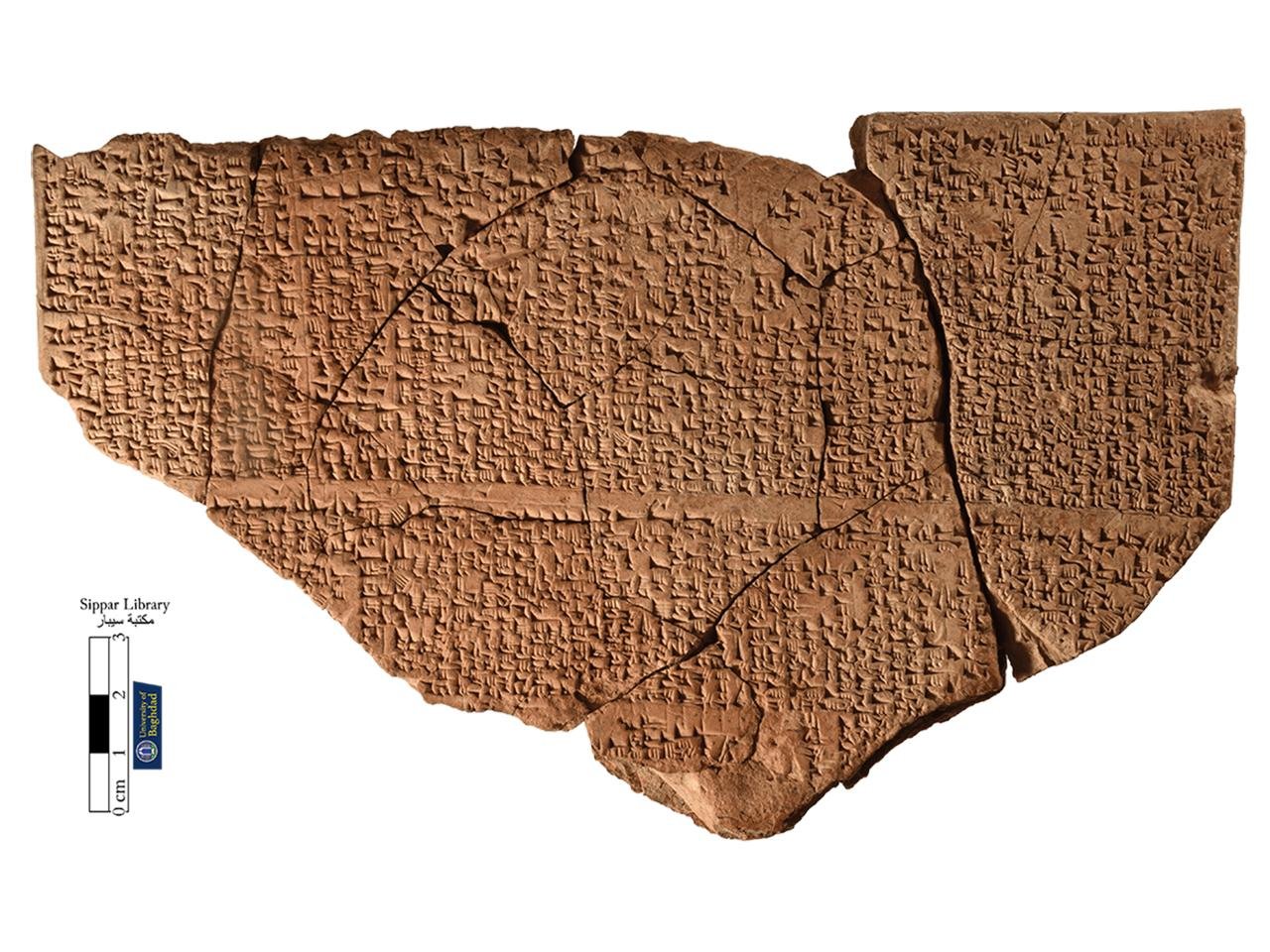
Hymn to Babylon discovered, revealing ancient Mesopotamian city life
In a collaboration between Ludwig Maximilian University of Munich (LMU) and the University of Baghdad, an ancient Babylonian hymn dating back over two millennia has been rediscovered and fully deciphered.
Editor's pick This post is part of hand-picked stories from across the web, curated by the editors of the Assyria Post.
"Composed in the early first millennium BCE, the hymn was widely circulated in the ancient world, as evidenced by the many surviving copies. “The hymn was copied by children in school. It’s remarkable that such a popular text remained unknown until now,” Jiménez said.
Composed in cuneiform script on clay tablets, the hymn was uncovered among the renowned Sippar Library collection. According to legend, Noah had allegedly hidden this library before the biblical flood. In the larger effort of digitization and preservation of cuneiform texts globally, the rediscovery is a major achievement in both Mesopotamian studies and digital humanities."
In a personal reflection, Assyrian-American student Sabrina Bet-Mansour draws on her family’s history of displacement and migration to examine today’s immigration policies and the growing challenges faced by those fleeing violence and persecution.
On August 7, 2026, Assyrian communities around the world observed the Day of Remembrance for Assyrian Martyrs. On this day, the victims of persecution and mass killings are commemorated, particularly those who perished during the Simele massacre in Iraq in 1933.
The best cookbooks offer more than recipes—they tell the stories of the people behind them, their heritage, and their struggles. That’s exactly what makes The Oldest Kitchen in the World by Matay de Mayee such a treasure.
From her early beginnings in the beauty industry to building an internationally recognized cosmetics brand, Swedish-Assyrian entrepreneur Gabriella Elio has transformed a professional makeup artist’s vision into a highly profitable business with growing global ambitions.
A new book about Seyfo, the genocide of Assyrians is now available in English. Based on oral histories, it recounts the history of Tur Abdin between 1830 and 1930, including events that preceded the 1915 genocide.
French author Claire Weibel Yacoub has published her new book Les tribulations de Paulus l'Assyrien, released in September 2026 by L'Harmattan in the collection Romans Historiques.


 Dario Radley