

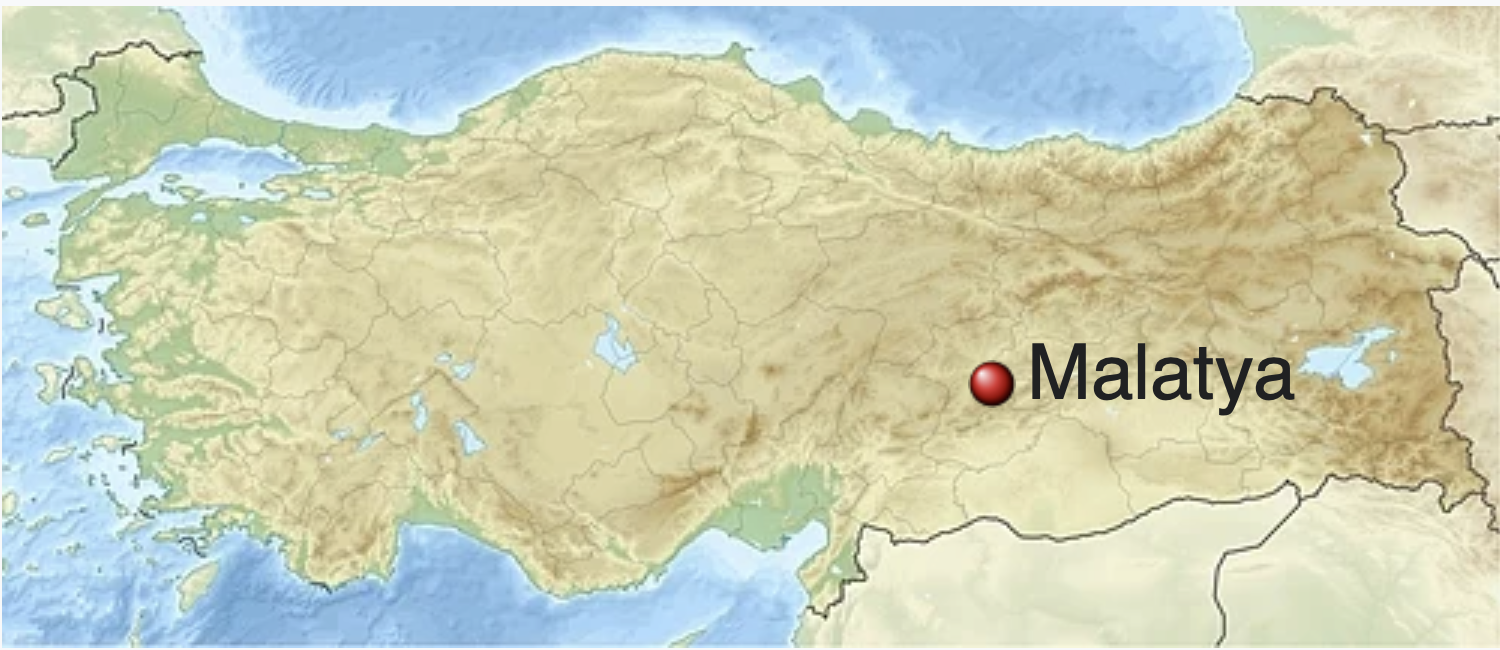
Gregorius Bar-Hebraeus (1225/26–1286) was one of the most remarkable scholars of the medieval Middle East. Born in Melitene, in present-day Turkey (Modern day Malatya), he became a leading bishop of the Syriac Orthodox Church and distinguished himself as a historian, physician, philosopher and theologian.
Writing mainly in Assyrian and Arabic, Bar-Hebraeus, or Bar Hebroyo in Assyrian, preserved valuable knowledge about ancient civilizations, Christianity, Islam and the Mongol period. His famous Chronography remains an important historical source, while his works on philosophy, medicine and grammar demonstrate the sophistication of Assyrian scholarship. The Chronography is a history of the world down to his own day, giving modern day scholars valuable clues about different historical events.
He traveled extensively to support his congregations, also interacting with Muslim communities. He wrote nearly 50 scholarly works in both Assyrian and Arabic covering grammar, theology, philosophy, medicine, and astronomy. Another notable book of his is The Butter/Cream of Wisdom (Ḥēʾwath ḥekkmthā), an encyclopedic overview of Aristotelian philosophy.
His family name, Bar-Hebraeus, has sometimes led to the claim that he was of Jewish ancestry. However, modern scholarship generally favors a geographical explanation for the name, and the claim of Jewish descent remains unproven. He was also known as Abu al-Faraj in Arabic and Abulpharagius in Latin.
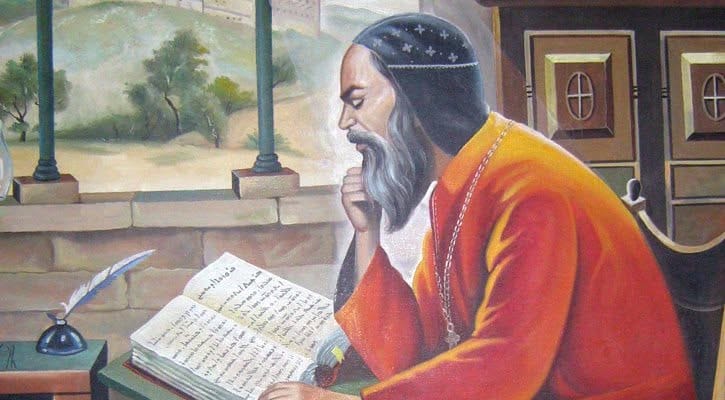
Bar-Hebraeus belonged to the Assyrian Christian intellectual tradition, which forms an important part of the historical heritage of modern Assyrians.
He died in Maragha, in present-day Iran, in July 1286. Nearly 740 years later, his legacy continues to inspire admiration among scholars of the ancient Near East.


