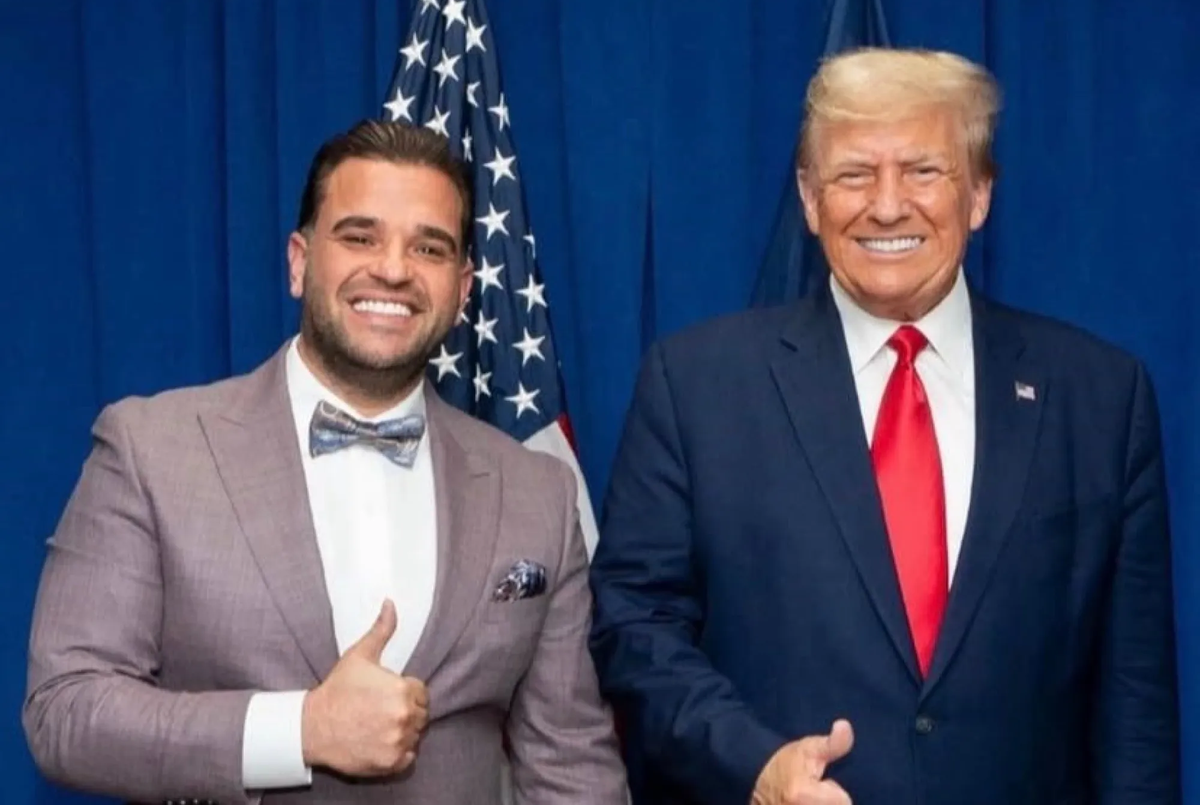
US envoy to Iraq pledges support for Nineveh Plain Region
Mark Savaya, the United States Special Envoy to the Republic of Iraq, has said he intends to help the Assyrian towns and villages in the Nineveh Plain in a recent interview.
Speaking to the Assyrian news outlet Chaldean Press, Savaya is quoted saying he will help the Assyrian villages of the Nineveh Plain: “Many of these villages were destroyed by ISIS, and I am going to help them.”
Savaya is also reported to push for the implementation of article 125 of the Iraqi constitution which grants minoritized groups administrative rights in their areas. If implemented, the Nineveh Plain Region could become a new province, giving locals greater autonomy over the area. Assyrian groups, most notably the Assyrian Democratic Movement, have advocated for the establishment of a Nineveh Plain Province since the fall of Saddam Hussein's regime. The Iraqi government took an initial step to establish the new province in early 2014 but the onslaught of ISIS later that year derailed the process.
Mark Savaya's family is originally from Tell Keppe, one of the towns in the Nineveh plain that was devastated by ISIS.
Dasko Sherwani, a representative of the Kurdish Regional Government office in Washington, DC, targeted Robert DeKelaita, a prominent Assyrian-American community leader in a public post.
Armenia’s Central Electoral Commission has confirmed that Assyrians and other minority groups will again be eligible for designated minority representation in the country’s upcoming parliamentary elections.
Congressman Darin LaHood called on President Trump to pressure Baghdad on Assyrian rights in a letter issued 16 February, reports Nineveh News, citing increased coordination among Assyrian-American organizations.
Patriarch Louis Sako’s most recent controversial remarks, in which he claimed that each Assyrian church denomination constitutes a separate nation, have triggered strong reactions and appear to have backfired.
We think of ancient civilisations as operating very differently from the way our economy works today. Yet the Assyrians, around 3,000 years ago, began the basis of modern capitalism, in a region spanning most of modern-day Iraq, eastern Syria and southeastern Turkey.
The Alqosh Subdistrict Directorate has announced the launch of a large-scale environmental campaign aimed at reforesting Mount Alqosh, in a bid to restore its vegetation cover and transform the mountain into a vibrant green space overlooking the historic Assyrian town.
A magnetic survey at Khorsabad, once the ancient Assyrian capital, has revealed the remains of a huge villa (with 127 rooms), royal gardens, the city’s water gate and five large buildings.


 The Assyria Post