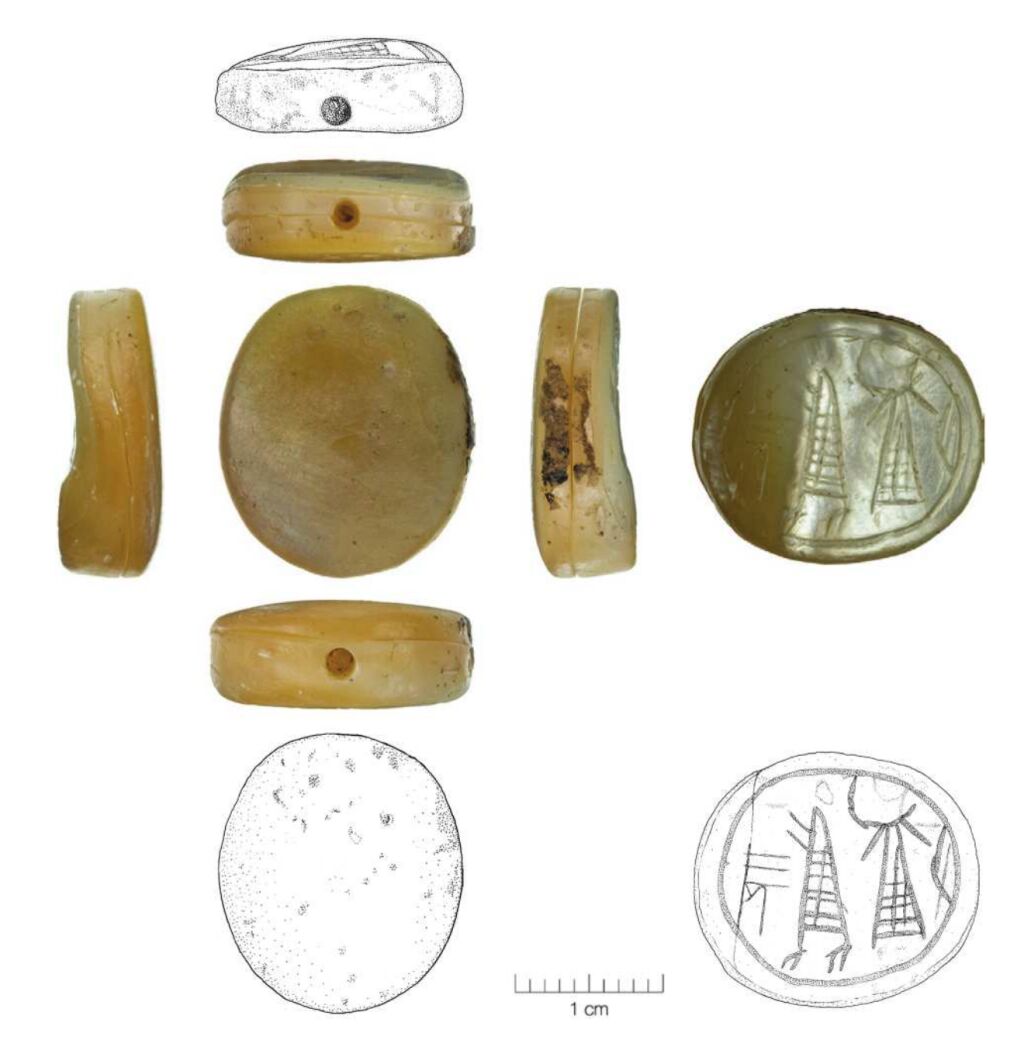
Rare Assyrian-period, mother-of-pearl seal discovered at Israels Tel Hadid
Excavators of Tel Hadid recently released the discovery of a unique seal stamp from the seventh century b.c.e., the time of Assyrian domination of the Levant.
Editor's pick This post is part of hand-picked stories from across the web, curated by the editors of the Assyria Post.
'Of most interest is the second feature—the crescent on a triangular stand. Researchers identified this feature with the crescent-on-standard motif associated with Sin, the moon god of Harran in Mesopotamia. This symbol spread throughout the Southern Levant under Assyria’s domination. Koch and colleagues point to a parallel on a seventh-century b.c.e. tablet from nearby Tel Gezer.
Next to the moon on a standard is the other triangular shape that has “leglike features,” as the authors describe it. Because of these human characteristics, they propose it could depict a worshiper. A cylinder seal discovered in the Garden Tomb in Jerusalem, dating to the seventh century b.c.e., contains a similar triangular figure identified as a worshiper.'
In a personal reflection, Assyrian-American student Sabrina Bet-Mansour draws on her family’s history of displacement and migration to examine today’s immigration policies and the growing challenges faced by those fleeing violence and persecution.
On August 7, 2026, Assyrian communities around the world observed the Day of Remembrance for Assyrian Martyrs. On this day, the victims of persecution and mass killings are commemorated, particularly those who perished during the Simele massacre in Iraq in 1933.
The best cookbooks offer more than recipes—they tell the stories of the people behind them, their heritage, and their struggles. That’s exactly what makes The Oldest Kitchen in the World by Matay de Mayee such a treasure.
The Assyrian Democratic Party unveiled a new monument dedicated to Assyrian martyrs in the center of Tal Tamr on Saturday, September 19, as the community gathered to commemorate those who lost their lives defending this Assyrian region.
An Assyrian bishop in California has been accused in a civil lawsuit of taking $200,000 in cash from a church member who believed the money would be used to renovate a church in El Cajon.
In a personal reflection, Assyrian-American student Sabrina Bet-Mansour draws on her family’s history of displacement and migration to examine today’s immigration policies and the growing challenges faced by those fleeing violence and persecution.


 Micah van Halteren