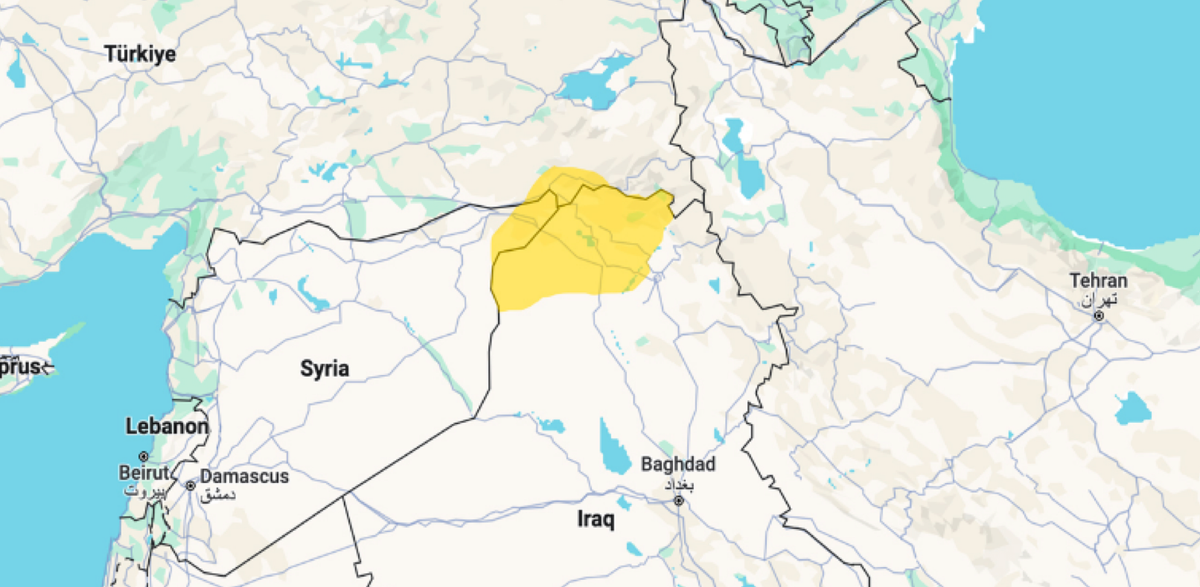
The Assyrian Democratic Movement, the main political body representing Assyrians in Iraq, has sounded the alarm together with other Assyrian organizations, over plans by the Kurdish administration to seize lands belonging to the Assyrian village of Bakhetme.
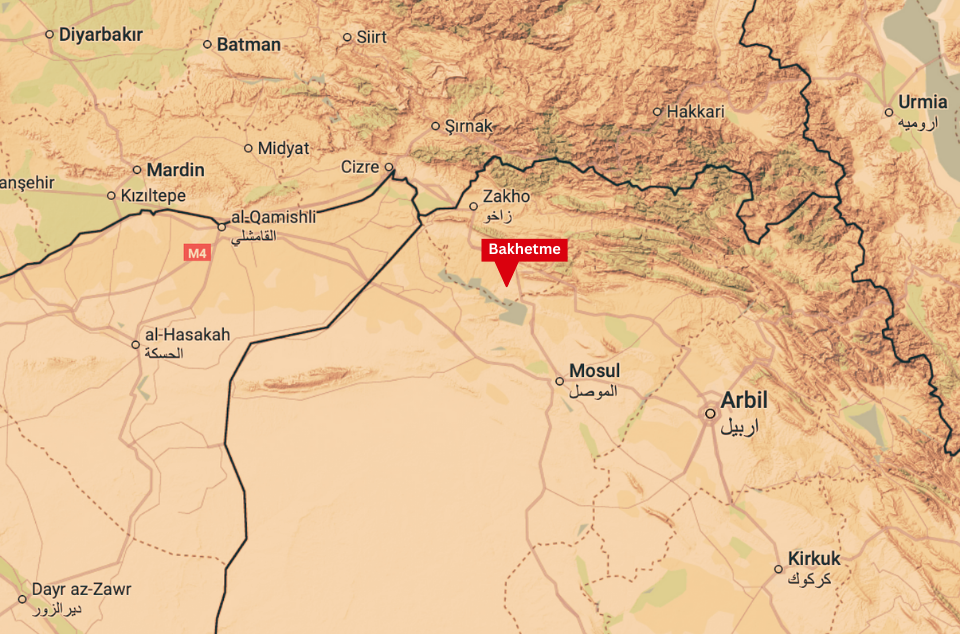
In a joint statement issued on the 4th of January 2026, the ADM warns that agricultural lands in Bakhetme, located in the Northern Iraq's Dohuk governorate, is at risk of confiscation by the local Kurdish regime.
According to the statement, information has emerged indicating plans to seize more than 1,500 dunams of land (equivalent to 370 acres, or 210 soccer fields) belonging to the local Assyrian villagers, with the intention of distributing the land as residential plots to members of the Peshmerga and Kurdish government employees. If implemented, the measure would constitute a serious violation of property rights and pose an existential threat to the village’s demographic, cultural, and economic foundations, the statement said.
A History of Forced Seizure
The lands in question were originally confiscated by the former Iraqi regime in 1983, when they were forcibly expropriated and converted into a military camp. At the time, the residents of Bakhetme rejected the compensation offered by the regime, refusing to legitimize the seizure of their ancestral lands.
Following the withdrawal of the Ba’athist regime from areas north of the 36th parallel, Bakhetme’s residents returned to their land and resumed agricultural activities. Like hundreds of other cases across northern Iraq, lands previously seized for military purposes were, in principle, meant to be restored to their original owners. In practice, however, Bakhetme’s lands were never officially returned, leaving the village in a state of legal limbo.
In 1995, the KRG Parliament issued a decision mandating the return of all lands confiscated under expropriation orders issued by the now-dissolved Iraqi Revolutionary Command Council. While this decision was implemented in many areas, particularly where the original landowners were Kurdish, the lands of Bakhetme remain excluded from this process. "This indicates discrimination in governmental handling of these files, or a double standard, as all lands on which the former regime established camps or used for military purposes were returned to their Kurdish owners, except for the lands of this village, which have remained suspended", the ADM statement said.
Threat of Demographic Change
Recent actions by the local municipality have intensified concerns. Villagers report attempts to reclassify the disputed lands in preparation for redistribution. Such a move would result in the confiscation of a substantial portion of Bakhetme’s territory and irreversibly alter the village’s demographic composition.
The actions directly contradict the Iraqi Constitution and Law No. 5 of 2015, enacted by the KRG Parliament, which guarantees the protection of private property, mandates lawful procedures in land disputes, and explicitly prohibits demographic change under any pretext.
The case of Bakhetme is not an isolated incident, but a reflection of a broader pattern facing Assyrians in the region controlled by Kurds since 1991. It raises fundamental questions about equality before the law and the future of the indigenous Assyrian population.
 The Assyria Post