Nineveh governor reaffirms support for Assyrian return
Nineveh Governor Abdul Qader Al-Dakhil met Assyrian Archbishop Mar Toma Dawod to discuss efforts to support the return of Assyrian families to Mosul. The visit comes amid renewed calls to reverse post ISIS displacement and restore stability in the province.
Nineveh Governor Abdul Qader Al-Dakhil received Mosul-born Assyrian Archbishop Mar Toma Dawod, Head of the Syriac Orthodox Church in the United Kingdom, during a visit focused on the situation of Assyrians in the province and efforts to encourage their return to Mosul and surrounding areas.
According to a statement from the governor’s office, the meeting addressed the local government’s plan to facilitate the return of Assyrian families to their neighborhoods inside Mosul as well as to towns and sub-districts across Nineveh. Al-Dakhil noted that a new Assyrian Christian family has recently returned to Mosul and called on others to uphold their historic identity and consider returning to their ancestral areas.
He also revealed that a delegation of Mosuli Assyrians residing in the United Kingdom is expected to visit the city in the near future to assess conditions and developments firsthand.
The Post has previously reported on Al-Dakhil’s outreach to Assyrians. In earlier statements, the governor pledged support for reconstruction in historically Assyrian areas, the protection of church properties, and coordination with community representatives to address security and service related concerns. While challenges remain, including limited job opportunities and infrastructure gaps, local authorities have repeatedly stated that restoring demographic balance and encouraging displaced families to return is a priority for the province’s long term stability.
The latest meeting comes amid ongoing efforts to promote coexistence and reverse the demographic decline that followed the 2014 ISIS onslaught, which led to the mass displacement of Assyrians from Mosul and the wider Nineveh Plain.
A century after its official establishment, Qamishli remains one of the most important reminders of how Assyrians rebuilt their lives after the destruction of their ancestral communities in the Ottoman Empire.
Hundreds of members and supporters of three Assyrian political parties gathered in the Nineveh Plains town of Tel Keppe on Wednesday to protest what they described as ongoing demographic change, land seizures, and violations of property rights.
A growing number of Assyrians are returning to spend their summers reconnecting with family, heritage, and community. At the heart of this revival are the village bed-and-breakfasts that have become gateways home for Assyrians from across the diaspora.
The Assyrian Monitor for Human Rights has issued a statement condemning what it describes as arbitrary detention practices carried out by members of the Kurdish Asayish security forces in Qamishli, calling for the immediate release of four Assyrian detainees, including a German national.
Almost two years after his passing on September 17, 2024, the voice of Evin Agassi still echoes deeply within the hearts of many Assyrians. Agassi was more than a musician; he was a cultural bridge, a storyteller of homeland longings, and a unifying symbol for millions scattered across the globe.
Meet the man who has invested countless hours translating forgotten Assyrian magazines issued more than a century ago, and in the process discovered the thoughts and developments that continue to shape the Assyrian nation today.
A century after its official establishment, Qamishli remains one of the most important reminders of how Assyrians rebuilt their lives after the destruction of their ancestral communities in the Ottoman Empire.
The two oldest Assyrian church rites have been able to preserve their existence for more than fifteen centuries, putting them among the oldest existing organizations in the world.


 The Assyria Post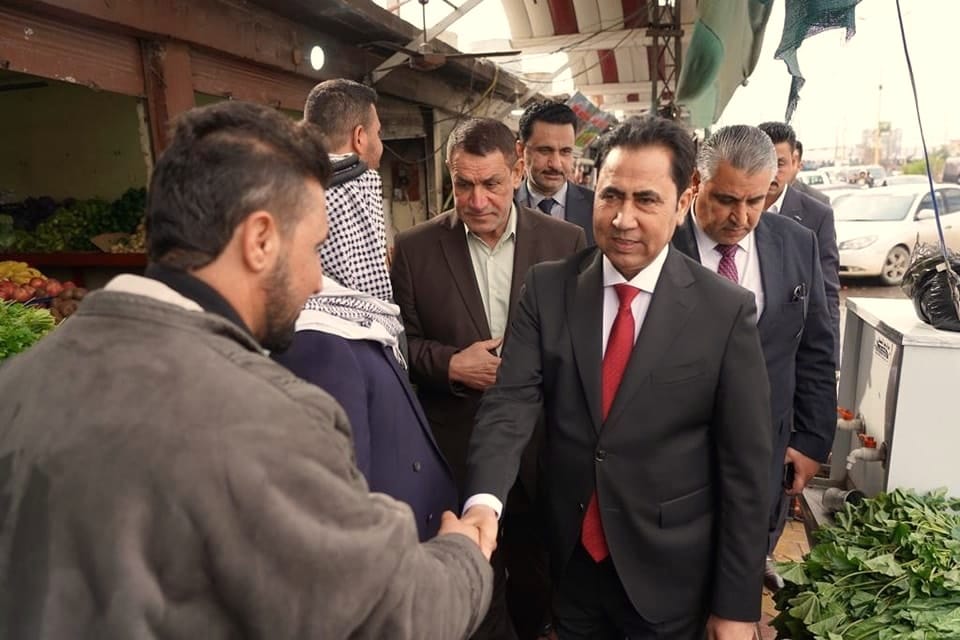
 The Assyria Post