

The discovery was announced by Iraq's State Board of Antiquities and Heritage following ongoing excavations at Bab Shamash, one of the most important gateways of ancient Nineveh. Officials stated that the stele dates to the seventh century BC, during the height of the Assyrian Empire.
According to archaeologists, the monument bears Assyrian inscriptions and is believed to depict a king from the Sargonid dynasty, the royal house that ruled Assyria during its final and most powerful centuries. Researchers say the find could provide valuable insight into the political, religious, and military history of the empire.
Stone stelae were commonly erected by Assyrian rulers to commemorate royal achievements, military victories, construction projects, and official decrees. The newly discovered monument is expected to contribute to scholars' understanding of Nineveh and its role as the empire's administrative and ceremonial center.
The Shamash Gate, known in Akkadian as Bab Shamash, formed part of Nineveh's extensive defensive walls. Dedicated to Shamash, the Mesopotamian god of the sun and justice, the gate was one of seventeen major entrances that surrounded the ancient city. During the seventh century BC, Nineveh served as the capital of the Assyrian Empire and was among the largest and most influential cities in the world.
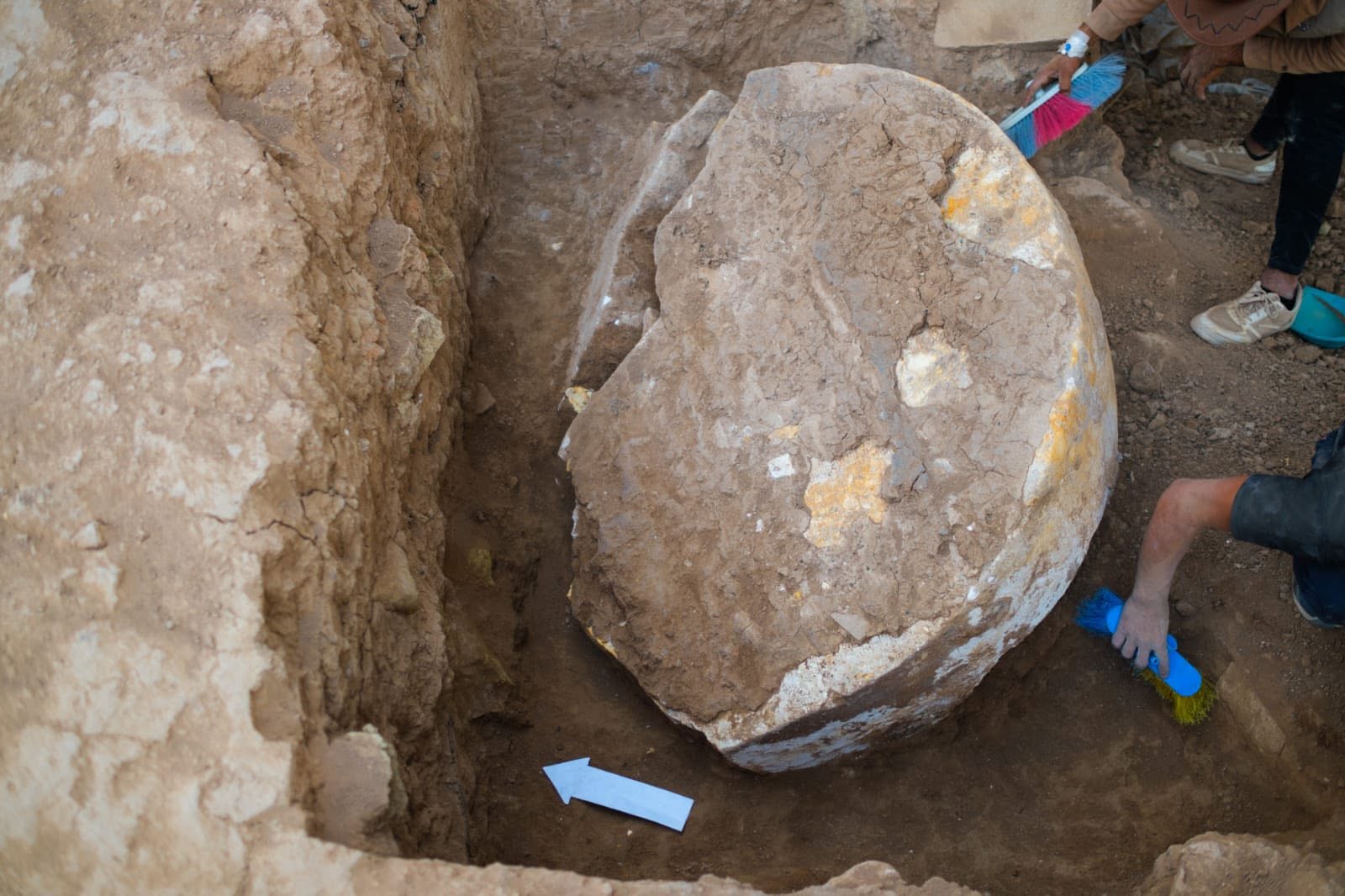
The discovery has generated excitement among historians and archaeologists, who note that large portions of ancient Nineveh remain unexplored. Experts believe that further excavations could reveal additional monuments, inscriptions, and artifacts buried beneath the site.
The find also underscores the enduring archaeological importance of Assyria's heartland, where ongoing research continues to uncover new evidence of one of the ancient world's most advanced civilizations.
Further study and conservation work on the stele are expected in the coming months as specialists examine its inscriptions and iconography in greater detail.


