

The relief, discovered in Athens in 1879, depicts a bearded figure in Achaemenid Persian dress standing between two winged guardian beings, while a second frieze below portrays a lion attacking a deer. The artistic vocabulary is unmistakably rooted in the Assyrian-Mesopotamian tradition of protective winged creatures and royal hunting imagery.
Of particular interest are the upcurved wings of the guardian figures and lion's hunt of a deer are closely reminiscent of the royal sphinx and similar reliefs seen in Persepolis.
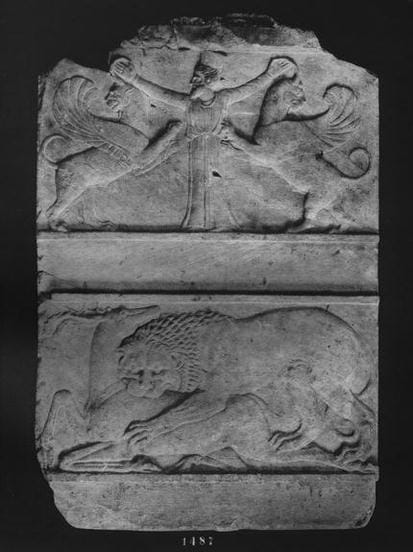
This similarity points to the continued transmission of Assyrian artistic conventions throughout the Achaemenid world and strongly suggests the presence and activity of Assyrian artists, craftsmen, and workshops across the empire.
Far from disappearing after the destruction of Nineveh in 612 BCE, Assyrian artistic traditions continued to flourish under successive imperial administrations. This relief therefore stands as an important testimony to the continuity of Assyrians and their artistic work, demonstrating how Assyrian cultural and artistic heritage survived, adapted, and influenced visual production from Mesopotamia to Iran and the eastern Mediterranean.
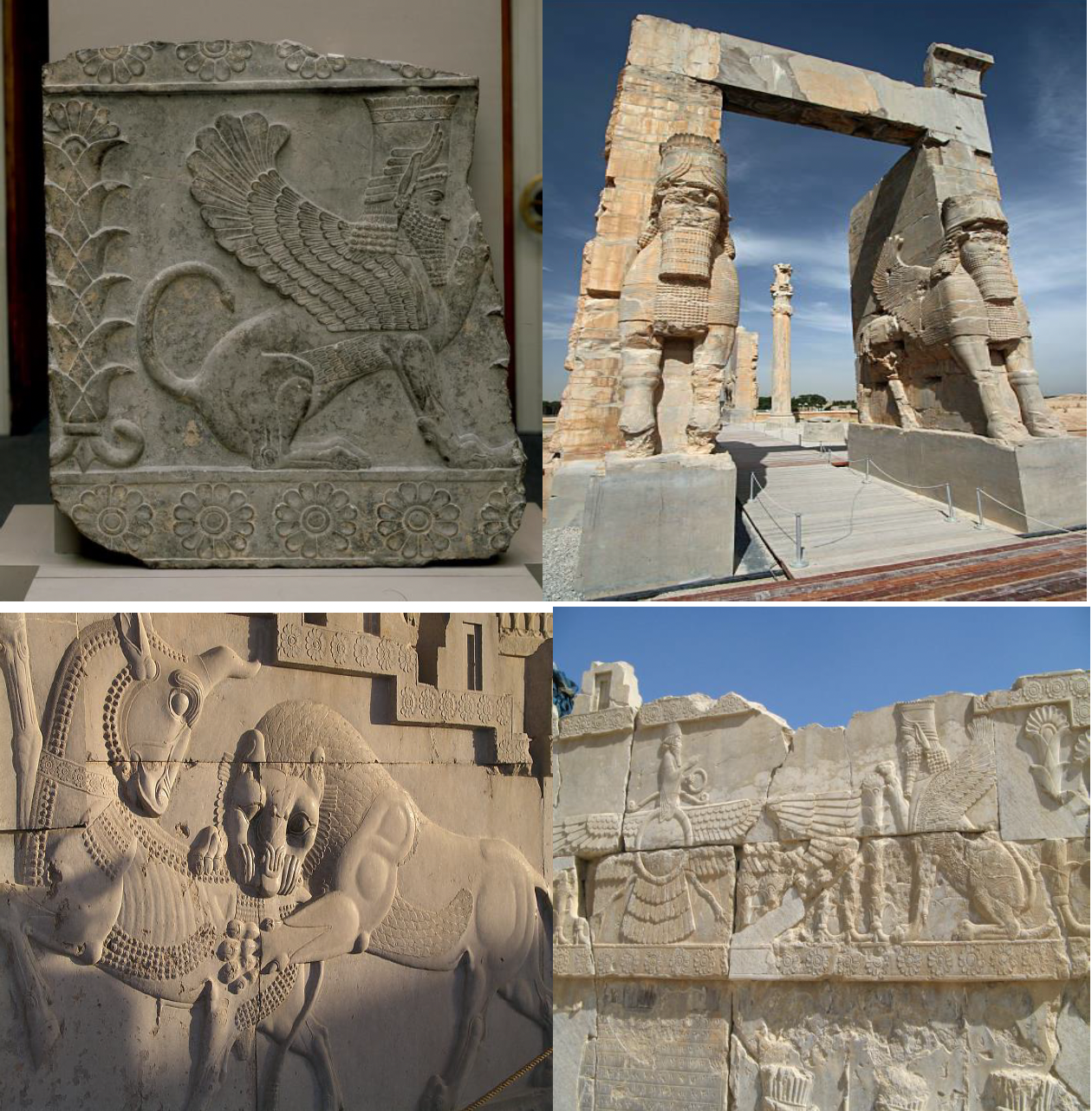
The Athens relief reminds us that empires may collapse, but peoples, traditions, artistic knowledge, and cultural memory often endure for centuries thereafter. The survival of distinct Assyrian iconographic elements in a Late Classical Greek context offers yet another indication that Assyrian civilization continued as a living cultural force long after the end of Assyrian political rule.
Source: Perseus Digital Library, Tufts University, Art & Archaeology Collection. Object record: “Relief with Assyrian Demons and Lions,” National Archaeological Museum, Athens.


