

These schools operate across Assyrian towns and villages in the Dohuk (Nohadra) region, the Nineveh Plain Region, and surrounding Assyrian areas. All core subjects, including mathematics, history, and the sciences, are taught entirely in the Assyrian language. More than three decades later, they remain among the few examples of comprehensive mother-tongue education available to an indigenous people in Iraq, serving as both centres of learning and pillars of Assyrian cultural and linguistic continuity. Today, 22 Assyrian schools funded by the Assyrian Aid Society remain operational across the region, while eight have closed in recent years due to sustained population decline in Assyrian villages.
Despite their significance, Assyrian schools continue to face chronic underfunding from both the Kurdish Regional Government and the federal government in Baghdad. Unlike Arabic or Kurdish public schools, where all teaching staff are fully funded by the state, Assyrian schools are required to independently cover the costs of additional lecturers needed to deliver instruction in Assyrian. This structural disparity places a heavy financial burden on the schools and significantly constrains their capacity to operate effectively. To help bridge this gap, the Assyrian Aid Society has assumed responsibility for funding lecturers’ wages, while other Assyrian organisations have stepped in to provide essential support.
Infrastructure presents another persistent challenge. Many school buildings are aging or in poor condition and depend on assistance from Assyrian charitable organisations such as the Shlama Foundation and Assyrians Without Borders for repairs, renovations, and basic supplies, responsibilities that would ordinarily fall under the remit of the state.
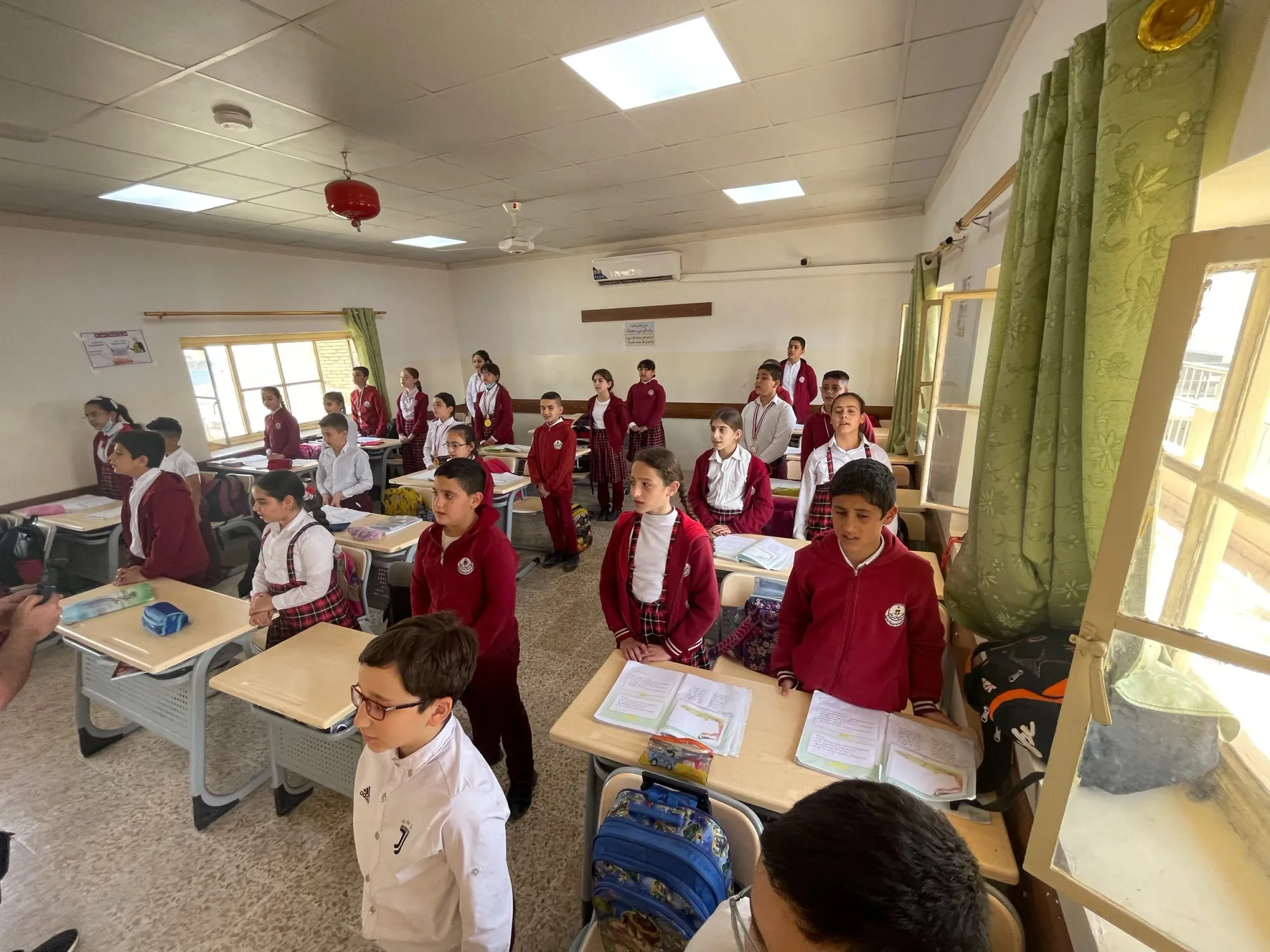
Remarkably, these schools have continued to produce strong academic outcomes despite these limitations. Data from the Assyrian Aid Society over the past 15 to 20 years shows that students from Assyrian public schools have achieved a university acceptance rate of 98 percent, significantly exceeding Iraq’s national average of 85 percent. Between 2005 and 2023, of Assyrian students admitted to higher education, 43 percent enrolled in universities ranked in the top quartile, 74 percent attended standard four-year universities, and 24 percent pursued studies at technical institutes.
These results underscore that Assyrian schools function as far more than educational institutions. They provide safe, culturally affirming environments that foster a strong sense of identity and belonging. For many students, learning in their ancestral language cultivates a deeper sense of responsibility to preserve their heritage, an awareness that motivates academic achievement not only for personal advancement, but for the collective future of the Assyrian community.
However, this model of mother-tongue education now faces an escalating external threat. The rapid expansion of private schools across Iraq has increasingly drawn Assyrian families away from the public system. As state schools continue to suffer from neglect by both the federal government in Baghdad and the KRG, private institutions, often offering superior facilities and English-medium instruction, have become more attractive to parents. While these schools may offer short-term academic advantages, their English-only curricula have coincided with a steady decline in the everyday use of the Assyrian language. Among younger generations, English is increasingly dominant in the home and social life, while Assyrian is marginalised, accelerating language erosion in the homeland.
This concern has been echoed by Noor Matti, board member and co-founder of the Shlama Foundation, who warned in an opinion piece for The Assyrian Journal that the shift toward English-medium private education risks producing generations of Assyrians disconnected from their ancestral language. Matti argues that without sustained investment in Assyrian-language public schools, linguistic loss becomes an unintended consequence of educational reform—particularly for indigenous communities already facing structural marginalisation.
 Noor Matti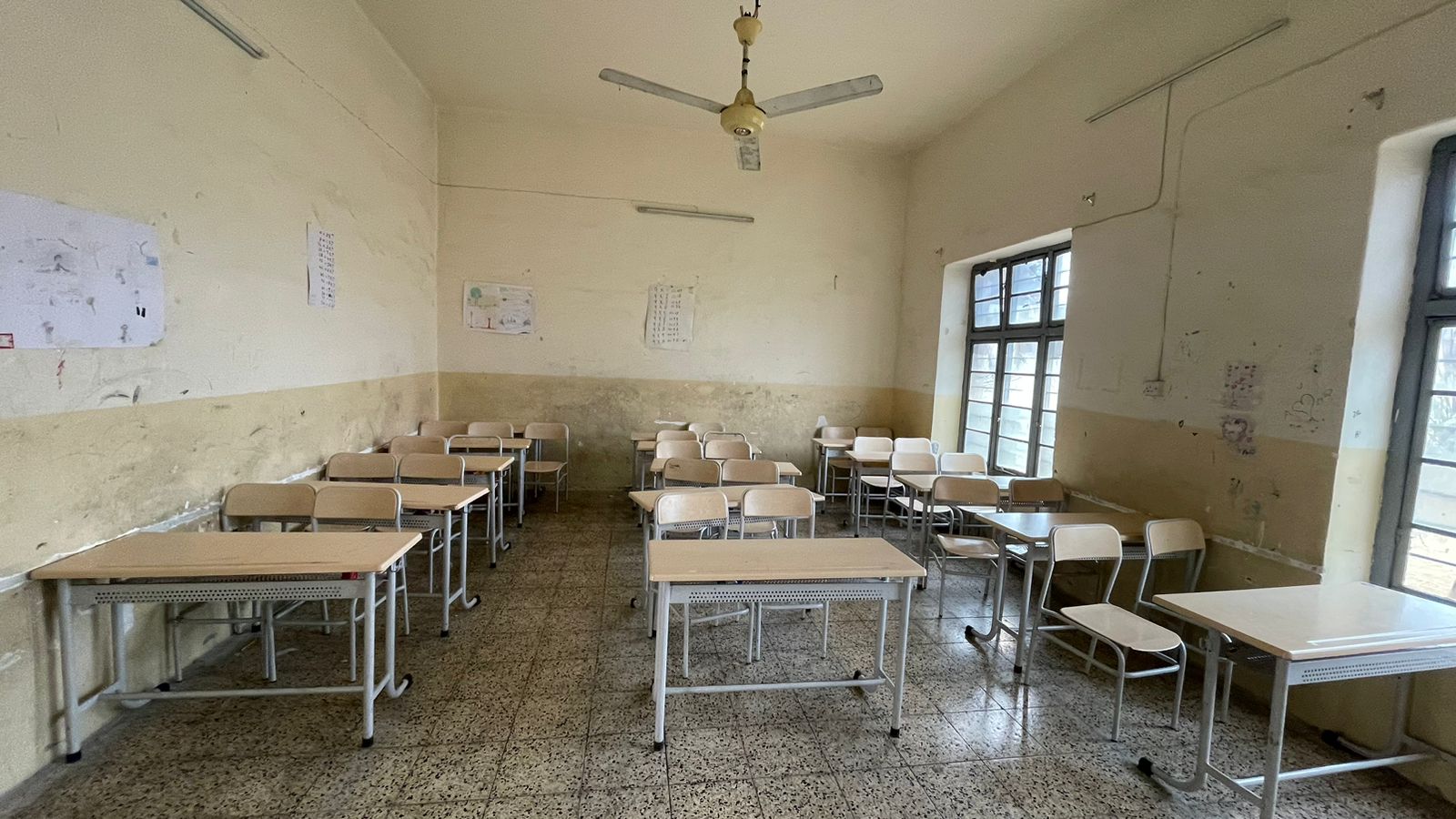
As Assyrian schools continue to operate under mounting financial, institutional, and demographic pressures, their survival remains inseparable from the survival of the Assyrian language itself. Without meaningful government support and long-term investment, one of the most significant achievements in modern Assyrian education risks gradual erosion, along with the cultural identity it was created to protect.


