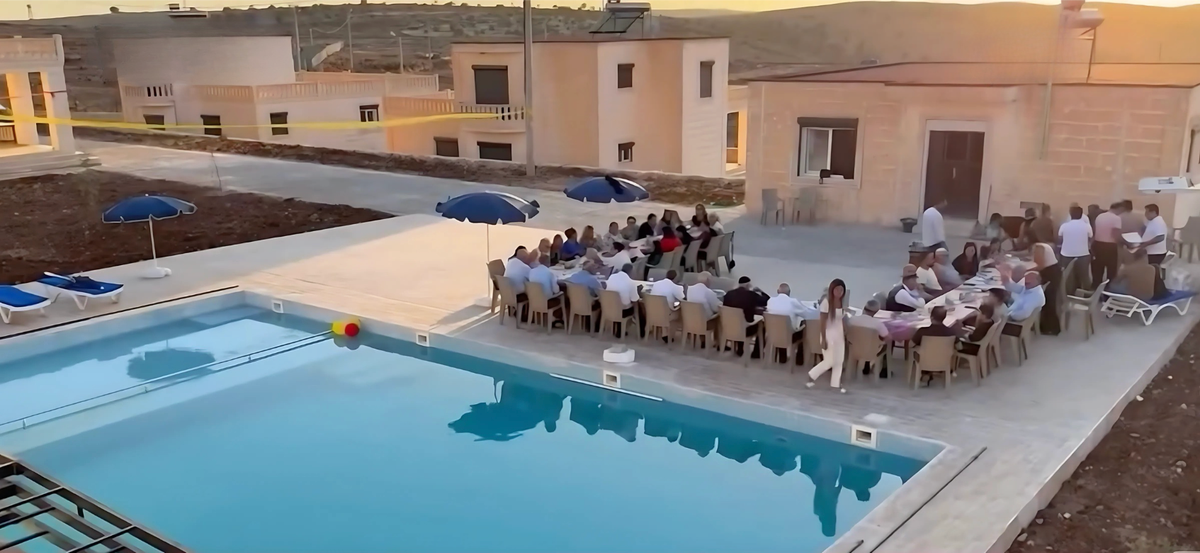
Villagers reject solar project threatening Turabdin heritage
Residents of the historic Assyrian village of Ayn Wardo (Gülgöze) in Tur Abdin are opposing a large solar power project planned by Turkey’s Ministry of Energy and Natural Resources, warning that it could damage farmland, grazing areas, and the region’s ancient cultural heritage.
The G25-Mardin Solar Power Plant, expected to generate 40 megawatts of electricity, is being built on village land traditionally used for agriculture and livestock. Local residents and diaspora Assyrians say the project threatens the fragile revival of Assyrian life in the region, where some families have recently returned and invested in restoring villages and heritage sites.
In an official objection, the Ayn Wardo Association stated that the project could harm water resources, disrupt farming activities, and negatively affect the village’s historic landscape and tourism potential. The group called on authorities to suspend the project and consult directly with residents.
Ayn Wardo is considered one of the most important Assyrian settlements in Tur Abdin, known for its ancient churches, traditional stone homes, and centuries-old religious heritage. Community leaders fear industrial development could permanently alter the character of the area.
A century after its official establishment, Qamishli remains one of the most important reminders of how Assyrians rebuilt their lives after the destruction of their ancestral communities in the Ottoman Empire.
Hundreds of members and supporters of three Assyrian political parties gathered in the Nineveh Plains town of Tel Keppe on Wednesday to protest what they described as ongoing demographic change, land seizures, and violations of property rights.
A growing number of Assyrians are returning to spend their summers reconnecting with family, heritage, and community. At the heart of this revival are the village bed-and-breakfasts that have become gateways home for Assyrians from across the diaspora.
The Assyrian Monitor for Human Rights has issued a statement condemning what it describes as arbitrary detention practices carried out by members of the Kurdish Asayish security forces in Qamishli, calling for the immediate release of four Assyrian detainees, including a German national.
Almost two years after his passing on September 17, 2024, the voice of Evin Agassi still echoes deeply within the hearts of many Assyrians. Agassi was more than a musician; he was a cultural bridge, a storyteller of homeland longings, and a unifying symbol for millions scattered across the globe.
Meet the man who has invested countless hours translating forgotten Assyrian magazines issued more than a century ago, and in the process discovered the thoughts and developments that continue to shape the Assyrian nation today.
A century after its official establishment, Qamishli remains one of the most important reminders of how Assyrians rebuilt their lives after the destruction of their ancestral communities in the Ottoman Empire.
The two oldest Assyrian church rites have been able to preserve their existence for more than fifteen centuries, putting them among the oldest existing organizations in the world.


 The Assyria Post