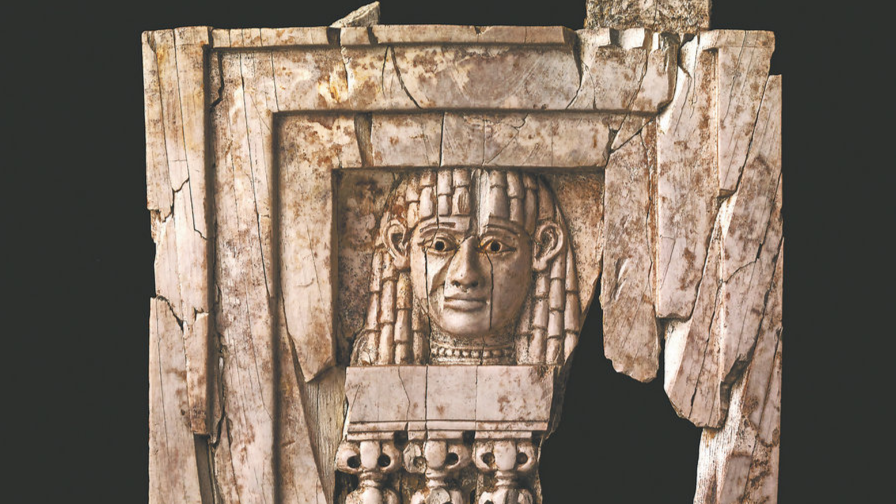
A king of ancient Assyria was relaxing with his queen in what's believed to be the queen's garden under the cool canopy of grape vines. Raising their cups to their lips, the king and queen — one reclined on a couch while the other sat on a throne — appeared to congratulate each other. For what?
Editor's pick This post is part of hand-picked stories from across the web, curated by the editors of the Assyria Post.
"Aided by his mighty troops, Ashurbanipal subjugated and terrorized neighboring countries, continuing a tradition long started by his ancestor kings including his grandfather Sennacherib and his father Esarhaddon, who handpicked his younger son Ashurbanipal to be his successor. To appease his resentful older son Shamash-shumu-ukin, Esarhaddon placed him on the throne of Babylonia, which at the time was a vassal state to Assyria."
A newly discovered Assyrian world chronicle from the early eighth century offers fresh insights into the political and religious upheavals from Late Antiquity to the rise of Islam.
According to an ancient Assyrian monument of the eleventh century BCE known as the Broken Obelisk (BM118898), the region of Kashiāri and mount Īzallā, were considered to be among the “mountains of Assyria”.
Iraqi Armenians and Assyrians share deep cultural ties rooted in the Fertile Crescent, from food and family traditions to common histories, showing how diverse communities in the region are connected despite different languages and identities.
During the observance of the Rogation of the Ninevites, Archbishop Yousif Thomas Mirkis made remarks regarding Assyrian civilization that have prompted reflection among scholars and the faithful regarding historical understanding and cultural memory.
US-born writer Johnny Shiba turned a college hobby into two books tackling history, fantasy, and identity. From preserving the Assyrian name to imagining a future Assyria, his work wrestles with what it means to endure—and to belong.
A newly discovered Assyrian world chronicle from the early eighth century offers fresh insights into the political and religious upheavals from Late Antiquity to the rise of Islam.
We're honoring Naum Faik Palak’s memory on his day of remembrance, 5 February, by publishing a translation of a special article he wrote more than one hundred years ago.
The Village of Skokie has approved a plan that will allow the Holy Apostolic Catholic Assyrian Church of the East to expand and build a dedicated worship space after years of waiting.