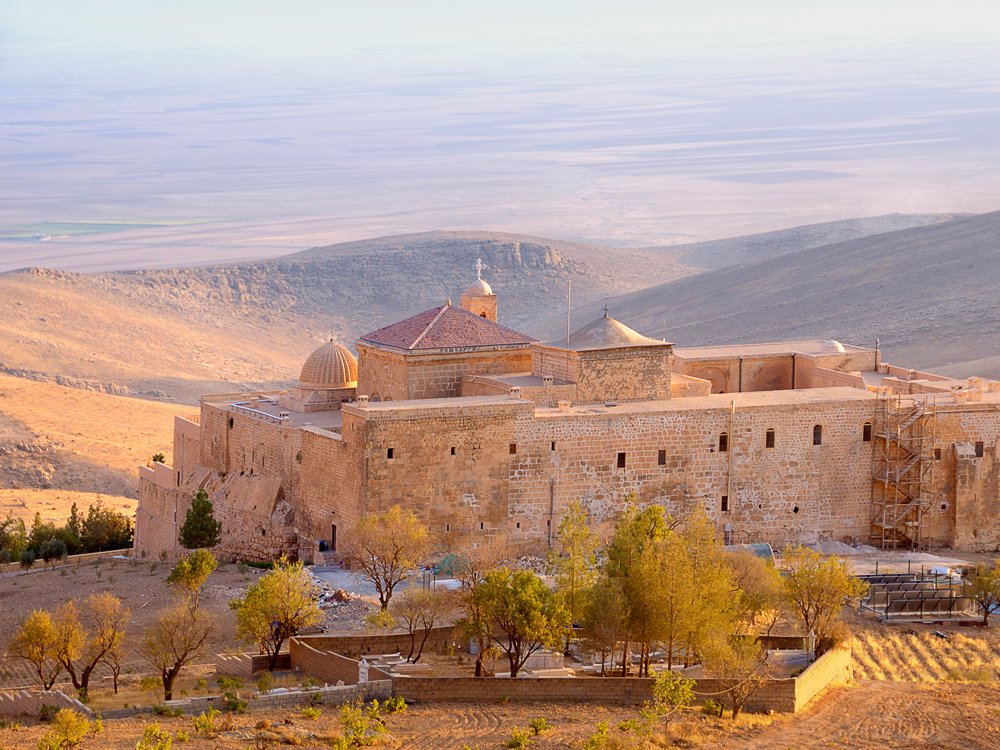
According to an ancient Assyrian monument of the eleventh century BCE known as the Broken Obelisk (BM118898), the region of Kashiāri and mount Īzallā, were considered to be among the “mountains of Assyria”.
Editor's pick This post is part of hand-picked stories from across the web, curated by the editors of the Assyria Post.
"According to an ancient Assyrian administrative text (SAA 12, 050), Rēmanni-Adad, the royal chariot driver of the Neo-Assyrian King Āshūrbānīpal (c. 685–631 BCE), and his household was a notable landowner at Īzallā operating multiple farmlands and vineyards. It was quite common for members of the Assyrian royal court as well as military to own property in this region.
According to another Neo-Assyrian text (SAA 14, 042), a temple was constructed in the vicinity of Mardīn (ancient: Mardiānē). Such evidence may demonstrate that Assyrian settlers exerted significant cultural influence among the diverse population groups in the region.
In addition to the introduction of indigenous cults, one may also find references to the inhabitants of Kashiāri adopting traditional Assyrian names. According to a Neo-Assyrian judicial text (BM 1883,0118.231), the ruler of “the city of Arkuḥi (modern-day Arkaḥ) in Kashiāri” reported “after my son has been born, I shall name him Āshūrbānīpal”.
It should be noted that, mount Īzallā was also renowned among the ancient Assyrians as a provider of wine. Excavations in this region as well as the area of Āmīd (modern-day Diyarbakır, Türkiye) have also unearthed the presence of ancient Assyrian trade colonies."
On August 7, 2026, Assyrian communities around the world observed the Day of Remembrance for Assyrian Martyrs. On this day, the victims of persecution and mass killings are commemorated, particularly those who perished during the Simele massacre in Iraq in 1933.
The best cookbooks offer more than recipes—they tell the stories of the people behind them, their heritage, and their struggles. That’s exactly what makes The Oldest Kitchen in the World by Matay de Mayee such a treasure.
In a collaboration between Ludwig Maximilian University of Munich (LMU) and the University of Baghdad, an ancient Babylonian hymn dating back over two millennia has been rediscovered and fully deciphered.
Almost two years after his passing on September 17, 2024, the voice of Evin Agassi still echoes deeply within the hearts of many Assyrians. Agassi was more than a musician; he was a cultural bridge, a storyteller of homeland longings, and a unifying symbol for millions scattered across the globe.
Meet the man who has invested countless hours translating forgotten Assyrian magazines issued more than a century ago, and in the process discovered the thoughts and developments that continue to shape the Assyrian nation today.
A century after its official establishment, Qamishli remains one of the most important reminders of how Assyrians rebuilt their lives after the destruction of their ancestral communities in the Ottoman Empire.
The two oldest Assyrian church rites have been able to preserve their existence for more than fifteen centuries, putting them among the oldest existing organizations in the world.


 ACSYA Inc.