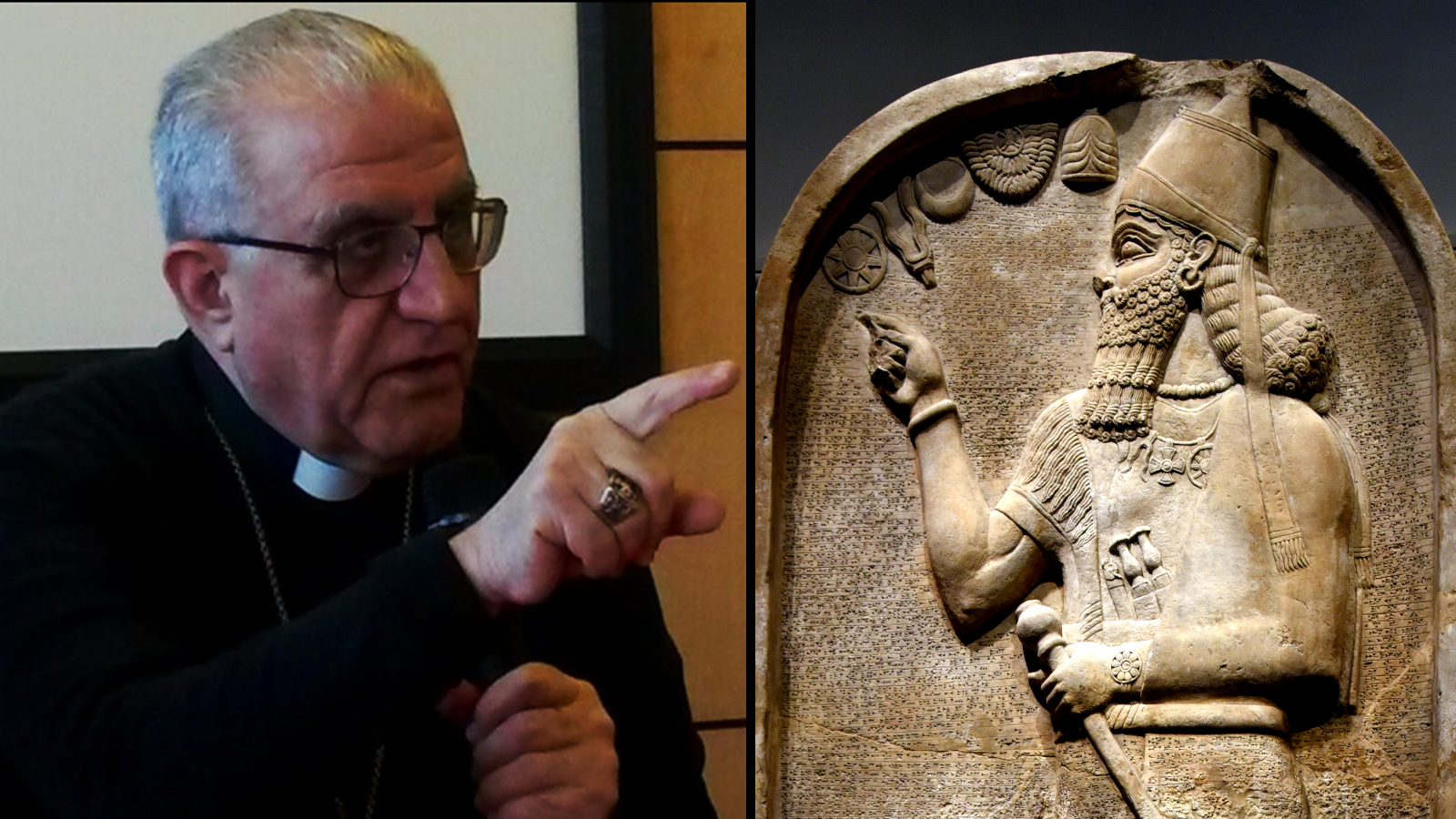
Archbishop’s Hostile Remarks Raise Concerns Over Historical Understanding of Assyrian Civilization
During the observance of the Rogation of the Ninevites, Archbishop Yousif Thomas Mirkis made remarks regarding Assyrian civilization that have prompted reflection among scholars and the faithful regarding historical understanding and cultural memory.
"Historically, the fast originated during a devastating plague that afflicted Mesopotamia and Assyria in the Sixth Century AD. The metropolitans of the East Syriac ecclesiastical provinces of Assyria or Adiabene (encompassing Arbil, Nineveh, and Hakkari) and Beth Garmaï (encompassing Kirkuk and the surrounding region) called for services of prayer, fasting, and penitence in all churches under their jurisdiction, following the example of the Ninevites. This tradition has been strictly observed for centuries. Patriarchs of both the Church of the East and Chaldean Catholic Church have also called for additional fasts to alleviate suffering in times of crisis, including during the persecution by ISIS in Nineveh and the broader Middle East."
An Assyrian family travels to Japan in search of Mrs. Apcar, uncovering the story of an extraordinary Assyrian woman whose life connects the Assyrian diaspora with Japan’s history. A journey into a little-known chapter of Assyrian heritage and global history.
In a personal reflection, Assyrian-American student Sabrina Bet-Mansour draws on her family’s history of displacement and migration to examine today’s immigration policies and the growing challenges faced by those fleeing violence and persecution.
A letter sent by Pope Paul V to Shah Abbas I of Persia in November 1612 refers to Christians in Isfahan as people “who are called Assyrians or Jacobites”. The document is an interesting piece of history that helps to shed light on how Assyrians were known in the old world.
A 2,800-year-old Assyrian monument from the Lower Khabur region offers compelling new evidence of the religious, artistic, and ceremonial traditions that flourished across the western territories of ancient Assyria.
Shlama Foundation has completed a major two-phase rehabilitation project benefiting two Assyrian schools in Baghdeda (Qaraqosh), providing approximately 400 students and teachers with a significantly improved learning environment for the new school year.
Authorities in Iraq’s Nineveh Governorate have named a street adjacent to an Assyrian church in Mosul after Father Bulos Iskandar, the Assyrian priest abducted and murdered in the city in October 2006.


 admin