A silver necklace featuring a lion figure and an eight-pointed star, believed to represent the Assyrian goddess Ishtar, has been unearthed during excavations at the ancient city of Amos in Mugla, southwestern Türkiye.
Editor's pick This post is part of hand-picked stories from across the web, curated by the editors of the Assyria Post.
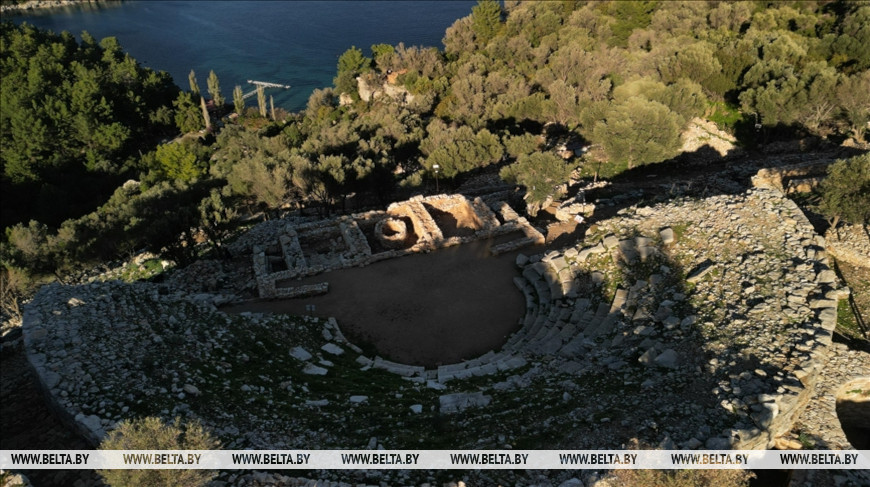
The artifact was discovered at the 2,200-year-old site, located on Asarcik Hill in the Marmaris district, where excavations have been carried out uninterrupted throughout 2025 under the leadership of archaeologist Mehmet Gurbuzer from Mugla Sitki Kocman University.
Gurbuzer told Anadolu that each excavation season brings new and exciting discoveries, noting that this year a silver necklace depicting the Assyrian goddess Ishtar, featuring a lion figure and an eight-pointed star, was uncovered.
He said the find, associated with Ishtar, known as “Inanna” in Sumerian culture, indicates that Amos once possessed significant cultural, economic and commercial power.
On August 7, 2026, Assyrian communities around the world observed the Day of Remembrance for Assyrian Martyrs. On this day, the victims of persecution and mass killings are commemorated, particularly those who perished during the Simele massacre in Iraq in 1933.
The best cookbooks offer more than recipes—they tell the stories of the people behind them, their heritage, and their struggles. That’s exactly what makes The Oldest Kitchen in the World by Matay de Mayee such a treasure.
In a collaboration between Ludwig Maximilian University of Munich (LMU) and the University of Baghdad, an ancient Babylonian hymn dating back over two millennia has been rediscovered and fully deciphered.
More than 200 letters, photographs and family records documenting Assyrian life in the Lake Urmia region have been digitized and will soon be made widely accessible through the University of California, Berkeley.
Almost two years after his passing on September 17, 2024, the voice of Evin Agassi still echoes deeply within the hearts of many Assyrians. Agassi was more than a musician; he was a cultural bridge, a storyteller of homeland longings, and a unifying symbol for millions scattered across the globe.
Meet the man who has invested countless hours translating forgotten Assyrian magazines issued more than a century ago, and in the process discovered the thoughts and developments that continue to shape the Assyrian nation today.
A century after its official establishment, Qamishli remains one of the most important reminders of how Assyrians rebuilt their lives after the destruction of their ancestral communities in the Ottoman Empire.