

Francis Yusuf Shabo, born in 1951 in Mangesh (Duhok Province), was a prominent member of the Assyrian Democratic Movement (ADM). He was elected to the regional parliament in Northern Iraq following the May 1992 elections, where he served on the parliament’s Economic Committee and was tasked with addressing complaints from Assyrians regarding disputed villages in the Bahdinan region, areas from which Assyrians had been displaced by the Iraqi government and later resettled by Kurdish communities.
A trained civil engineer and graduate of the University of Mosul, Shabo entered public service and politics during a period of major political transition in northern Iraq. Following the establishment of the regional parliament in 1992, he also served as a representative in the regional legislature, contributing to committees focused on economic affairs, planning, and development.
Within parliament, Shabo became widely known for his advocacy on behalf of Assyrian and Yazidi communities affected by land confiscation and demographic change. He consistently challenged illegal land seizures and called for the return of Assyrian villages and farmland to their rightful owners. His efforts earned broad recognition among Assyrians in Iraq and across the diaspora.
As an adherent of the Chaldean Catholic Church, Shabo also promoted Assyrian national unity, consistently rejecting sectarian divisions and advocating for greater solidarity across church affiliations.
According to the Assyrian Policy Institute, Shabo’s growing political profile placed him at risk amid the unstable security environment of early 1990s northern Iraq. He was shot dead on 31 May 1993 as he approached his home in Duhok.
In the same period, another Assyrian political figure was also assassinated in Duhok. Lazar Mikho Hanna (known as Abu Nasir), born in 1933 in Mangesh, was a member of the Iraqi Communist Party’s Central Committee for the Kurdish dominated region. He also served on a three-member committee responsible for overseeing the financial affairs of IKF, a Kurdish group. Hanna was shot dead near his home on 14 June 1993. No suspects were ever apprehended.
Concerns surrounding political assassinations in northern Iraq during this period were documented by human rights organisations. In a 1995 report, Amnesty International stated it had received “numerous allegations” attributing assassinations to special units operating within Kurdish political parties, including the KDP, the PUK, and the Kurdish Islamic Movement (IMIK). The report further noted a widespread belief that such operations could not have taken place without the “knowledge, consent or acquiescence” of senior party leadership, to whom security and intelligence structures were ultimately accountable. While Amnesty did not specifically investigate Shabo’s case, its findings provide broader context to allegations of politically motivated killings during that period.
For years, the identity of Shabo’s killers remained officially unresolved. In 2010, leaked Baath-era intelligence documents published by the Kurdish newspaper Hawlati reportedly linked the assassination to Wahid Koveli, a KDP-affiliated figure and Peshmerga commander. Despite repeated calls for accountability from Assyrian organisations, human rights advocates, and Shabo’s family, no criminal prosecution has followed.
The controversy deepened after Koveli was publicly honoured following his death in 2016. In 2017, a mural commemorating him was erected near the Assyrian town of Enishke, prompting widespread anger among Assyrians who viewed the tribute as deeply offensive and a reminder of the enduring lack of justice in the case.
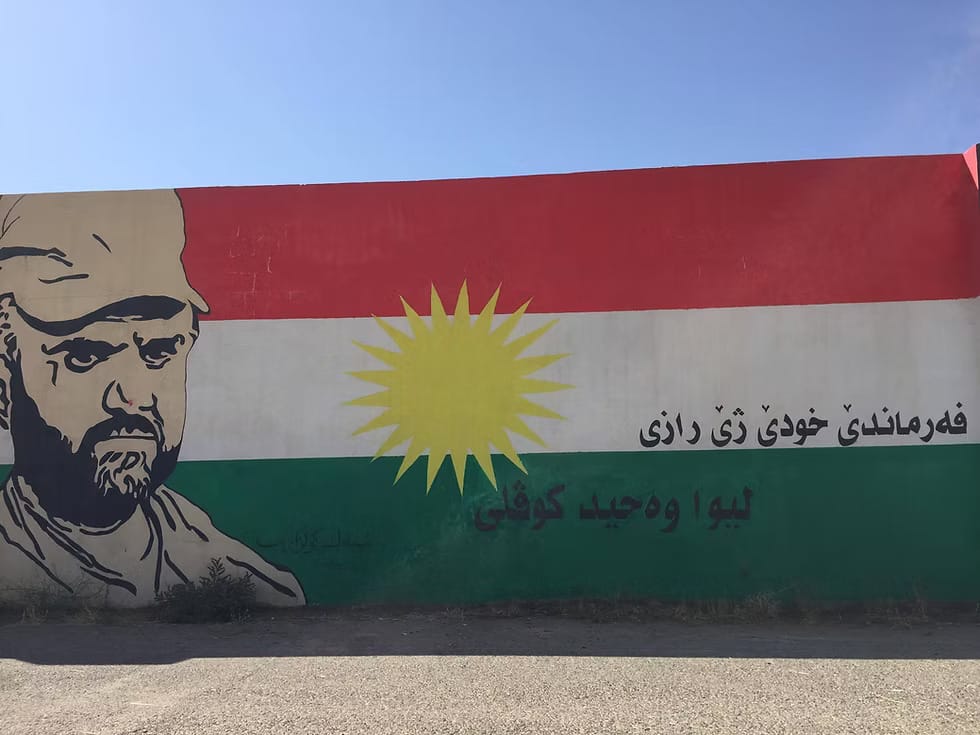
Human rights reports and Assyrian advocacy groups have frequently cited Shabo’s assassination as part of a broader pattern of intimidation, violence, and political pressure directed at Assyrian activists who challenged land confiscations and demographic change in the region.
More than 33 years after his death, Francis Yusuf Shabo remains a symbol of Assyrian political representation and resistance to the dispossession of Assyrian lands. His legacy continues to resonate among Assyrians who advocate for justice, self-determination, and the protection of their ancestral homeland.
Yet despite the passage of time, no individual has been convicted, no official accountability has been established, and the case remains one of the most prominent unresolved political assassinations in modern Assyrian history.


