

In a recent ceremony, Nineveh governor Abdulqadir al-Dakhil announced the beginning of rehabilitations of the Sacred Heart Church of Tel Keppe, one of the main towns of the Nineveh Plain Region. The announcement took place during a ceremony attended by Assyrian villagers and laymen in Tel Kepe.
The Sacred Heart Church is one of many churches to have been overrun by jihadists when ISIS controlled the Nineveh Plain beginning in the summer of 2014. Pictures have surfaced of the flag of IS perched onto the exterior of the church, and its historic cross torn down, while the town was under its control. After IS was defeated and banished from the Nineveh Plain, the church continued to remain in disarray. It is estimated in a report by the Assyrian Policy Institute that only 7% of Tel Kepe's original population remained in 2021. The reconstruction is expected to significantly impact the livelihood of Assyrians who still live in Tel Kepe, and reflect positively on other villages and towns in the Nineveh Plains region.
In addition, the Governor recently received the Superior General of the Chaldean Antonian Hormizdian Order and the overseer of its endowments, Bishop Dr. Samer Sourisho, along with a delegation from the Chaldean Community Foundation's Iraq Office. During the meeting the governor affirmed that the local government will begin the executive work to reconstruct the Church of the Monastery of Mar Gorgis during the coming month of April.
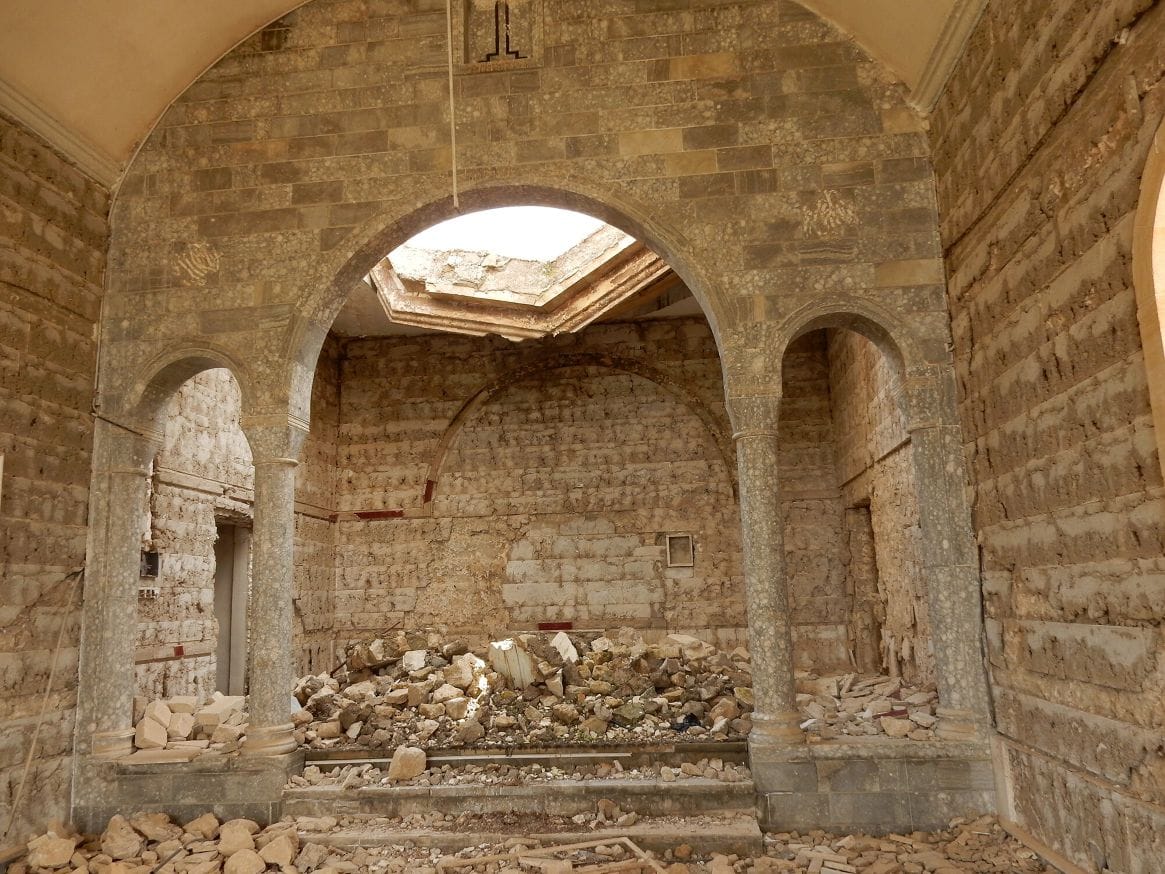
Since the defeat of ISIS, only a limited number of Assyrian Christian sites in Mosul and the Nineveh Plain Region have been reconstructed. Major landmarks such as Al-Tahera Church and Al-Saa’a Church in Mosul have been restored under UNESCO’s “Revive the Spirit of Mosul” initiative, while St. George’s Monastery has also been rebuilt. In contrast, many village churches across the Nineveh Plain remain damaged or in ruins, highlighting the slow and uneven pace of post-ISIS reconstruction.


