Editor's pick This post is part of hand-picked stories from across the web, curated by the editors of the Assyria Post.
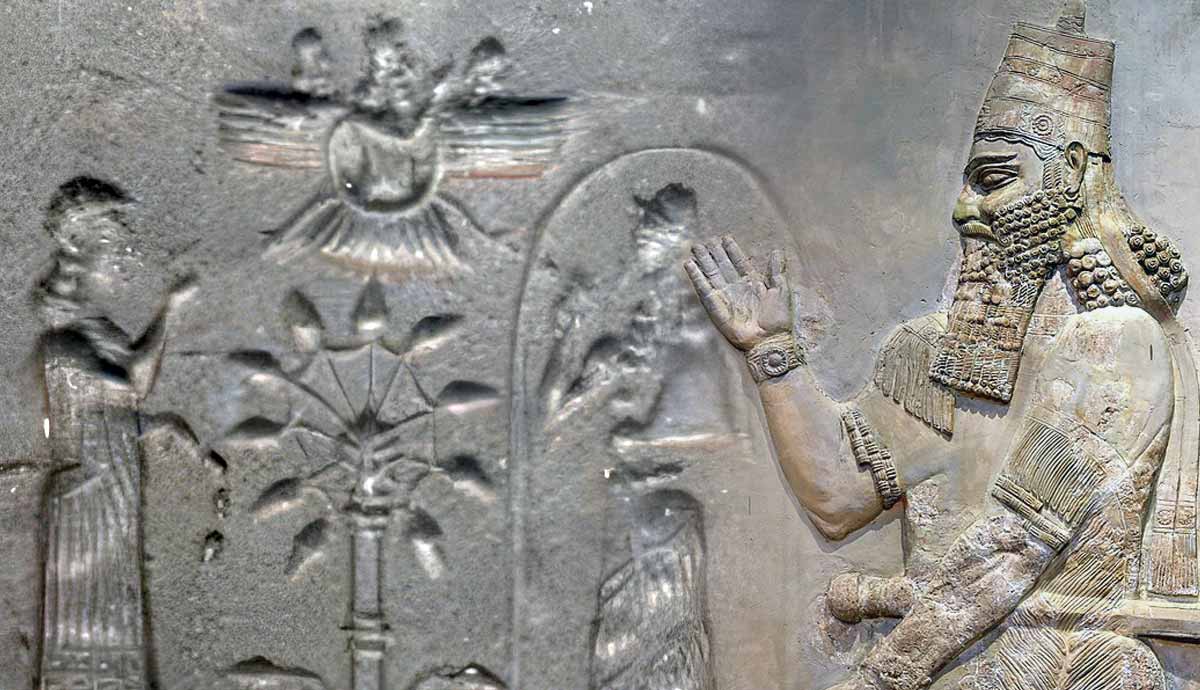
The reign of Tukulti-Ninurta I was a hallmark of what was to come in the arsenal of Neo-Assyrian subjugation. Before his war with Babylon, Tukulti-Ninurta I presented himself as the king who would restore the will of the gods, thereby justifying his attack. The relationship between the Assyrian ruler and the Assyrian pantheon had been notable since the start of the Old Assyrian period, when the leader was given the title “governor on behalf of Assur.”
By the height of the Neo-Assyrian Empire, the king was essentially the mouthpiece of the gods, acting as their representative on earth. The Assyrians had adopted the ancient concept of divine kingship from the Sumerians and Akkadians, and it is constantly emphasized in art and inscriptions from that time."
For the first time in the city’s history, the flag of Assyria will rise alongside the banners of other countries at the Sculpture Park on McCormack Boulevard.
Historian Themistocles Kritikakos offers the first comprehensive comparative study of Armenian, Greek and Assyrian Genocide recognition efforts in 21 century Australia.
A king of ancient Assyria was relaxing with his queen in what's believed to be the queen's garden under the cool canopy of grape vines. Raising their cups to their lips, the king and queen — one reclined on a couch while the other sat on a throne — appeared to congratulate each other. For what?
A newly discovered Assyrian world chronicle from the early eighth century offers fresh insights into the political and religious upheavals from Late Antiquity to the rise of Islam.
Four Assyrian-Americans have emerged as visible figures within Donald Trump’s MAGA movement, gaining prominence across politics, media, and conservative activism.
For the first time in the city’s history, the flag of Assyria will rise alongside the banners of other countries at the Sculpture Park on McCormack Boulevard.
Historian Themistocles Kritikakos offers the first comprehensive comparative study of Armenian, Greek and Assyrian Genocide recognition efforts in 21 century Australia.
US-born writer Johnny Shiba turned a college hobby into two books tackling history, fantasy, and identity. From preserving the Assyrian name to imagining a future Assyria, his work wrestles with what it means to endure—and to belong.


 Heather Reilly