Assyrian representatives and officials from the Kurdish Regional Government (KRG) held a ceremony on January 4 for the laying of the foundation stone for a memorial dedicated to the victims of the 1933 Simele massacre in which thousands of Assyrians were murdered. The ceremony, however, was quickly overshadowed by chauvinistic remarks made by a Kurdish official, as well as reports of a KRG plan to confiscate a vast area of Assyrian-owned land in the nearby village of Bakhtme.
Speaking at the ceremony, the Kurdish Governor of Duhok, Ali Tatar, described the Assyrians who perished in the Simele massacre as martyrs of the land of the Kurds. His statement sparked widespread anger among Assyrian commentators. Khlapeel Benjamin, an Assyrian journalist and political activist based in northern Iraq’s Assyrian region, commented: “What happened today was not an honoring of our most sacred cause, the Simele Massacre, but a cheap attempt to stone it and bury it beneath the dirt of political courtesies, silencing the voices of the victims’ descendants with a monument devoid of recognition.” He added: “We are not ‘Koerdestanis’, this is a political term imposed upon us. We are Assyrians: a people with a cause, a people of the land, and a people whose blood has not dried.”
Assyrian researcher and writer Max J. Joseph commented: "Assyrians have become so politically disempowered, even our martyrs are easily appropriated into another national story by those actively erasing our history and existence."
The absence of the main Assyrian political party, the Assyrian Democratic Movement, from the ceremony also drew attention. Assyrian author and researcher Frederick Aprim questioned the religious framing of the event, where church officials took center stage, asking: “Is the Simele Massacre an Assyrian national issue or a church-denomination matter under the auspices of the partial perpetrators, the Kurds?” His comment referred to the fact that Kurds participated in the massacre.
“Giving crumbs with one hand and stealing loaves with the other”
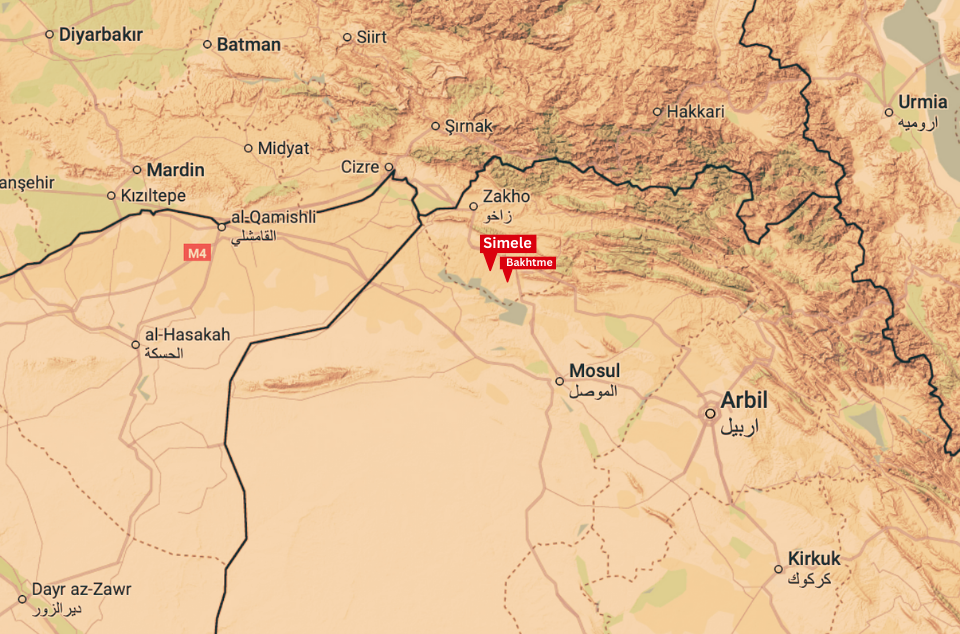
News of plans by the Kurdish Regional Government to seize large swaths of land belonging to the Assyrian village of Bakhtme, located just a few kilometers south of Simele, cast another shadow over the ceremony.
Several Assyrian commentators pointed to what they described as a double play by the KRG: donating a small plot of land for a memorial while simultaneously advancing plans to confiscate a much larger area of Assyrian-owned land.
 The Assyria Post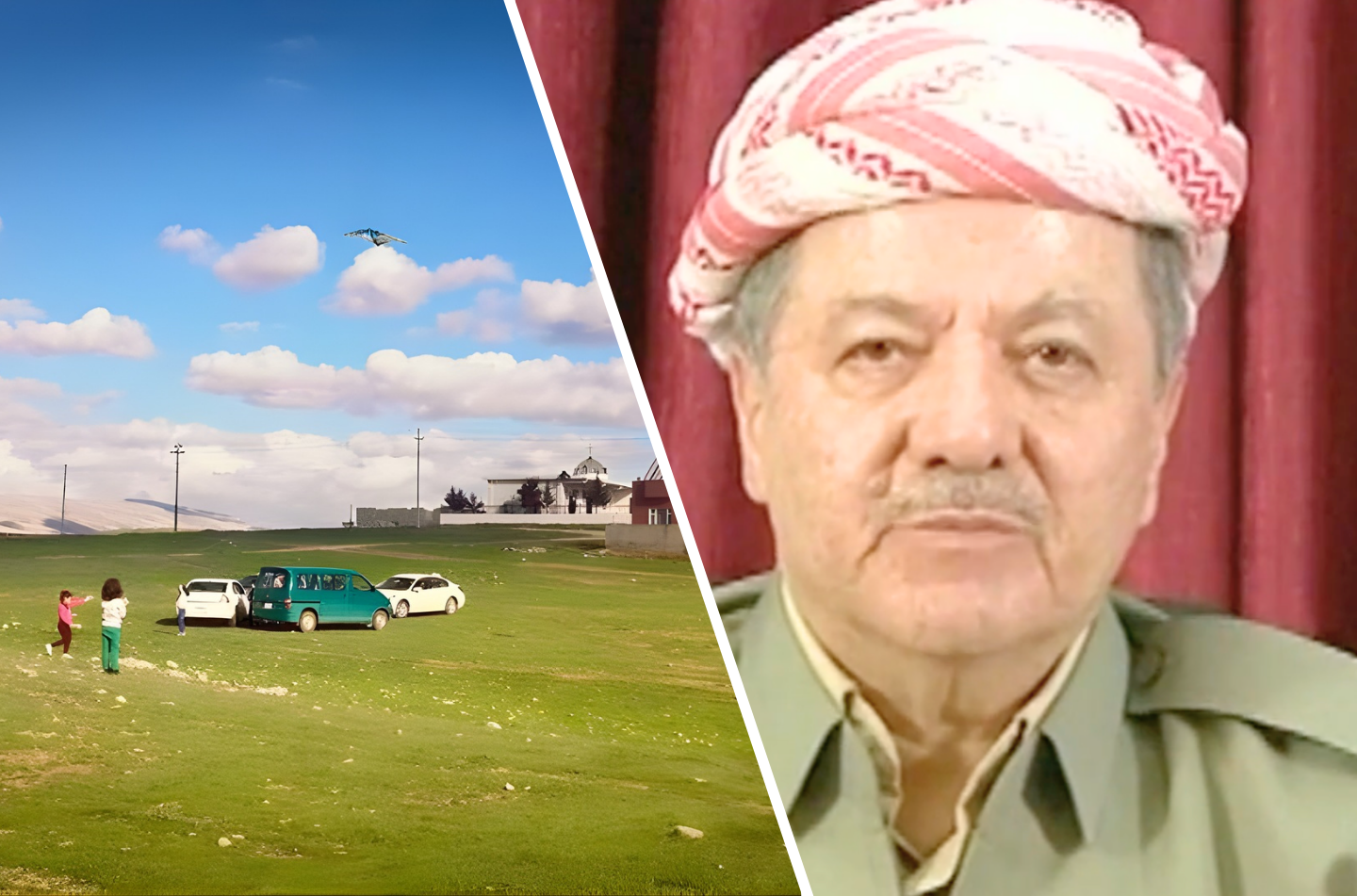
According to Assyrian analysts, the timing of the stone-laying ceremony and the emergence of news about the pending land seizure in Bakhtme is not coincidental. They argue that this reflects a familiar political maneuver – diverting attention from an ongoing transgression by promoting a gesture framed as positive or symbolic.
Kurdish media outlets, meanwhile, published favorable coverage of the ceremony but have so far remained silent on the reported plans to confiscate Assyrian land.
The symbolism has not gone unnoticed as Bakhtme was originally settled by Assyrians who fled in the aftermath of the Simele massacre. “It is tragicomic,” noted Augar Dashto, an older Assyrian with origins from Bakhtme now living in Australia, “that they intend to seize land from a village whose people are descendants of those who were displaced by Simele, while simultaneously using a planned memorial for the same massacre to boast of so-called tolerance.”
The Simele massacre refers to the killing of thousands of Assyrians by the Iraqi army and local Kurds in August 1933, primarily in the town of Simele and surrounding Assyrian villages in northern Iraq's Assyrian region. The killings followed years of anti-Assyrian actions by Arabs and Kurds in the newly formed state of Iraq and following the ending of the British mandate.
 The Assyria Post