

Every case resolved fairly can rebuild confidence. A family that regains its rights can give others in the diaspora reason to believe that returning is possible.
Before asking people to return to their homeland, we must ensure that they can build a life there with confidence that their rights will be protected. How can anyone be expected to return if they cannot be sure of keeping their home, cultivating their land or passing their family inheritance on to their children?
The Assyrians’ connection to Tur Abdin has endured across countries and generations. A village name, the sound of a church bell or a few words learned from one’s mother can bring that homeland close again. But for the desire to return to become a lasting reality, legal security is essential. Unresolved property rights remain a major obstacle.
At a meeting I attended a few days ago in Delmenhorst, Germany, an elderly Assyrian man, about 75 years old, put the issue plainly to a delegation visiting from Turkey. I recount his words here, preserving their meaning:
“Mr Chairman, you tell us, ‘Come, return to your homeland.’ We want to return too. But if we return and cannot sow wheat on our own land, how are we supposed to eat our famous Assyrian bulgur? If we cannot cultivate our land, how are we to earn our livelihood?”
For a moment, no one in the room knew how to respond.
In the language of the land and everyday life, he had captured a problem that has filled reports and legal files for years. His question was about more than wheat or bulgur. He was asking whether he could once again make a living in the place he called home.
Assyrian families who left their villages amid pressure, insecurity and conflict carried with them the hope of returning one day. Yet when some returned years later, they found that land used by them or their ancestors had been registered as state land, forest or pastureland.
Years abroad, an inability to participate in land registration procedures, missed official notices and difficulties obtaining old documents made it harder to assert their rights. Some learned what had happened only after the deadlines for applications and objections had expired. Their journey home became a struggle through documents and court proceedings before it could even begin.
Knowing a field’s boundaries through family memories is one thing; proving rights to it in official records is another. Bridging that gap can consume years and savings.
Each property’s legal status must, of course, be assessed on its own evidence. But when similar problems recur across different villages, leaving individual families to bear the cost and uncertainty of lengthy proceedings makes calls for return less likely to succeed.
A village house, vineyard or field carries the memories and labour of generations. Uncertainty over its ownership also weakens trust in Turkey’s institutions. Every unresolved case may mean a postponed return, a house left unrepaired or an investment abandoned.
Time makes these difficulties harder to resolve. Those who remember old boundaries and the history of their villages are growing older. As their knowledge is lost and younger generations become more distant from the homeland, the possibility of return may fade with it.
If Turkey’s calls for return are to lead to lasting resettlement, the relevant state authorities must make the property rights issue a priority and take responsibility for coordinating a solution.
Disputes should be examined thoroughly and transparently, with land registers, archival documents and evidence of historical land use considered together. The authorities should establish a clear process with a published timetable and meaningful participation by community representatives.
Where ownership is established, the aim should be to restore property to its rightful owners. Where restitution is not possible, fair and transparent compensation arrangements should be available. Those unable to participate in earlier proceedings should have access to effective procedures for examining their claims. Measures should also be taken to prevent further harm while disputes are under review.
Every case resolved fairly can rebuild confidence. A family that regains its rights can give others in the diaspora reason to believe that returning is possible.
The return of Assyrians would also bring lasting benefits to the region. A dynamic community with diverse skills, entrepreneurial experience and international connections could contribute to local businesses, employment and economic prosperity. Their presence would enrich the region’s cultural diversity, while the revival of village life, traditions and crafts could strengthen tourism and create new opportunities for all who live there.
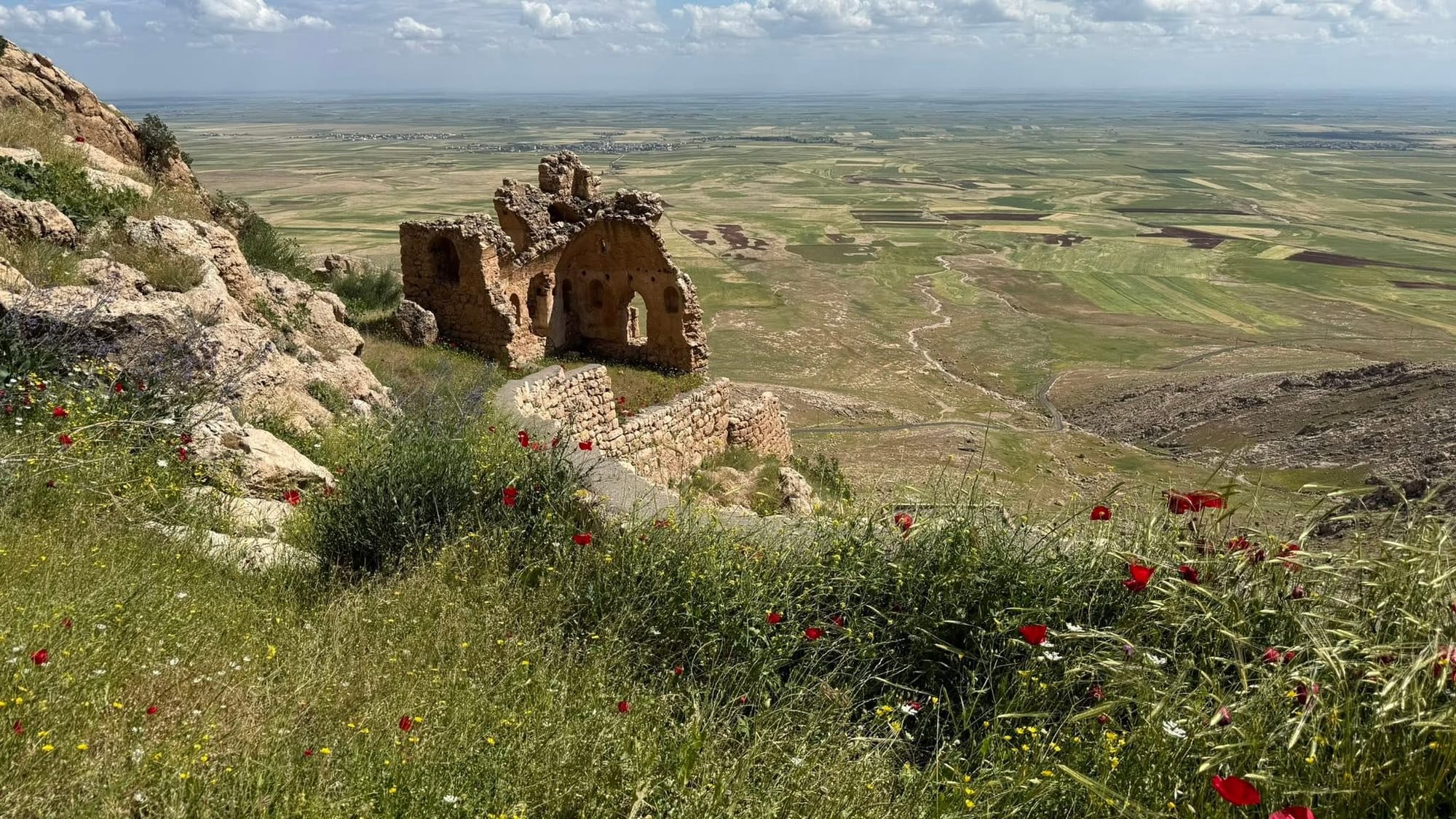
Resolving these disputes would help preserve more than Tur Abdin’s historic buildings. It would help bring life back to its villages: children’s voices around Mor Gabriel, our language spoken in homes, and ears of wheat rising once more in the fields.
The question asked by our elderly compatriot in Delmenhorst remains before us. The answer will show whether calls for return are becoming a real possibility for the people being invited home.
One day, we must be able to answer him without hesitation:
“You will be able to cultivate your land in security, live in your own home and share, around the same table with your children, the bulgur made from your own wheat.”


