

For more than three decades, Assyrian political advocacy has been remarkably consistent in the language it speaks. Whether addressing the United Nations, Western governments, churches or human rights organizations, the message has revolved around a set of compelling and entirely legitimate claims: the Assyrians are an indigenous people; they survived genocide; they continue to face persecution; they represent one of humanity's oldest living civilizations; and they deserve protection, recognition and the right to self-governance in their ancestral homeland.
Over the years, they have also achieved something significant. Today, few serious observers dispute the indigenous status of the Assyrian people or the scale of the historical injustices committed against them. Recognition of Seyfo has steadily expanded. The destruction of Christian communities in Iraq and Syria has been widely documented. Minority protection and religious freedom have become established themes in international discussions about the Middle East.
Yet despite this growing recognition, one political objective has remained elusive: a territorially anchored Assyrian administrative region in the Nineveh Plain. This should force us to ask an uncomfortable question.
If the moral legitimacy of the Assyrian cause is increasingly acknowledged, why has it not translated into political reality?
The answer may not lie in the strength of the Assyrian case itself, but in the changing nature of geopolitics itself.
Recognition is not strategy
The post-Cold War era created a political environment in which international legitimacy often flowed through the language of universal values. Human rights, minority protection, indigenous recognition and international law became the principal vocabulary through which stateless peoples sought political support. The Assyrian movement adapted successfully to that environment. But while this strategy generated sympathy, it rarely generated institutions.
The international community may recognize historical injustice, but governments rarely reorganize territories because injustice has been acknowledged. They do so when institutional change advances broader strategic interests. But moral legitimacy alone has proven insufficient to produce the political outcome successive generations have pursued. The challenge, therefore, is not to abandon the language of rights. It is to become equally fluent in another language: the language of statecraft.
A different Middle East is emerging
A series of recent analyses published by The National Context offers an intriguing explanation for what may be unfolding across the Middle East. Whether one agrees entirely with its conclusions or not, the framework deserves serious consideration because it identifies a broader pattern.
Its central argument is deceptively simple: the organizing principles of the Middle East are changing. For decades, regional politics revolved around competing nationalist projects. The dominant questions were territorial: Who should control which land? Which nation would emerge stronger? Could stateless peoples eventually achieve statehood?
Today, a different logic appears to be taking shape. Increasingly, regional and international powers seem less interested in supporting large nationalist projects than in stabilizing strategically important territories within existing states. The question is no longer simply who governs a territory, but what function does that territory perform?
This represents a profound shift. Territories are increasingly evaluated according to the contribution they make to regional stability, economic integration, infrastructure, energy security and governance. Identity still matters, but function increasingly shapes policy. These are becoming the organizing concepts of regional policy. If this diagnosis is correct, then it represents more than a change in policy. It represents a change in geopolitical grammar.
The Kurdish example
The Kurdish question offers perhaps the clearest example of this transformation. For decades, policymakers tended to speak about "the Kurdish question" as though it represented a single geopolitical project stretching across Türkiye, Iraq, Syria and Iran. Supporters envisioned a unified national movement. Opponents often viewed it as a single security threat. Although Kurdish politics was always more complex than this, the dominant strategic assumption treated "the Kurds" as one geopolitical file.
Recent analyses suggest that this assumption no longer reflects how regional and international powers approach the issue. Increasingly, Washington, Ankara, Baghdad and Damascus appear to differentiate between Kurdish-administered territories according to the strategic functions each performs rather than treating them as components of one nationalist project.
The KRG region of Iraq is increasingly approached as a constitutionally recognized component of the Iraqi state. Recent negotiations concerning customs, energy exports and federal authority point towards deeper institutional integration with Baghdad rather than preparation for independence.
In Syria, Washington's emphasis has similarly shifted. Rather than advocating an independent Kurdish entity, American diplomacy increasingly encourages negotiated arrangements through which local administrations can operate within a sovereign Syrian state.
Tom Barrack, the U.S. ambassador to Türkiye and special envoy for Syria and Iraq, has repeatedly described the three countries as a strategic “fulcrum.” This framing reflects precisely the emerging logic: differentiated forms of local governance anchored within stronger state structures.
Ankara itself illustrates this differentiation. It maintains deep political and economic relations with the KRG while simultaneously treating the PKK as an existential security threat. Increasingly, this differentiation extends even within the Iraqi Kurdish held region. Rather than approaching the KRG as a single political entity, Türkiye is developing distinct policies towards Erbil and Sulaymaniyah, reflecting their different regional functions. Its growing engagement with the PUK is driven in part by the party's close relationship with the PKK, making dialogue a strategic necessity, but also by Sulaymaniyah's growing importance for regional energy development and its closer integration with Baghdad. Such an approach would have made little sense if Ankara still viewed the Kurdish question primarily through the lens of a single nationalist project.
None of these developments suggest that Kurdish identity has become less important. Rather, they indicate that identity alone no longer determines regional policy. Increasingly, territories are evaluated according to the institutional role they perform within recognized states. The debate has quietly shifted from nationalist aspiration to institutional design.
For Assyrian policymakers, the significance of this development extends far beyond Kurdish politics. If the emerging regional order increasingly evaluates territories according to the functions they perform rather than the identities they represent, then the strategic environment surrounding the Nineveh Plain has fundamentally changed as well.
The Nineveh Plain in the emerging regional order
This does not mean the traditional Assyrian narrative was mistaken. The human rights framework was the right strategy for the post-Cold War era, when Western engagement was largely framed around democracy, minority rights and humanitarian protection. It secured international recognition for the Assyrian cause. The challenge today is different: the geopolitical environment itself has changed.
For decades, Assyrians have explained why they deserve a region. The more pressing question now is why regional states would benefit from one.
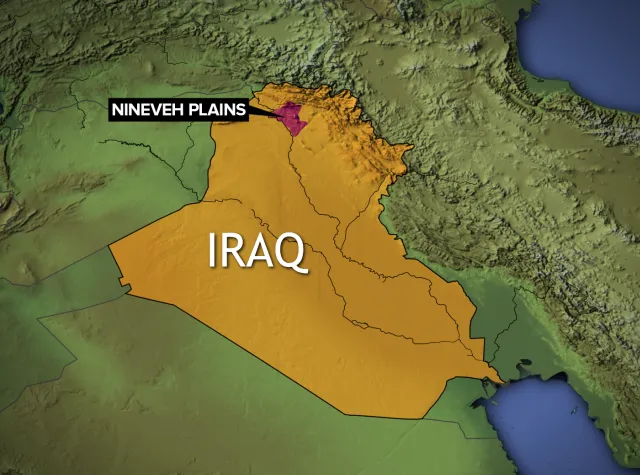
Viewed through this lens, the Nineveh Plain is more than the historic homeland of the Assyrian people. Like Erbil, Sulaymaniyah and northeastern Syria, the Nineveh Plain should increasingly be understood as a governance space rather than simply an ethnic homeland. It is one of northern Iraq's most consequential governance spaces. Located within Iraq's disputed territories, it is marked by overlapping authority, fragmented security structures and institutional ambiguity, problems that extend well beyond the Assyrian community.
An Assyrian administrative region anchored within Iraq's constitutional framework should therefore be understood not only as a minority rights proposal, but as a governance proposal. It could clarify authority in one of Iraq's most contested regions, strengthen accountable local administration, facilitate reconstruction, improve regional connectivity through the Mosul-Dohuk-Türkiye corridor and contribute to the long-term stability of northern Iraq.
The economic dimension
The strategic value of such an arrangement would also be economic. A more stable and accountable Nineveh Plain could create better conditions for reconstruction, private investment, agricultural development, local employment and cross-border trade. For Assyrian policymakers, this would help make return and long-term demographic recovery more viable. For Baghdad, it would strengthen local economic participation and reduce dependence on patronage networks.
For Türkiye and the KRG, greater stability along the Mosul–Dohuk–Türkiye corridor could support trade, infrastructure and regional connectivity. Economic development would therefore not be an additional benefit of self-government; it would be one of the functions through which an Assyrian-administered region could demonstrate its value to the wider regional order.
None of these objectives require independence or redrawing internationally recognized borders. All strengthen the Iraqi state while providing the institutional foundation for Assyrian self-government.
Identity explains why the Nineveh Plain matters to Assyrians. Strategic function explains why it should matter to Baghdad, Ankara, Washington and Erbil. That distinction may appear subtle, but it fundamentally changes how the Assyrian cause should be presented.
The internal challenge
The external case for an Assyrian administrative region cannot be separated from the internal capacity to pursue it. The absence of a broadly representative political body remains one of the principal obstacles facing the Assyrian cause. Regional governments are unlikely to invest in a proposal if they are uncertain who can articulate it, negotiate its terms or assume responsibility for its implementation.
Precisely because the Assyrian movement lacks a single representative institution, a shared strategic framework becomes more rather than less important. Political language can create coherence before political structures do.
What is required first is agreement on a limited set of strategic principles: that self-government must remain anchored within the Iraqi state; that it should strengthen rather than weaken Iraqi cohesion; that local institutions must be accountable and inclusive; and that the Nineveh Plain should be presented as a space of governance, stability and economic connectivity.
Agreement on a common strategic framework would allow different institutions to contribute according to their comparative strengths. Some may engage governments, others develop constitutional proposals, conduct research, build economic partnerships or represent the cause internationally. Representation would become a coordinated ecosystem rather than the responsibility of a single organization.
A representative body may remain a long-term aspiration. But strategic coherence need not wait for institutional unity. Political language can create coherence before political structures do. If Assyrian institutions begin speaking the same strategic language, they will not only strengthen the external case for self-government— they will also begin strengthening the institutions capable of exercising it.
"These audiences rarely begin by asking whether Assyrians deserve self-government. They ask whether a proposed governance arrangement strengthens state cohesion, regional stability and long-term strategic interests."
Towards an Assyrian statecraft
This strategic turn therefore requires change at two levels: in how Assyrian diplomacy address regional powers, and in how Assyrian institutions coordinate among themselves. It requires more than a change in language; it requires a new diplomatic orientation.
For decades, Assyrian advocacy has focused primarily on churches, human rights organizations and international institutions. Those relationships remain indispensable, but they should increasingly be complemented by engagement with foreign ministries, constitutional experts, security planners and economic policymakers in Baghdad, Ankara, Washington and Brussels. These audiences rarely begin by asking whether Assyrians deserve self-government. They ask whether a proposed governance arrangement strengthens state cohesion, regional stability and long-term strategic interests.
Assyrian policymakers must therefore become bilingual: continuing to speak the language of justice while becoming equally fluent in the language of statecraft.
If this diagnosis is correct, then the Assyrian movement stands at an important crossroads. It can continue asking the world to recognize why Assyrians deserve an administrative region, or it can demonstrate why an Assyrian-administered Nineveh Plain would strengthen Iraq, enhance regional stability and perform functions that neighboring peoples and states have an interest in preserving.
The first argument secures recognition. The second has the potential to secure institutions. History gives the Assyrian cause its legitimacy. Strategic relevance may yet secure its future.


