Editor's pick This post is part of hand-picked stories from across the web, curated by the editors of the Assyria Post.
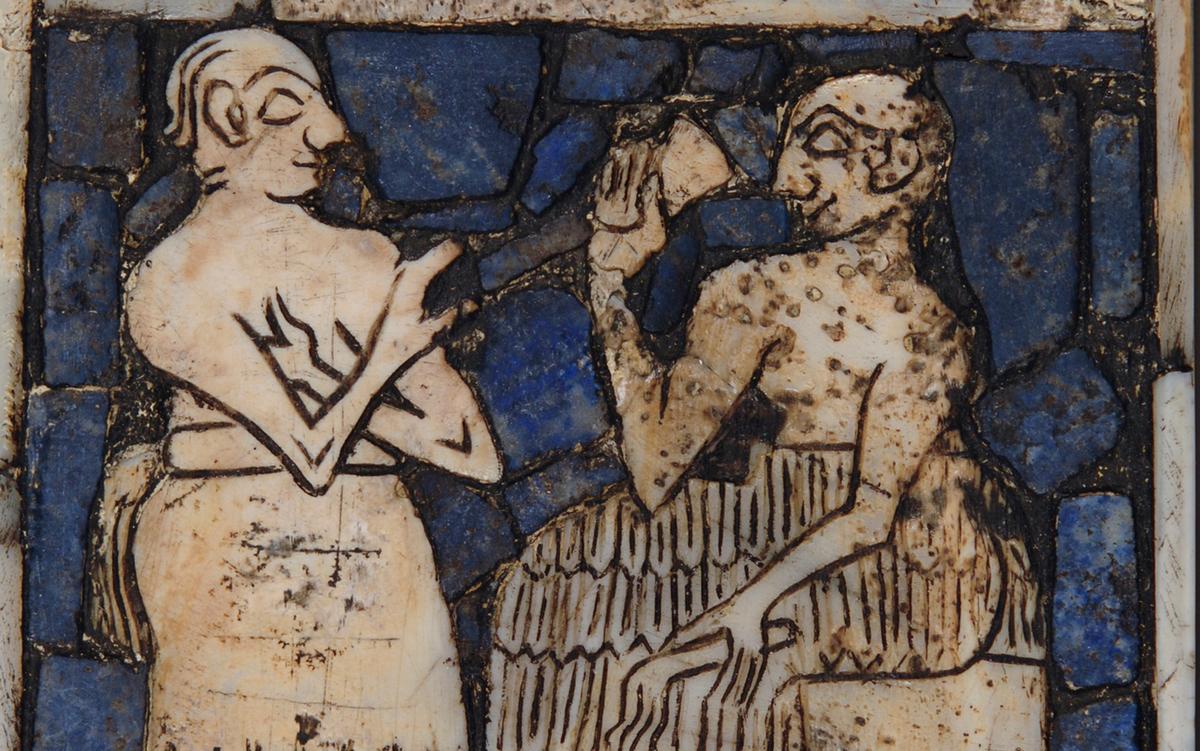
"Hundreds of thousands of clay tablets, densely packed with cuneiform characters, testify to more than three millennia of history in Mesopotamia. And thousands of those tablets testify to more than three millennia of beer. They allow us to peer into the minds and mouths of our beer-drinking forebears – what kind of beverages they preferred, how these beverages were made, what they meant to people. Thanks to more than a century of archaeological excavation, we can also bring these documentary sources into conversation with other remains – architecture, ceramics, stone tools, cylinder seals, carbonised seeds – that allow us to look beyond what was put down in writing. We can, for example, take a virtual tour through the spaces where beer was brewed, reconstruct the brewer’s toolkit (and use replica vessels to brew some beer ourselves), or sneak a peek at exclusive elite banquets through the eyes of ancient artists."
The ancient leather armor, datable to 786-543 BCE, was originally made of about 5,444 smaller scales and 140 larger scales, which, together with leather laces and lining, had a total weight of 4-5 kg.
Taking its name from the Assyrian word for “peace,” Shiluh is Turkey’s largest commercial Assyrian-style winery. It is based in Midyat, about 100 km from Mardin in southeastern Turkey, and carries on the winemaking tradition of Christian Assyrians in a modernized way.
There has been a surge of AI-generated music online over the past few months, including AI covers of old songs, entirely new tracks, and even the emergence of Narina Sarkis and Remos Ashuraya, believed to be the first-ever Assyrian AI singers.
The patriarchate of the Chaldean Catholic Church revealed in a letter made public on 22 February that church property in the diocese of Urmia in western Iran had been sold illegally by a deacon serving as the diocesan procurator.
Assyrians across the world recently commemorated the martyrdom of Catholicos-Patriarch of the Church of the East, Mar Benyamin XXI Shimun, who was assassinated on 3 March 1918 by the Kurdish tribal chief Simko Shikak.
The Assyrian Democratic Organization has welcomed the agreement between the Syrian government and the PYD/YPG, calling it an important step toward restoring stability, state sovereignty, and inclusive governance in Syria’s northeastern Hasakah province.