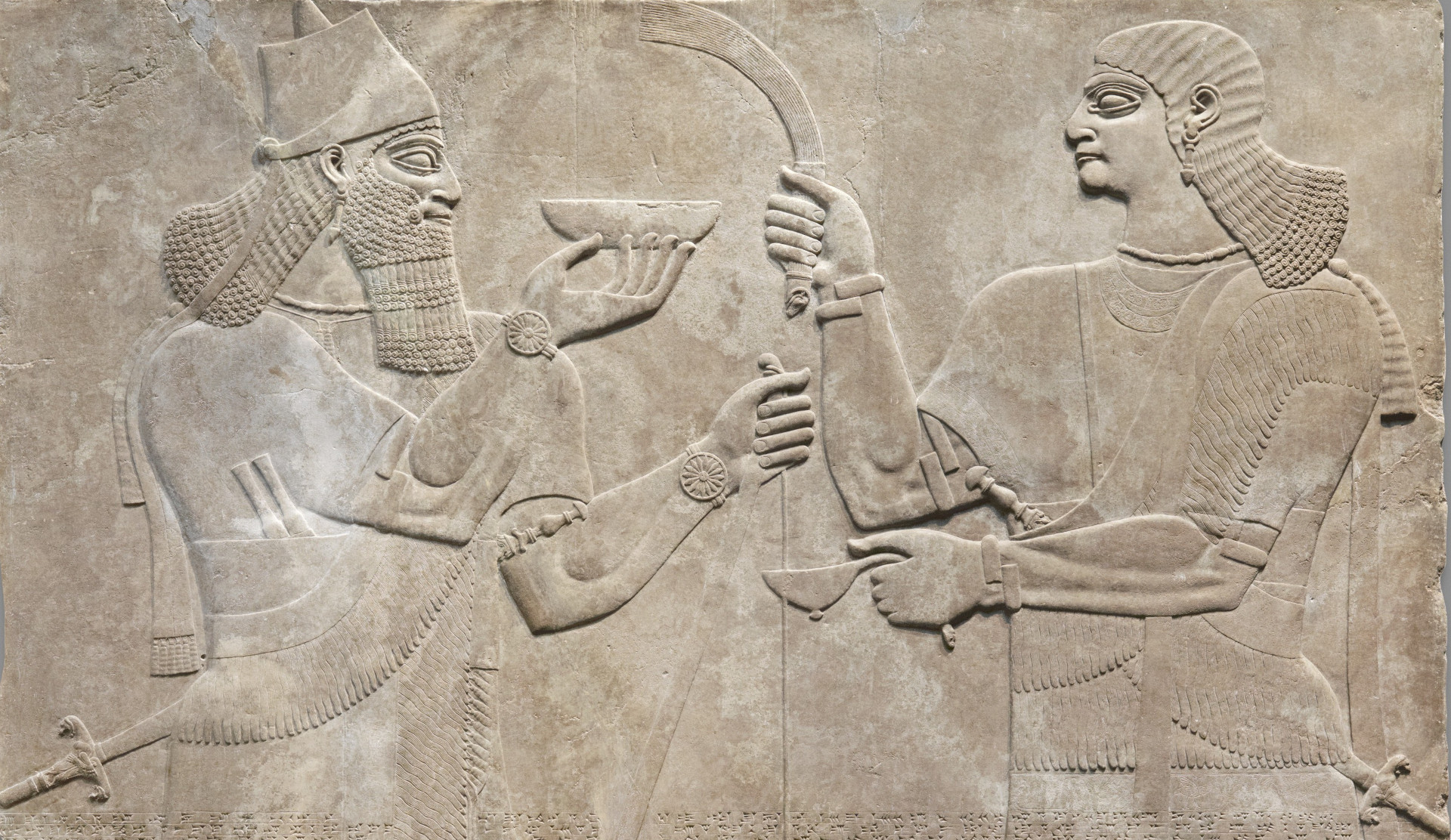
Tappūtī-Bēlet-ekallim, The Oldest Perfumer on Record
What we know of the first perfumer in the historical record comes from one tablet that was housed alongside other chemical texts in the ancient library of Aššur. It is written in Middle Assyrian and currently resides in the Vorderasiatisches Museum in Berlin.
Editor's pick This post is part of hand-picked stories from across the web, curated by the editors of the Assyria Post.
"If you Google who the first perfumer in history was, you will find Tappūtī-Bēlet-ekallim; most likely, her name will be shortened to Tapputi. Online sources cast her as a proto-girl-boss, a kind of corporate feminist before the conception of capitalism. However, today let’s dig past the hype to look at the source material and see Tappūtī-Bēlet-ekallim not as the patron saint of corporate perfumery, but as one of many Assyrian workers who helped develop the bedrock of olfactory culture."
The ancient leather armor, datable to 786-543 BCE, was originally made of about 5,444 smaller scales and 140 larger scales, which, together with leather laces and lining, had a total weight of 4-5 kg.
Taking its name from the Assyrian word for “peace,” Shiluh is Turkey’s largest commercial Assyrian-style winery. It is based in Midyat, about 100 km from Mardin in southeastern Turkey, and carries on the winemaking tradition of Christian Assyrians in a modernized way.
We think of ancient civilisations as operating very differently from the way our economy works today. Yet the Assyrians, around 3,000 years ago, began the basis of modern capitalism, in a region spanning most of modern-day Iraq, eastern Syria and southeastern Turkey.
A magnetic survey at Khorsabad, once the ancient Assyrian capital, has revealed the remains of a huge villa (with 127 rooms), royal gardens, the city’s water gate and five large buildings.
For the ancient Assyrians, emotions were felt differently in the body. A new analysis of Akkadian texts suggests happiness was linked not to the heart but to the liver, offering fresh insight into how Assyrians understood emotions and the human body.
Professor Dr. Artur Margulov, an Assyrian from Ukraine, has conducted unique archival research on Assyrians in Ukraine, tracing their journey from World War I refugees to victims of Soviet repression and the lasting impact on their community today.
A court in Brussels has sentenced Assyrian Paulus Sati, a Chaldean Archdeacon legally known as Atheel Sati, in connection with a major organized crime case in Belgium.