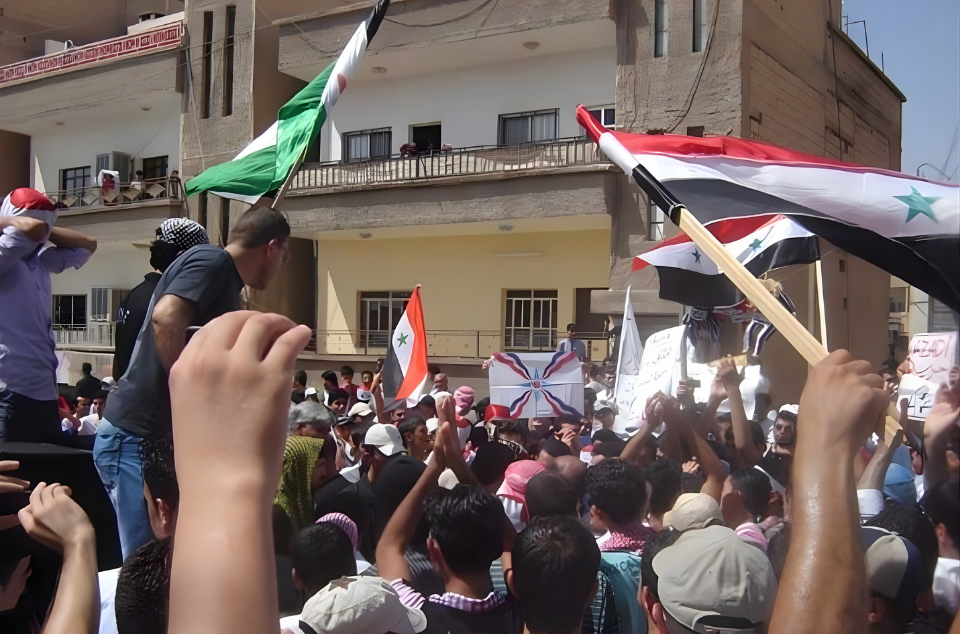
Military developments in the Gozarto region have raised concerns among the local Assyrian population. The rapid advance of the Syrian army, alongside local Arab tribesmen, rolled back Kurdish control over much of the region by Tuesday night. At the time a preliminary ceasefire came into effect late Tuesday, the PKK/YPG militia remained largely concentrated in the city of Hasakah, Qamishli, and other towns and villages with significant Kurdish populations.
Assyrians in the area remain apprehensive about the unfolding developments, yet cautiously hopeful after witnessing the smooth and largely bloodless takeover by the Syrian army of two neighbourhoods in Aleppo earlier this month. Assyrians have continued to suffer under the rule of the Kurdish PYD party and its militia, the YPG. Among a long list of grievances, the group has sought to confiscate Assyrian properties belonging to emigrants, was implicated in the murder of Assyrian leader David Jendo, closed Assyrian schools, and attempted to impose a Kurdish curriculum. The Kurdish group has also abducted a number of Assyrians with attempts to conscript some of them by force.
 The Assyria Post
No reports of Assyrian casualties so far
As of writing, there are no reports of Assyrian casualties or injuries. However, reports of heavy gunfire around the Assyrian town of Tell Tamer emerged on Tuesday evening, along with alleged bombardments in the Assyrian village of Tal Jemaa. Two heavy explosions were also reported near the outskirts of Qamishli late Tuesday. Reports also alleged Kurdish militiamen had entrenched themselves in Assyrian places of worship and schools.
Most Assyrians in the Gozarto region reside in the Khabur Valley, Qamishli, Hasakah, al-Malikiyah, and al-Qahtaniyah, in addition to a number of surrounding villages. The largest concentration of Assyrians is in central Qamishli.
ADO: We are in touch with factions
The Assyrian Democratic Organization (ADO), the main political body representing Assyrians in the region, issued a statement calling for dialogue and a peaceful solution. It said it is actively working to keep Assyrian areas out of danger: “Within the framework of its national responsibility, the organization is following developments through its relations and contacts with the Syrian government, with the aim of ensuring the security of our areas, villages, towns, and churches. In addition, through some leadership comrades, communication is underway with military factions to emphasize the necessity of keeping the region neutral from military conflict and ensuring the safety of civilians, particularly in the Khabur region, which has long witnessed tensions and clashes between various parties.”
 The Assyria Post