

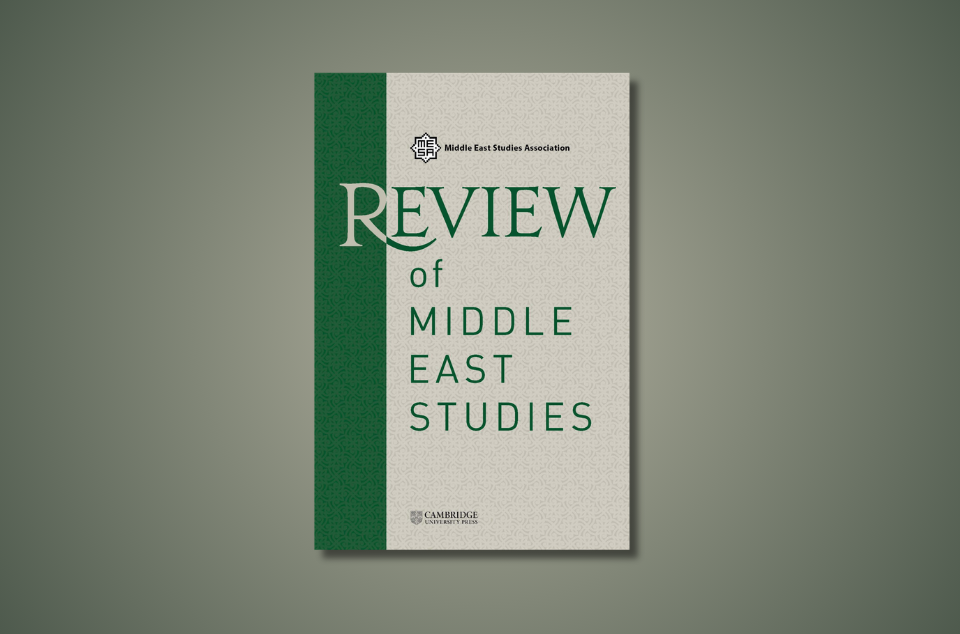
In her piece, titled “Propaganda of the Victims”: Atrocity Denial, Ethnic Nationalism, and the Disparagement of Assyrians in Middle East Studies", Dr. Arbella Bet-Shlimon of the University of Washington delivers a stinging critique of how modern scholarship treats–or rather, mistreats–Assyrian history. She argues that a culture of "atrocity denial" and "disparagement" has taken root in academic circles, often shielding the perpetrators of violence from historical accountability.
The title of the article is a direct reference to a 1974 essay by Khaldun S. Husry, who dismissed the 1933 Simele Massacre–where thousands of Assyrians were killed by the Iraqi army–as mere "propaganda of the victims." Bet-Shlimon demonstrates that this was not an isolated incident of bias. Instead, she argues that scholars have frequently used the language of anti-colonialism and anti-nationalism to de-legitimize Assyrian identity. By labeling Assyrian claims to indigeneity as "imperialist constructs" or "modern inventions," some historians have effectively paved the way for the erasure of their historical grievances.
"The bigoted treatment of Assyrians is unusually persistent, however, and continues to appear in newly written literature"
One of the most provocative aspects of the article is the concept of "moral licensing." Bet-Shlimon suggests that by focusing almost exclusively on the sins of Western colonialism, some scholars feel "licensed" to ignore or downplay the violence committed by regional majoritarian states against ethnic and religious minorities like the Assyrians. "The disparagement of Assyrians is not just a matter of academic debate," the article suggests. It has real-world consequences. When historians fail to acknowledge the systematic nature of past atrocities, it becomes easier for modern political actors in Iraq and Syria to continue the marginalization and displacement of these communities today.
The article also highlights a disturbing double standard. While the field has made significant strides in documenting the Armenian Genocide, the parallel experiences of Assyrians are frequently relegated to the footnotes or treated with skepticism.
Bet-Shlimon also dwells on the constant questioning of Assyrian continuity, which is done in a way that singles out Assyrians as opposed to other groups and their claims of historical continuity. "Other modern communities in the region that exhibit some kind of linguistic or geographical continuity with well-known ancient peoples also have been put through this kind of pathologizing scrutiny. Notably, modern Greeks were subject to stereotypes and questions about their origins, similar to those aimed at modern Assyrians, in works by twentieth-century classicists and historians of the Byzantine Empire as late as the 1960s. As Maria Mavroudi has documented, some of these works are still in print and regularly reissued. The bigoted treatment of Assyrians is unusually persistent, however, and continues to appear in newly written literature", she writes.
Arbella Bet-Shlimon calls for increased scrutiny of people who hide their belittling views behind academic credentials: "It has never been more urgent to scrutinize denialist reasoning in the academy in order to repudiate it comprehensively. For historians of the Ottoman Empire and the modern Middle East, and for historians of ethnicity and nationalism more broadly, the extensive disparagement of Assyrians reveals that such a repudiation will require rethinking, reframing, and perhaps even abandoning entire lines of scholarly debate", she concludes.


