

The defense of Azakh (also named Beth Zabday) was not a spontaneous riot, but a calculated, professional resistance by the Assyrian population against a combined force of Ottoman regulars and Kurdish irregulars.
Beth Zabday was Christianised at an early stage; according to legend, this was done by Mor Agai, the first bishop of Urhoy, and Mor Aho, also from Urhoy. A bishop of Beth Zabday is known to have existed as early as the year 120, and in the 3rd century the city was one of 17 bishoprics in the East.
As the systematic Genocide known as the Seyfo (The Sword) decimated surrounding Assyrian settlements, the inhabitants of Azakh, a town of roughly 1,000 residents at the time, refused to accept displacement and massacres. Under the strategic command of Isho Hanna Gabre, the town’s defense committee transformed the settlement into a military grid.
The Syriac Orthodox Assyrians exploited the town’s unique architecture: houses built of volcanic basalt stone were interconnected via internal passages, and the outer walls were fortified to create a continuous defensive ring. By August, Azakh had become a sanctuary, sheltering over 3,000 Assyrian refugees from more than 40 destroyed neighboring villages.
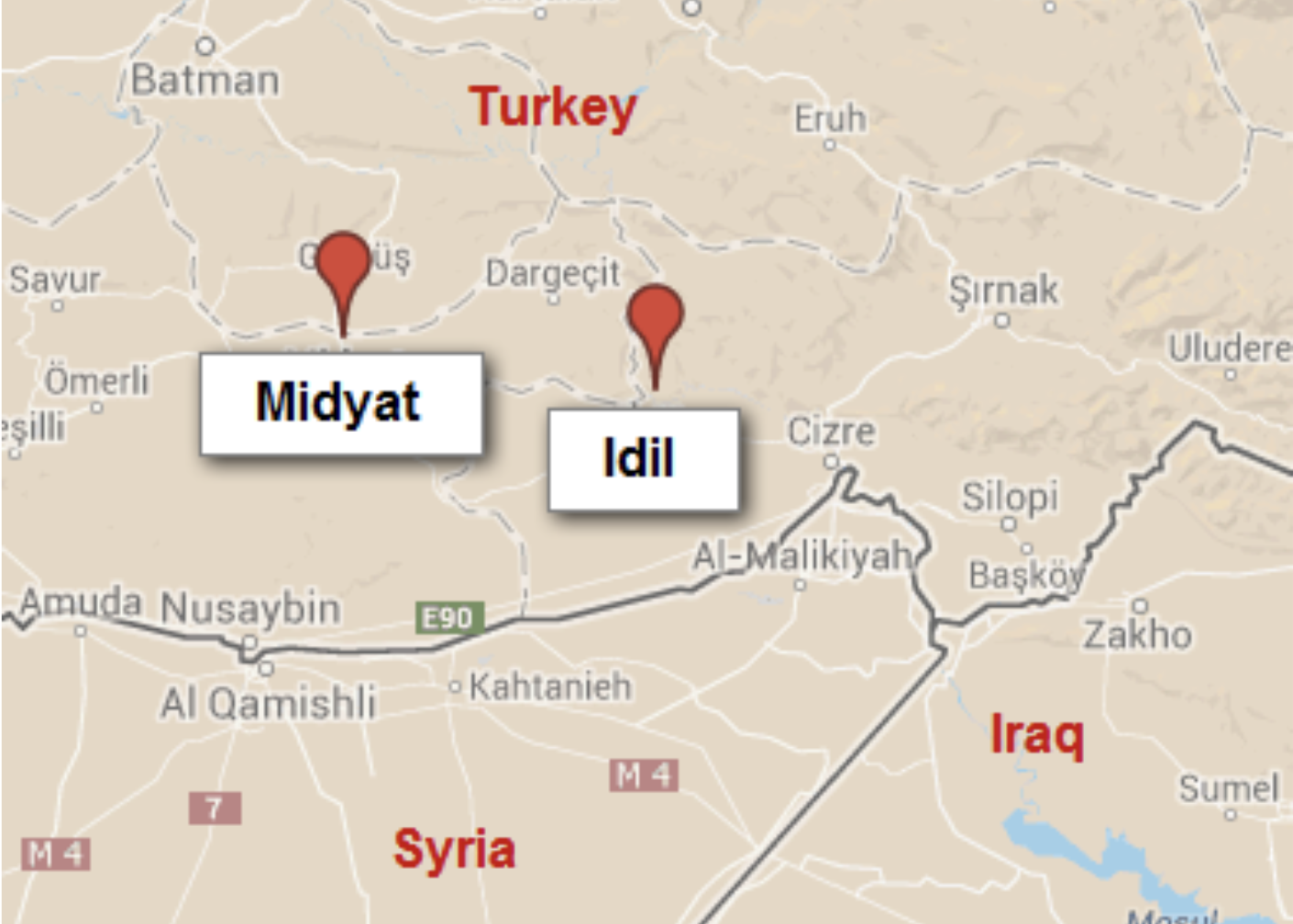
The siege was not a mere tribal skirmish. It was a coordinated operation involving the Ottoman force under the direction of the Governor of Diyarbakır, Dr. Mehmed Reshid, providing the heavy lifting by the Ottoman state. Ottoman advisors and officers led two regular battalions of the 3rd Army, bringing with them professional mountain artillery and standardized logistics. Secondly, the Muslim Kurdish clans. Those were thousands of irregular fighters from local Kurdish tribes (including the Haverkan and Raman tribes) who were mobilized to provide manpower and local intelligence. They were promised the spoils of the town in exchange for their service.
The fighting escalated in late October and early November 1915. The Ottoman advisors positioned their artillery on the surrounding heights, aiming to breach the northern gates. However, the Assyrian defenders utilized a "defense-in-depth" strategy. The sniper cells were small units of Assyrian marksmen, including women like the legendary Zayte, who occupied high vantage points, picking off Ottoman officers and stalling infantry advances. Then there were the counter-mine. When Ottoman forces attempted to use explosives to breach the outer walls, Assyrian defenders, many of whom were skilled miners, dug counter-tunnels to neutralize the charges. The failed final assault came on November 7, 1915. A massive coordinated charge led by Kurdish irregulars and Ottoman infantry was repelled. Despite having only about 700 armed men, the Assyrians used the town's labyrinthine alleys to ambush the attackers at point-blank range.
By the end of November, the coalition forces faced a crisis. The Ottoman advisors were increasingly needed on the Caucasian and Sinai fronts of the World War. The Kurdish irregulars, having suffered hundreds of casualties for a town they could not take, began to desert.
Realizing that the "fortress" of Azakh could only be taken at an unacceptable cost, the Ottoman military command eventually signaled a retreat. While a formal peace was never signed, the siege was lifted, leaving Azakh as an island of survival in a sea of destruction.


