

"Assyrians have not been asked a single question about these plans"
The “New Midyat Project,” a planned urban neighborhood in Midyat, an originally Assyrian town in southeastern Turkey, marketed toward the diaspora, has drawn mounting criticism from Assyrian commentators and local residents.
 The Assyria Post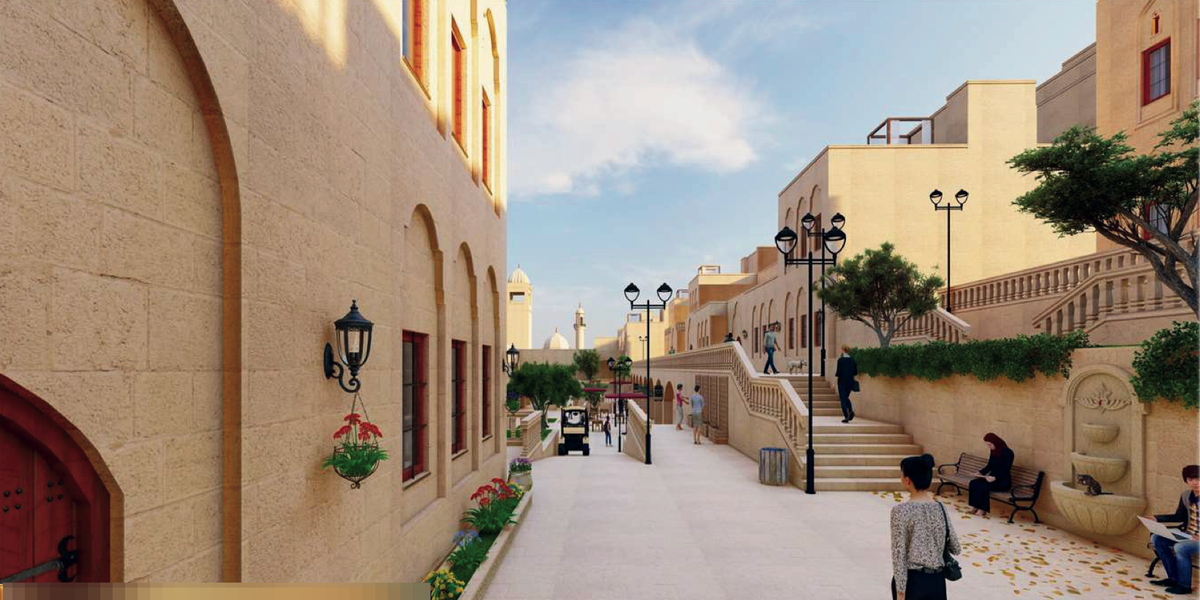
The project, consisting of 478 residential units, has been drafted by the Municipality of Midyat in cooperation with Turkish state agencies. What has triggered the most concern, however, is that a development ostensibly intended for Assyrians has been planned without any consultation with Assyrians themselves.
Speaking to Assyria TV, Simon Poli, who was raised in Midyat and still spends part of the year there, said no Assyrians were involved at any stage of the planning process. “It’s conceived entirely by the mayor of Midyat, Veysi Şahin, without any dialogue with any Assyrians at any point,” Poli said.
Reflecting the lack of Assyrian input, several observers have questioned the choice of location. The proposed neighborhood sits adjacent to an area dominated by the Mhalmi community, Arabic-speaking Muslims. Critics ask why Assyrians would choose such a site over investment in their own ancestral villages scattered throughout the Tur Abdin Region.
The inclusion of both a mosque and a church in the development has also provoked debate. “We already have many churches in the region, too many to fill, why build a new one?” Poli asked. “We have seven Assyrian churches in Midyat alone. There is no need for another.”
Discussing the proposed housing prices, Poli argued that economic motives, not community development, appear to be driving the project. He described the pricing of the units as “quite high for the region,” and doubted that Assyrians would actually purchase them. “I don’t believe any Assyrian will buy houses there. It would be better to support development projects in the existing Assyrian villages,” he concluded.


