

Within the liturgical calendar of the Assyrian Church of the East, the commemoration of Mar Benyamin XXI Shimun is observed annually on the second Sunday of February.
For the Assyrian nation, he is remembered not only as a spiritual leader, but as a national martyr whose assassination symbolised betrayal, dispossession, and the fragmentation of the Assyrian nation in the modern era.
Born in 1887 in Qudchanis, the historic patriarchal seat of the Church of the East in Hakkari (today in south-eastern Turkey), Mar Benyamin assumed leadership of the Church at just sixteen years of age. In accordance with the tradition of the Shimun patriarchal dynasty, succession was passed from uncle to nephew.
His patriarchate coincided with one of the darkest chapters in Assyrian history. During the Assyrian Genocide (Seyfo), Assyrians faced systematic massacres, forced displacement, and the destruction of their ancestral homeland across Anatolia and Mesopotamia.
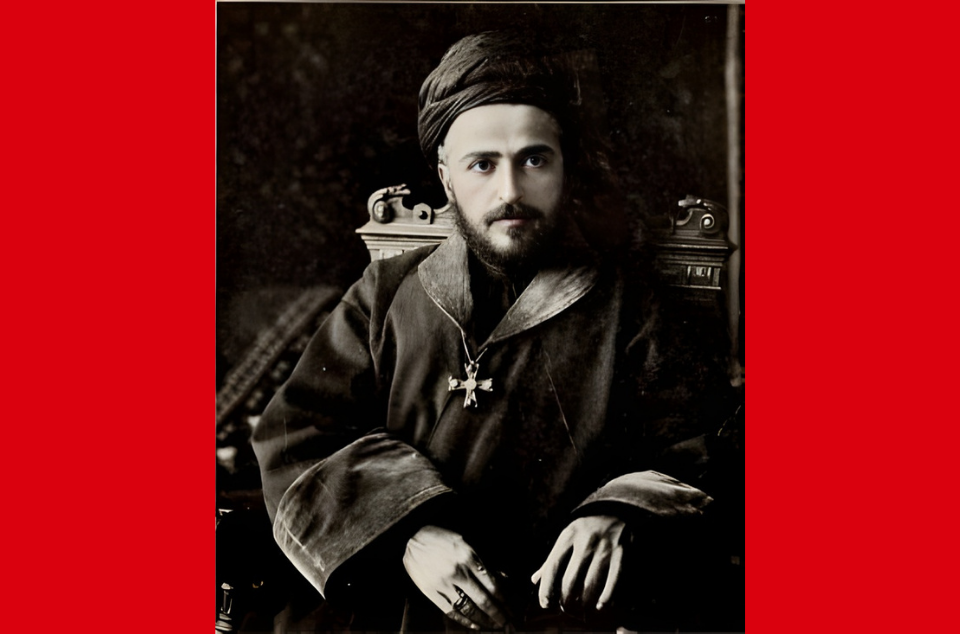
“My Brother Is One, but My Nation Is Many”
In 1915, while convening a meeting with Assyrian tribal leaders, Mar Benyamin received a letter from Haydar Bey, the Ottoman governor of Mosul, informing him that his brother Hormizd Mar Shimun had been detained in Constantinople. The Ottomans demanded Assyrian submission in exchange for his brother’s life.
Mar Benyamin’s response has since become a defining expression of Assyrian national consciousness: “Under no circumstances will I submit the tribes to your power, after having witnessed what the Turkish government has done to the Assyrian Christians through oppression and torture. For this reason, I prefer that my brother be killed rather than surrender the entire people.” His brother was subsequently executed by Ottoman authorities.
Assassination at Kuhnashahir
Following the collapse of Assyrian resistance in Hakkari, Mar Benyamin led his people in flight to Urmia. There, a meeting was arranged with the Kurdish tribal leader Ismail Agha Shikak, better known as Simko Shikak, under the pretext of negotiation and truce.
On 3 March 1918, in the town of Kuhnashahir in Salmas, Mar Benyamin Shimun XXI was assassinated in cold blood by Simko alongside approximately 150 of his bodyguards. The killing was not merely an act of violence; it marked a decisive blow to Assyrian political and military leadership at a moment of existential vulnerability.
Simko met his own fate in 1930 by the Persian government. He was lured into a trap under the pretense of negotiations in the town of Oshnavieh (near Lake Urmia), promising talks and reconciliation. When he arrived with a small entourage, Iranian troops ambushed him and opened fire, killing him on the spot.
The Glorification of Simko Shikak
More than a century later, the memory of Mar Benyamin’s assassination remains deeply intertwined with contemporary political realities. In the Kurdish administered region of Northern Iraq, Simko Shikak is widely glorified as a national hero.
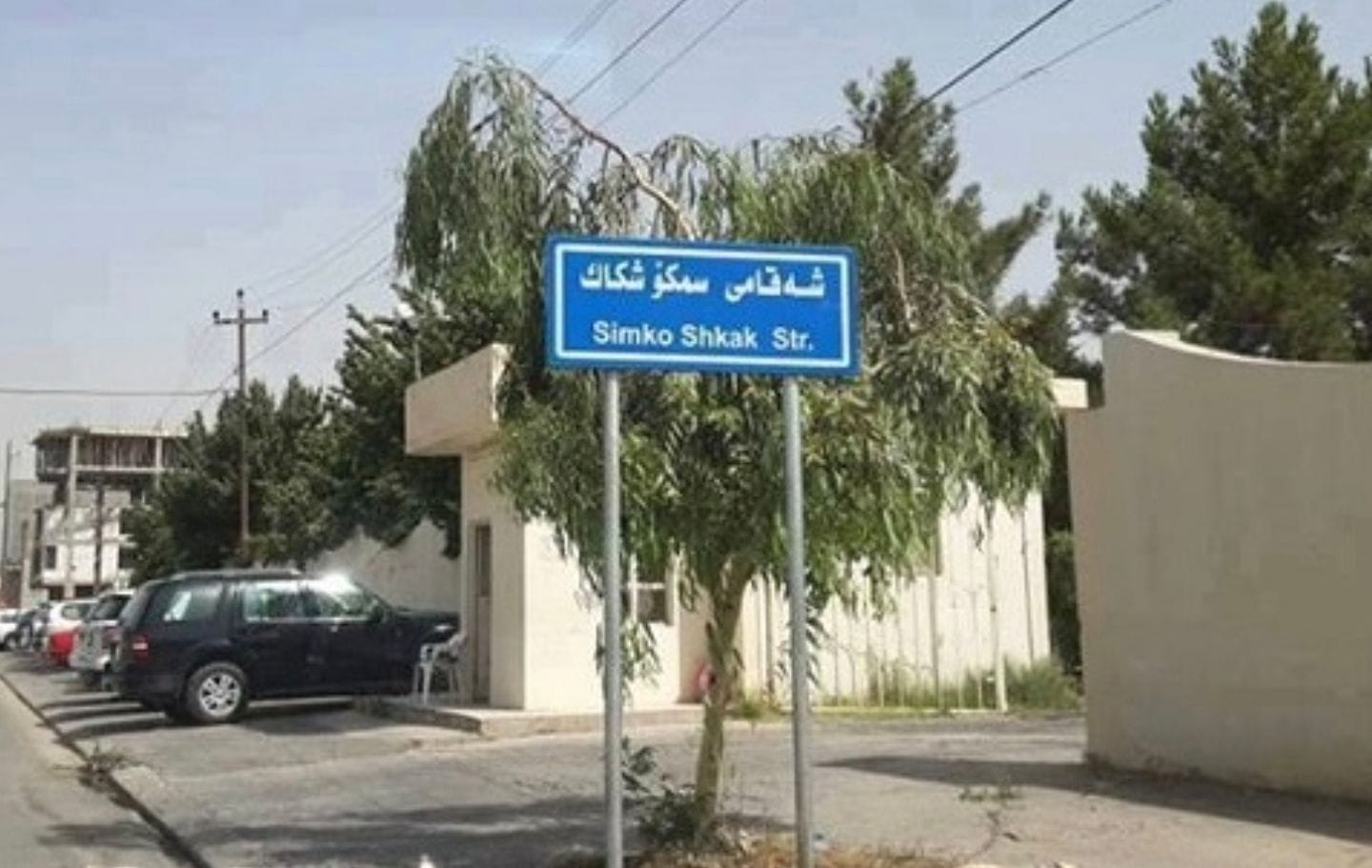
According to the Assyrian Policy Institute, school textbooks distributed to Assyrian schools by the KRG include passages praising Simko Shikak. His name appears on streets, and his image has been displayed in public spaces, including a portrait once exhibited in a restaurant at the DDK Hotel in Nohadra (Dohuk), which was later removed following Assyrian outrage.
For Assyrians, the glorification of Simko Shikak represents not merely historical insensitivity, but a deeper refusal to acknowledge crimes committed against their people by Kurds.
Modern Parallels: Francis Yousif Shabo
The assassination of Mar Benyamin finds disturbing parallels in modern Assyrian history. In 1993, Assyrian Democratic Movement member and KRG parliamentarian Francis Yousif Shabo was assassinated after emerging as a unifying Assyrian political figure who challenged land dispossession and demographic change in Assyrian regions by Kurds.
Shabo was shot dead on 31 May 1993 by armed assailants. Despite widespread documentation of the crime, no perpetrators were brought to justice. Investigations reported by the Kurdish newspaper Hawlati and subsequent allegations have linked the assassination to Wahid Majid Koveli, a high-ranking KDP party figure and known operative within Kurdish security networks.
Amnesty International has documented patterns of targeted violence against political opponents in the region. Koveli remained free until his death in 2017, never prosecuted for his alleged role in Shabo’s murder.
In a striking echo of the past, a mural commemorating Koveli was later unveiled near Assyrian villages in the Sapna valley, close to Mangesh, near where Francis Shabo was assassinated, provoking deep anger among local Assyrians.


