Editor's pick This post is part of hand-picked stories from across the web, curated by the editors of the Assyria Post.
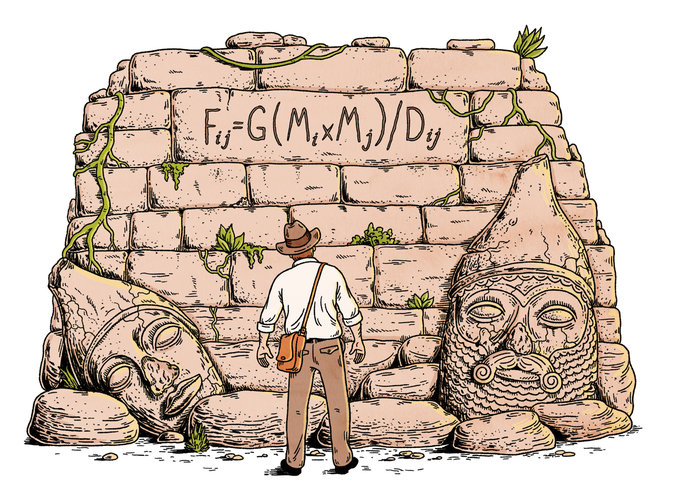
"But one of these clues offers a remarkably detailed picture of economic life in an Assyrian market town. As a recent feature in the New York times explains, archaeologists have discovered an uncharacteristically complete set of records kept by businessmen who ran importing enterprises in Kanesh, an ancient trading hub in what is now Turkey.
Dating back to the 19th century BC, these records have allowed Assyriologists to construct an intimate and detailed portrait of the lives these traders led, and the socio-economic policies that shaped their businesses."
The ancient leather armor, datable to 786-543 BCE, was originally made of about 5,444 smaller scales and 140 larger scales, which, together with leather laces and lining, had a total weight of 4-5 kg.
Taking its name from the Assyrian word for “peace,” Shiluh is Turkey’s largest commercial Assyrian-style winery. It is based in Midyat, about 100 km from Mardin in southeastern Turkey, and carries on the winemaking tradition of Christian Assyrians in a modernized way.
We think of ancient civilisations as operating very differently from the way our economy works today. Yet the Assyrians, around 3,000 years ago, began the basis of modern capitalism, in a region spanning most of modern-day Iraq, eastern Syria and southeastern Turkey.
A magnetic survey at Khorsabad, once the ancient Assyrian capital, has revealed the remains of a huge villa (with 127 rooms), royal gardens, the city’s water gate and five large buildings.
The American attack on Iran is reverberating across the Middle East, with Assyrian areas in northern Iraq already experiencing the effects of rockets, drones, and falling debris, according to multiple local reports.
The ancient leather armor, datable to 786-543 BCE, was originally made of about 5,444 smaller scales and 140 larger scales, which, together with leather laces and lining, had a total weight of 4-5 kg.
Taking its name from the Assyrian word for “peace,” Shiluh is Turkey’s largest commercial Assyrian-style winery. It is based in Midyat, about 100 km from Mardin in southeastern Turkey, and carries on the winemaking tradition of Christian Assyrians in a modernized way.
We think of ancient civilisations as operating very differently from the way our economy works today. Yet the Assyrians, around 3,000 years ago, began the basis of modern capitalism, in a region spanning most of modern-day Iraq, eastern Syria and southeastern Turkey.