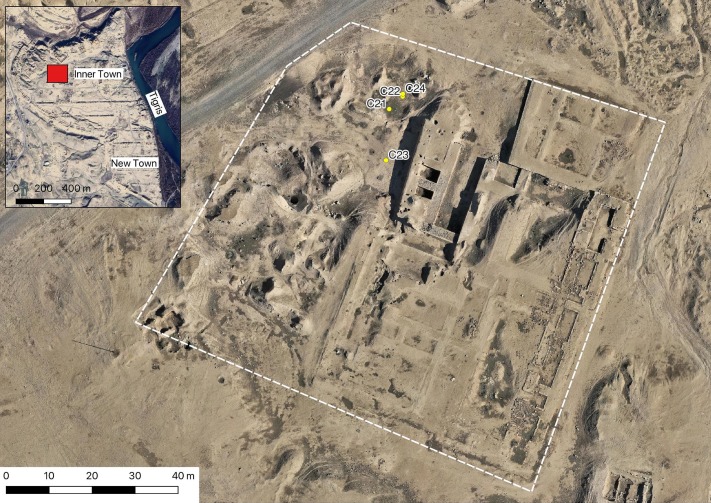
A Mysterious Sand Layer Beneath an Ancient Assur Temple
A groundbreaking archaeological discovery in northern Iraq reveals that a mysterious layer of sand beneath an ancient temple may reshape what we know about Mesopotamian religion, architecture, and cultural exchange.
Editor's pick This post is part of hand-picked stories from across the web, curated by the editors of the Assyria Post.
"Archaeologists working at the ancient city of Assur, once the spiritual and political heart of the Assyrian world, have uncovered a surprising secret hidden beneath the foundations of the Ishtar Temple. Beneath the stone and brick lies a thick, deliberately placed layer of sand—one that is now transforming scholars’ understanding of early Mesopotamian civilization.
According to a newly published scientific study, this sand is not local debris or a natural deposit. Instead, it was carefully sourced, transported, and laid down nearly 5,000 years ago, long before Assur rose to imperial power. The discovery offers rare insight into ancient building rituals, long-distance connections, and the early origins of the cult of the goddess Ishtar."
The ancient leather armor, datable to 786-543 BCE, was originally made of about 5,444 smaller scales and 140 larger scales, which, together with leather laces and lining, had a total weight of 4-5 kg.
Taking its name from the Assyrian word for “peace,” Shiluh is Turkey’s largest commercial Assyrian-style winery. It is based in Midyat, about 100 km from Mardin in southeastern Turkey, and carries on the winemaking tradition of Christian Assyrians in a modernized way.
We think of ancient civilisations as operating very differently from the way our economy works today. Yet the Assyrians, around 3,000 years ago, began the basis of modern capitalism, in a region spanning most of modern-day Iraq, eastern Syria and southeastern Turkey.
A magnetic survey at Khorsabad, once the ancient Assyrian capital, has revealed the remains of a huge villa (with 127 rooms), royal gardens, the city’s water gate and five large buildings.
Professor Dr. Artur Margulov, an Assyrian from Ukraine, has conducted unique archival research on Assyrians in Ukraine, tracing their journey from World War I refugees to victims of Soviet repression and the lasting impact on their community today.
A court in Brussels has sentenced Assyrian Paulus Sati, a Chaldean Archdeacon legally known as Atheel Sati, in connection with a major organized crime case in Belgium.
Assyrian patriarch Louis Raphael Sako, the head of the Chaldean Catholic Church, has resigned from his position amid church scandals and rising criticism of his attempts at dividing the Assyrian nation.


 Leman Altuntaş