

The recent exchange between Namrod Koshaba in this publication and Barin Kayaoglu in Türkiye Today about a Turkish-backed Assyrian region in northern Iraq has opened an important discussion that deserves to move beyond disagreement and toward strategic clarity. The central question is not whether Assyrians possess legitimate historical grievances or an indigenous connection to northern Iraq, few serious observers deny their suffering or their indigenous status in northern Iraq. Rather, the real issue is whether an Assyria Nineveh Plain administrative region within Iraq can align with the long-term interests of Türkiye.
 Barin Kayaoglu
Kayaoglu’s response reflects concerns widely shared among Turkish policymakers: the fear that new political entities may lead to regional fragmentation, the risk of destabilizing relations with Baghdad and the Kurdish-led region, doubts about viability, and unease over possible external geopolitical involvement. These concerns should not be dismissed. They must be addressed directly.
When examined through a strategic rather than emotional lens, however, an Assyria Nineveh Plain administrative region need not represent instability. Properly framed and structured, it can instead function as a mechanism for stability, one that advances both Iraqi cohesion and Turkish strategic interests.
Not a New State, but a Governance Solution Within Iraq
The most persistent misunderstanding surrounding the idea of an Assyrian region is the assumption that it implies independence or border change. This assumption understandably triggers resistance in Ankara, where territorial fragmentation in neighboring states is viewed as a direct security risk.
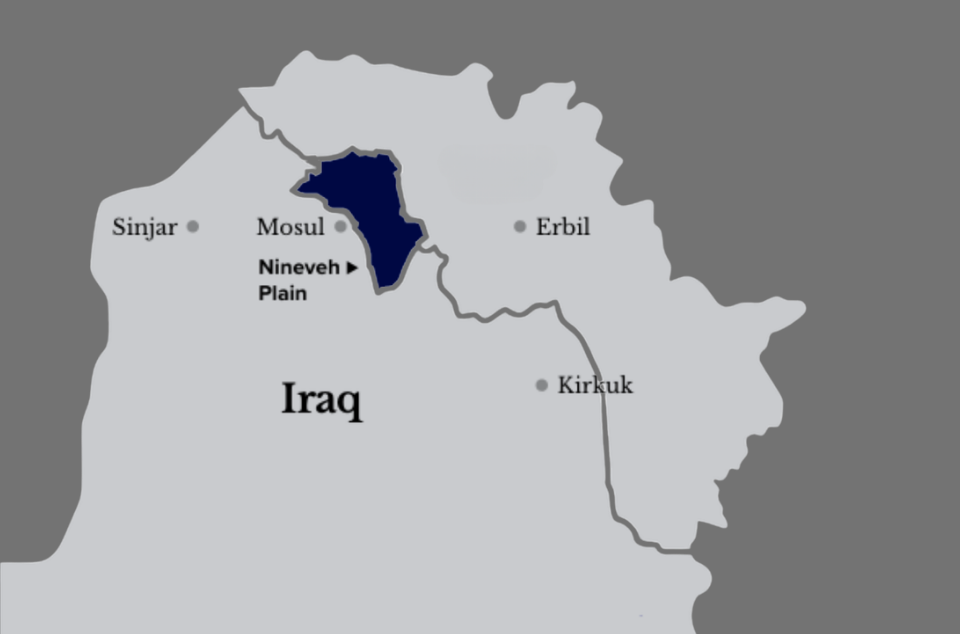
Yet an Assyria Nineveh Plain administrative region does not require new borders or sovereignty claims. Iraq’s existing constitutional framework already allows for administrative decentralization, and minority protections through the formation of a Nineveh Plain Governorate. Within this framework, local administration can strengthen – rather than weaken – the Iraqi state by stabilizing areas that have long suffered from overlapping authority and weak governance.
From Türkiye’s perspective, this distinction is crucial. A decentralized Iraq with functioning local governance is far preferable to contested territories that produce recurring instability. In this sense, an Assyrian region should be understood not as partition, but as conflict management within existing borders.
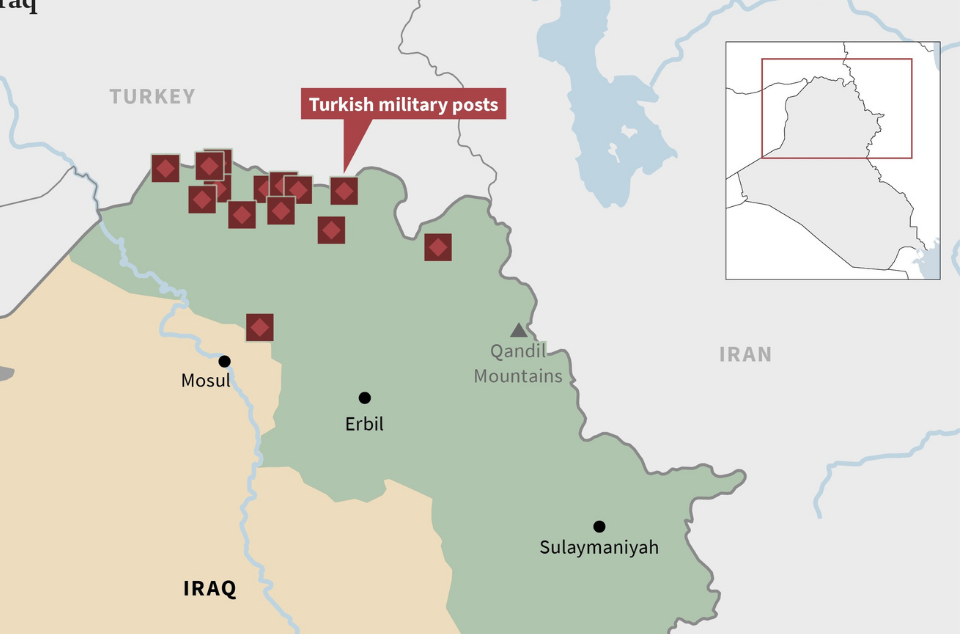
Türkiye’s engagement in northern Iraq has consistently been shaped by security concerns. Areas with unclear governance structures often become spaces where armed actors compete for influence, creating risks that spill across borders.
A locally administered Assyria Nineveh Plain region could help reduce these risks. Minority-led administrations historically depend on stability and cooperation rather than territorial expansion. Their survival relies on predictable relations with neighboring communities and the central state. Improved local governance, strengthened policing, and reduced competition between larger political actors would lower the likelihood of security vacuums emerging. For Türkiye, this translates into fewer cross-border tensions and reduced long-security costs. Stability in northern Iraq is not a symbolic benefit, it is a strategic one.
Complementing Regional Relationships Rather Than Undermining Them
Another concern raised in the debate is that support for an Assyrian region could complicate Türkiye’s relationship with the Kurdish-led region. This concern stems largely from the mistaken perception that Assyrian proposals are intended as a counterweight to Kurdish autonomy.
Such a framing is neither accurate nor helpful. Türkiye’s relationship with Erbil is grounded in economic cooperation and mutual stability. An Assyrian administrative region need not challenge Kurdish self-governance; instead, it could reduce friction in disputed areas by clarifying administrative responsibilities and lowering competition over local authority. Stability in the Nineveh Plain and surrounding areas benefits all parties by securing trade routes and reducing tensions that periodically disrupt regional cooperation. The goal is not ethnic competition, but functional coexistence.
A Regional Solution, Not an External Project
Turkish skepticism toward minority autonomy initiatives is often shaped by experiences in Syria, where externally driven political experiments produced long-term geopolitical complications. Any proposal perceived as externally imposed or Western-sponsored would understandably face resistance.
For this reason, an Assyrian administrative arrangement must be rooted in Iraqi institutions and regional cooperation. A solution developed through coordination with Baghdad and local communities, rather than external guarantees, aligns more closely with Türkiye’s preference for regionally owned stability. This approach transforms the proposal from a geopolitical liability into a practical governance reform.
Economic Integration as a Shared Interest
Economic integration and regional connectivity have become a central pillar of Türkiye’s northern Iraq policy. Trade corridors, infrastructure, and energy cooperation increasingly define Ankara’s strategic outlook. A secure and locally governed Assyrian region could contribute to this vision by stabilizing key transit areas linking Mosul, Dohuk, and Turkish markets. Minority-administered regions typically prioritize economic connectivity because their stability depends on trade and development rather than territorial control. In this context, decentralization does not undermine integration – it enables it.
Türkiye increasingly positions itself as a regional stabilizer capable of maintaining dialogue with diverse actors across Iraq. Supporting inclusive governance arrangements that protect minorities without altering borders would reinforce this role. Such an approach demonstrates that stability can be achieved through cooperation rather than domination, strengthening Türkiye’s diplomatic standing while contributing to long-term regional balance.
A Necessary Shift in the Debate
Much of the disagreement surrounding an Assyrian administrative region stems from how the idea is presented. Arguments framed primarily in terms of historical injustice or as a counterweight to other groups are unlikely to persuade Turkish policymakers, whose decisions are guided by long- term strategic calculations.
The more compelling argument is straightforward: an Assyria Nineveh Plain administrative region, firmly embedded within Iraq’s constitutional framework, can reduce contested zones, improve governance, and enhance stability in northern Iraq. These outcomes directly serve Türkiye’s interests as much as they serve the survival and dignity of the Assyrian people. When viewed through this lens, the proposal is no longer a nationalist aspiration. It becomes a practical contribution to regional stability, and therefore a subject worthy of serious consideration in Ankara as well as Baghdad.
For a region that has suffered from too many zero-sum solutions, this may be precisely the kind of pragmatic thinking the future requires.


