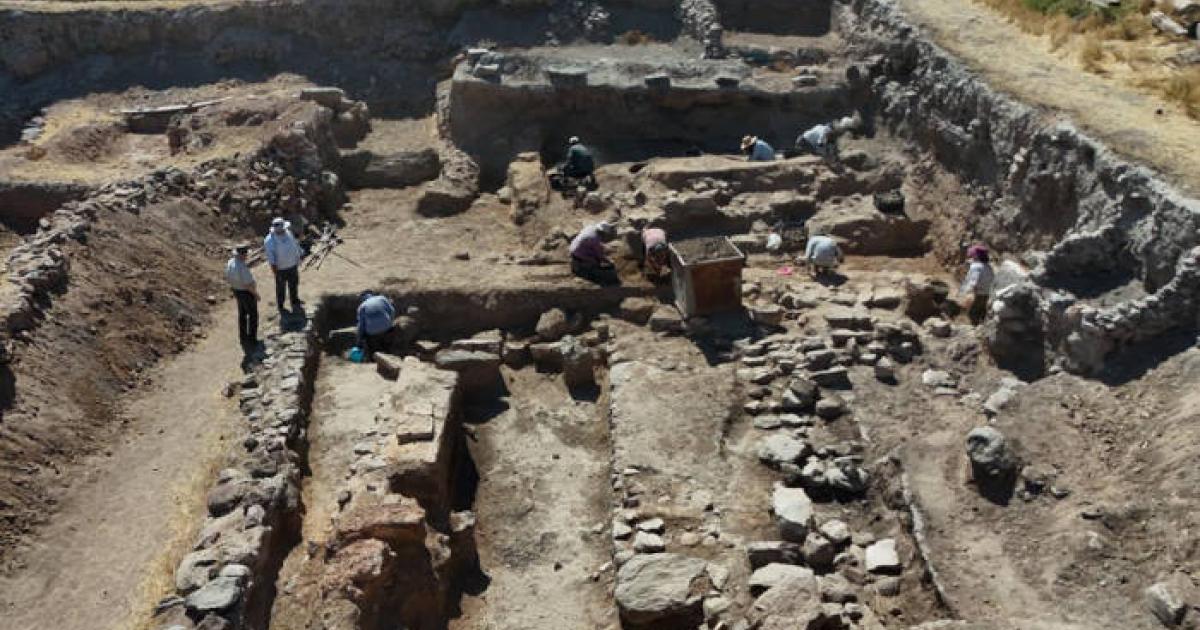
Discovery Unveils Private Homes at Assyrian merchant colony in Anatolia
Archaeologists working at the renowned Kultepe archaeological site in central Turkey have achieved a significant breakthrough, uncovering private residences on the main mound for the first time in decades of excavation.
Editor's pick This post is part of hand-picked stories from across the web, curated by the editors of the Assyria Post.
"The newly discovered houses predate the arrival of Assyrian merchants by several centuries, challenging earlier assumptions that only grand structures occupied the summit of Kultepe. Professor Kulakoglu explained that Kultepe has been home to successive monumental buildings since at least the third millennium BC, with palaces and temples being destroyed and rebuilt multiple times throughout its long history. "This shows Kultepe has been a major center not only during the Assyrian merchants' time but long before, from around 6,000 years ago," he noted.
The discovery represents what Kulakoglu describes as "a new event" for the archaeological team. The presence of private homes among the palaces suggests a more complex urban layout than previously understood. These residential structures contained distinctive ceramics and architectural elements that set them apart from other areas of the settlement, indicating possible social stratification among the inhabitants. The houses likely belonged to administrators, craftsmen, and other professionals who worked within the monumental complexes but needed to live nearby."
The ancient leather armor, datable to 786-543 BCE, was originally made of about 5,444 smaller scales and 140 larger scales, which, together with leather laces and lining, had a total weight of 4-5 kg.
Taking its name from the Assyrian word for “peace,” Shiluh is Turkey’s largest commercial Assyrian-style winery. It is based in Midyat, about 100 km from Mardin in southeastern Turkey, and carries on the winemaking tradition of Christian Assyrians in a modernized way.
We think of ancient civilisations as operating very differently from the way our economy works today. Yet the Assyrians, around 3,000 years ago, began the basis of modern capitalism, in a region spanning most of modern-day Iraq, eastern Syria and southeastern Turkey.
Two Assyrian high school students from Södertälje are earning national attention after turning a popular social media beauty trend into a scientific investigation that may now win them a prestigious award.
After an attack on a synagogue in a Detroit suburb, the Assyrian-owned Shenandoah Country Club opened its doors to shelter families and staff, earning praise for the Assyrian community’s solidarity with Detroit’s Jewish community.
For the ancient Assyrians, emotions were felt differently in the body. A new analysis of Akkadian texts suggests happiness was linked not to the heart but to the liver, offering fresh insight into how Assyrians understood emotions and the human body.


 Gary Manners