

The Chaldean Catholic Patriarch of Baghdad, who has led the Church since 2013 and was elevated to the rank of cardinal in 2018, now faces criticism from across the Assyrian spectrum, including his own church.
Instead of receiving approval, his statements have prompted a broad and vocal rejection of division. A united chorus of prominent Assyrians, including several members of the Chaldean Church itself, have publicly rejected what they describe as divisive rhetoric. Reactions in online forums and community discussions suggest that rather than deepening internal fault lines, the remarks have generated a near universal pushback against further fragmentation of the Assyrian people.
 Daniel Sada
"A descent into juvenile exchanges"
Assyrian journalist Steven Nabil, who has a large online following, shared a ten minute video in which he laid out his rejection of the patriarch’s comments. "I am from the Assyrian Church of the East and my wife is from the Chaldean Church - what identity does our son have according to Louis Sako..", he asked rhetorically.
Several intellectuals who are themselves members of the Chaldean Church have also spoken out. Jamil Diyarbakirli, head of the Assyrian Monitor for Human Rights, issued a scathing critique, writing: "It has long been believed that occupying the patriarchal throne requires a spirit elevated above trivialities and a wisdom that weighs words on scales of gold. Yet what Patriarch Louis Sako presents to us today shatters that image, not through an abundance of spirituality, but through a descent into juvenile exchanges unbefitting even a novice deacon in a remote church.."
Criticism has also come from political representatives. Iraqi Parliament Rapporteur and member of the Babylon Bloc, Evan Jabro, who is likewise affiliated with the Chaldean Church, addressed the issue in a more measured tone. "There are attempts to sow discord among us and to cast doubt on our roots. Our unity is a historical reality, and statements issued by certain religious and political figures should reflect a spirit of responsibility and respect", she said.
Sowing division and hatred is not a spiritual mission, but a satanic cause that brings destruction instead of love
"A satanic project to divide"
Ephrem Yildiz, professor at the University of Salamanca and a member of the Chaldean Church, described Sako’s statement as a "satanic project to divide the Assyrians.” Cardinal Sako, he wrote, "has crossed all red lines and, in his statement, revealed a satanic project aimed at separating the Chaldeans from the Assyrian people and weakening their unity for personal ambitions." The professor continued: "You were called to the priesthood, not to politics. The unity of the people stands above all else. Sowing division and hatred is not a spiritual mission, but a satanic cause that brings destruction instead of love.”
 Barseen Oshana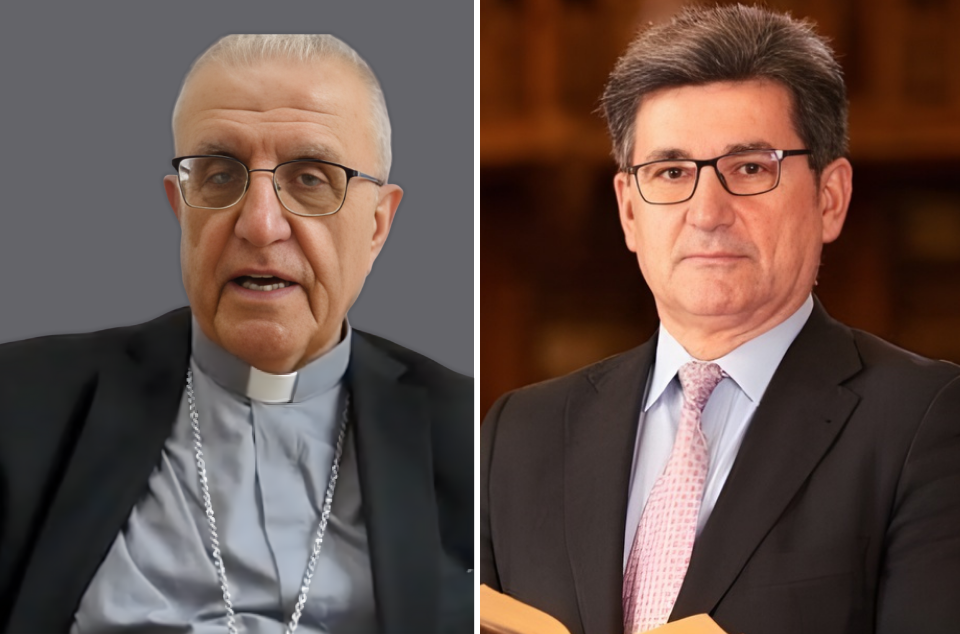
The criticism has not been limited to public figures. In social media discussions, many ordinary Assyrians from all denominations voiced frustration. One commentator wrote: "We do not live in the Middle Ages where people blindly believed what religious leaders preached and we are not sheep to be labelled according to the personal views of a bishop or patriarch."
 The Assyria Post
A long history of controversy
Cardinal Sako has long been regarded as a polarizing figure among Assyrians and in Iraq where he has previously been involved in a number of contentious episodes.
Following the fall of Saddam Hussein’s regime in 2003, then Bishop Sako opposed efforts to establish the Nineveh Plain as a separate province, arguing against what he described as the creation of a "Christian ghetto," while at the same time expressing support for the Kurdish-led region.
 Barseen Oshana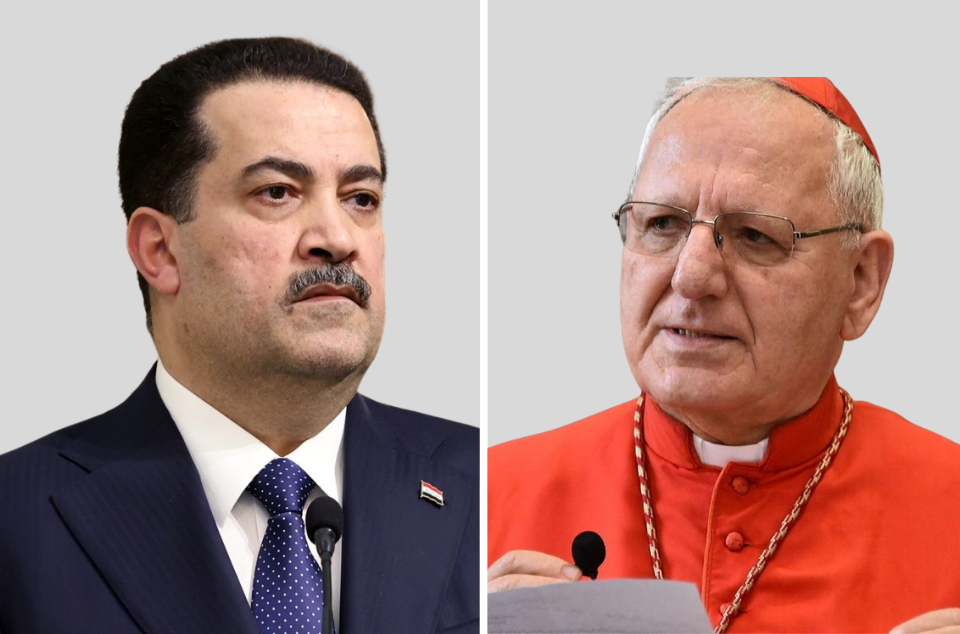
More recently, he made remarks that were interpreted by some as supporting normalization between Iraq and Israel, prompting backlash from segments of Iraqi society and calls from certain members of parliament for legal action. He also became embroiled in a public dispute with Rayan al Kaldani, which led to tensions over his official recognition as head of the Chaldean church by the Iraqi state and ultimately resulted in his temporary relocation to Erbil, a development he admitted was humiliating.
Cardinal Sako’s family is originally from the Assyrian village of Perzawa, near Zakho in the Dohuk region of northern Iraq. The village lies in the historic Assyrian heartland, and its inhabitants were traditionally members of the Assyrian Church of the East before later ecclesiastical realignments in the region saw the creation of the Chaldean church following efforts by catholic missionaries to Assyria.


