

“Christian” is a religious label. It does not anchor political rights in land or history. It invites guardianship rather than self-rule. An Assyrian province asserts ownership. A Christian province invites supervision.
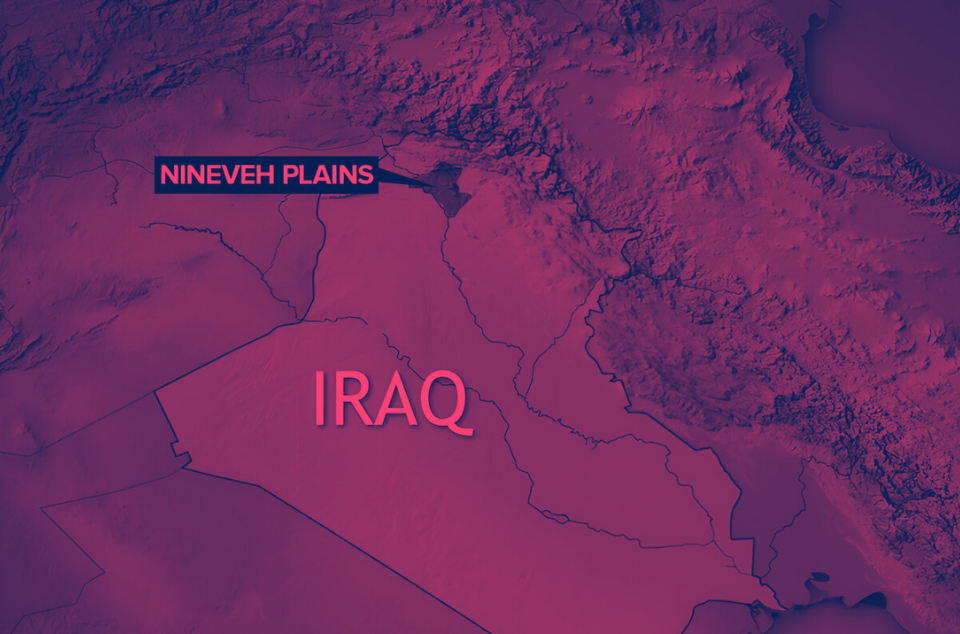
Today, renewed calls to implement Article 125 of the Iraqi Constitution and to establish a province in the Nineveh Plains are again being presented as a long-overdue remedy. Iraqi officials invoke pluralism. International actors speak of reconstruction and minority protection. Assyrian members of parliament announce plans to “reopen the file.”
For Assyrians who have watched these cycles repeat for decades, such announcements prompt caution rather than celebration.
The danger is not that this initiative will fail. The danger is that it will succeed on terms that permanently neutralize Assyrian self-determination—transforming historic Assyrian land into a symbolic administrative unit that is praised internationally, controlled externally, and emptied of national meaning. If that occurs, Article 125 will not become a mechanism of survival. It will become the final instrument of erasure.
The parallel experience of Assyrians and Yazidies under ISIS matters profoundly for the Article 125 debate. ISIS did not succeed merely because it was brutal. It succeeded because communities were forced to remain structurally dependent on forces that withdrew when it mattered most.
Any implementation of Article 125 that does not guarantee genuine self-administration—including authority over security—will simply recreate the conditions that made genocide possible.
The result so far post-ISIS has been partial return, continued emigration, and accelerating demographic collapse. Villages exist on maps but to a lesser extent in lived reality. Reconstruction without self-administration has perhaps stabilized ruins, but not restored life. This is the reality against which Article 125 must be measured.
Article 125: Promise Without Power
Article 125 of the Iraqi Constitution guarantees administrative, cultural, and educational rights for Iraq’s “various nationalities.” On paper, it appears to offer a pathway toward local self-administration. In practice, it has functioned as a deferral mechanism rather than an instrument of justice.
For more than two decades, Article 125 has been acknowledged rhetorically while remaining unimplemented in substance. It does not create provinces automatically, nor does it guarantee territorial authority. Its realization depends entirely on political will.
Critically, Iraq has never passed the implementing legislation required to operationalize Article 125. There is no binding law defining how administrative units are formed, how authority is exercised, how security is guaranteed, or how land is protected. As a result, Article 125 exists in a legal vacuum—vulnerable to cosmetic implementation and political manipulation. Revival without substance would be worse than stagnation.
This is why premature celebration is dangerous. A province declared without clear legal safeguards may appear to advance minority rights while, in practice, locking in dependency.
Why Implementation Mechanisms Matter More Than Declarations
The absence of implementing legislation is not a technical oversight; it is the core vulnerability of Article 125 itself. Without a statutory framework defining enforcement, jurisdiction, and authority, constitutional language becomes an instrument of political interpretation rather than legal obligation.
In Iraq’s post-2003 system, this distinction is decisive. Rights that are not operationalized through binding law are not merely delayed; they are reshaped by those with leverage. Administrative arrangements emerge through negotiation, security realities, and party influence rather than constitutional intent. In disputed territories such as the Nineveh Plains, this means that any “implementation” of Article 125 will reflect existing power balances unless explicitly constrained by law.
This is why premature celebration is dangerous. A province declared without clear legal safeguards may appear to advance minority rights while, in practice, locking in dependency. Authority over budgets, appointments, security coordination, and land registration can all be retained externally while symbolic recognition is granted locally. Once institutionalized, such arrangements are exceedingly difficult to reverse.
For Assyrians, the lesson is straightforward: how Article 125 is implemented matters more than whether it is invoked. Without legislation that secures real administrative authority and locally accountable security, implementation risks formalizing vulnerability rather than ending it.
Recent announcements by Assyrian members of parliament to reopen the Nineveh Plains province file have been welcomed by some as progress. Yet these representatives emerge from a quota system that defines identity through religion rather than indigeneity and detaches representation from land, history, and collective political authority.
More critically, their electoral success depended heavily on Kurdish party votes. This dependency is structural, not personal, and it constrains outcomes before negotiations even begin.
Assyrians have seen this pattern repeatedly: representation without authority, participation without power, and promises that dissolve when they challenge entrenched interests.
One People, Many Churches — A Call to Return
A people fragmented by religious labels is easier to administer than a nation unified by memory and claim. What could not be erased by force has too often been diluted through redefinition.
Article 125 speaks of national components, not religious sects. Any future for the Nineveh Plains framed exclusively through denominational identity risks repeating the very logic that has already left Assyrians politically fragmented, administratively weak, and vulnerable to erasure. This is not a call to abandon faith. It is a call to return—to ourselves.
To remember that Assyrian identity is a national identity that cannot be reduced to denominational affiliation, older than any modern label, and essential to survival in the homeland. Without a shared national consciousness, no administrative arrangement—no province, no promise—will be strong enough to protect what remains.
“Christian” is a religious label. It does not anchor political rights in land or history. It invites guardianship rather than self-rule. An Assyrian province asserts ownership. A Christian province invites supervision.
Such a structure would be easy to celebrate internationally while remaining administratively hollow and politically dependent—an efficient mechanism for quiet absorption rather than genuine autonomy.
In practice, this pattern has consistently aligned with the Kurdish regional government’s long-standing objective of extending administrative and political influence over the Nineveh Plains without formal annexation.
What Self-Administration Must Mean
If a Nineveh Plains province is to represent justice rather than final dispossession, it must include:
- Recognition of Assyrians as an indigenous people
- Authority reporting to Baghdad, not Erbil
- Locally accountable security
- Control over land, education, and cultural policy
- Safeguards against demographic manipulation
Anything less is supervised decline.
If Assyrians accept a “Christian province,” they may gain recognition—and lose their nation. If they insist on an Assyrian province grounded in real self-administration, they affirm what history, law, and justice already require.


